


– Liberia’s Fishing Port Gap Benefits Senegal
MONROVIA – Liberia is reportedly losing an estimated US$17 million annually in potential revenue to Senegal, all due to the critical absence of a functional fishing port. This substantial financial shortfall, confirmed by the National Fisheries and Aquaculture Authority (NaFAA), highlights a major impediment to national income and job creation in a sector brimming with potential.
By Vaye Abel Lepolu / MICAT Reporter
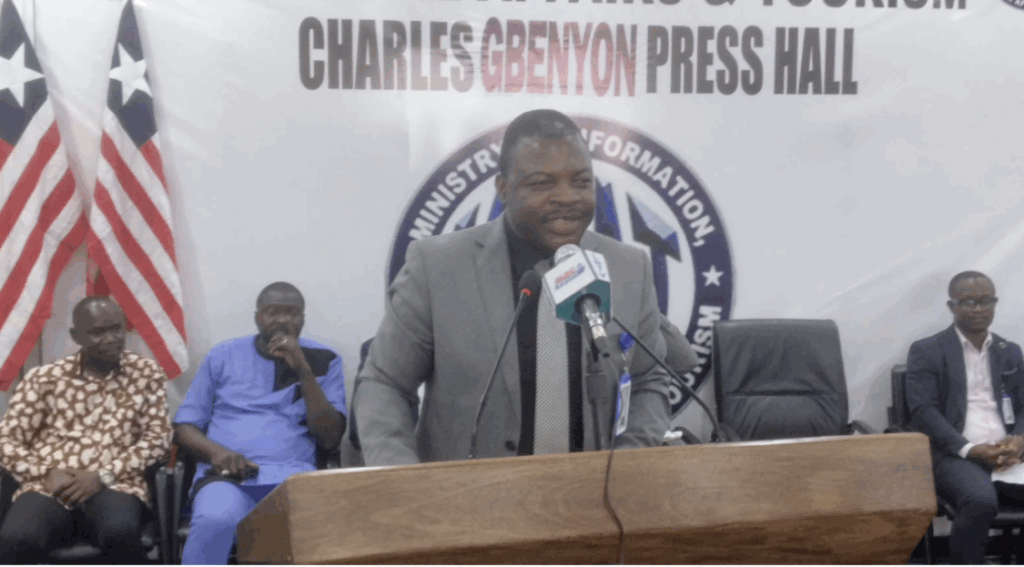
The core of the issue, as explained by NaFAA Director General J. Cyrus Saygbe, Sr., is a logistical failure that forces the very vessels harvesting Liberia’s rich marine resources to seek port facilities elsewhere. “We are losing millions of dollars in revenue and thousands of potential jobs for Liberians,” Saygbe stated in a recent briefing with journalists. “Several fishing vessels operating in Liberian waters are compelled to offload their catches in Senegal, depriving Liberia of vital export income and employment opportunities. The lack of a fishing port is a major setback to our fisheries sector.”
This practice means that the value-added processes—including processing, packaging, and formal export—which generate higher revenue and require local labor, are benefiting the Senegalese economy instead of Liberia’s. The US$17 million loss represents not just a missing line in the national budget, but also a cascade of lost opportunities for local boat services, ice factories, processing plants, and transportation jobs that would naturally cluster around a functioning port.
In response to this chronic challenge, Saygbe announced a concrete plan of action. He revealed that NaFAA, in collaboration with the World Bank, has formally commenced the design phase for a modern fishing port. The blueprints for this critical infrastructure project are expected to be finalized by December 2025.
“Once the design is ready, we will begin resource mobilization to raise about US$26 million for construction,” Saygbe explained. He projected that the completed port would directly create over 300 new jobs and, more importantly, fundamentally enhance Liberia’s capacity in fish export and processing, allowing the nation to finally capture the full value of its aquatic resources.
The port initiative is just one pillar of a broader strategy to revitalize Liberia’s fisheries sector. Director Saygbe outlined ambitious plans to simultaneously expand domestic fish farming, or aquaculture, to reduce the nation’s heavy reliance on imported fish. He disclosed a startling statistic: Liberia currently imports approximately 17,000 metric tons of fish each year. NaFAA’s goal is to slash this import dependency by over 75%, reducing the figure to just 3,900 metric tons by 2029.
To achieve this, the authority is pioneering the establishment of the country’s first integrated industrial fish farm. “This farm will create at least 100 direct jobs and serve as a model to be replicated in other counties,” Saygbe said. These integrated farms are designed to move beyond simple production, supporting value-added industries such as the manufacturing of fish powder, fish oil, and fish chips. These products could then supply national programs like school feeding initiatives, improving nutrition while creating a stable market for local producers.
Further bolstering this push for maritime self-sufficiency, Saygbe disclosed that a newly constructed semi-industrial fishing vessel, valued at US$800,000, will soon begin operations in Liberian waters. With a substantial capacity of 200,000 metric tons, this vessel represents a significant upgrade to the national fleet’s capabilities.
Emphasizing the overarching vision, the NaFAA Director General stated that the authority’s goal is to build a self-sufficient fisheries industry that robustly supports economic growth, drastically reduces import dependency, and creates sustainable jobs for Liberians. “If we can construct this port and strengthen our fish farming sector,” Saygbe concluded with resolve, “Liberia will finally retain the revenue that is currently going to other countries.”