

By: G. Bennie Bravo Johnson, I.
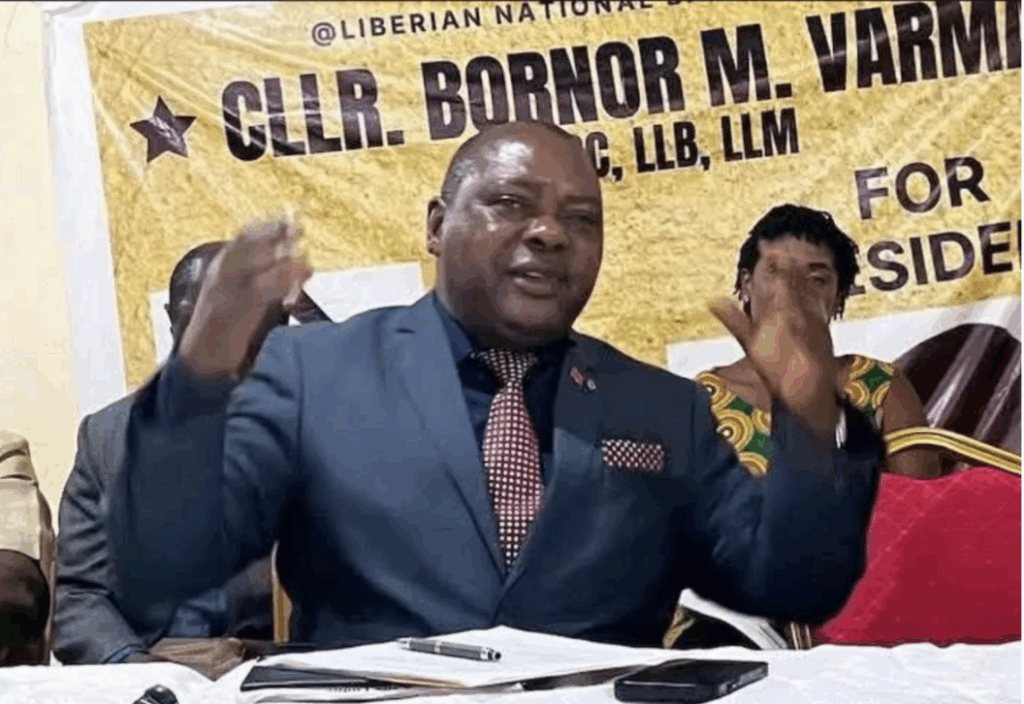
The President of the Liberian National Bar Association (LNBA), Cllr. Bornor M. Varmah, has warned that the effects of climate change in Liberia are increasingly becoming a rule of law, human security, and gender justice concern with women bearing the greatest burden of climate-induced hardships.
Speaking Thursday, October 30, 2025, at a gender program organized by the UN system in Liberia, under the theme, “Women, Climate, and Conflict: Advancing Gender Reproductive-Security and the Rule of Law in a Changing Climate,” Cllr. Varmah said intensified seasonal flooding, coastal erosion, displacement of communities, and agricultural pressures indicate that climate change is no longer only an environmental issue.
According to him, shrinking arable land and growing competition for natural resources are already triggering localized disputes across several counties. He noted that similar stress factors in history have escalated into broader conflict, placing rural women among the first and worst affected. Women, he said, shoulder the responsibility for water, food security, and household survival, and when resources decline, they are exposed to heightened risks including sexual and gender-based violence, exploitation, early marriage, and limited access to sexual and reproductive health services. Despite this, women’s voices remain underrepresented in climate governance and security decision-making.
The LNBA President stressed that advancing gender reproductive security in a changing climate requires deliberate protections. He said reproductive health services must remain accessible during climate emergencies, and evacuation centers, temporary shelters, and humanitarian response operations must be safe spaces for women and girls. Policies, he emphasized, must also consider maternal health, contraceptive access, and protection from gender-based violence, noting that these are rights, not optional considerations.
From a rule of law standpoint, Cllr. Varmah called for stronger legal frameworks to ensure equitable access to land and inheritance for women, enforcement of laws against gender-based violence in displacement contexts, and reforms in environmental governance that ensure transparency, accountability, and community consultation. He also emphasized the need for community-level conflict resolution systems that apply restorative justice approaches and address women’s needs.
He further stated that conflicts over natural resources are legal challenges before they escalate into political crises, placing lawyers at the frontline of prevention. The Bar, he said, must lead legal education on land rights, environmental protections, and women’s rights in climate-impacted communities, and must advocate for climate-responsive legislation and domestication of government commitments into enforceable law.
The LNBA committed to supporting public education on environmental rights and gender protections, partnering with civil society to monitor violations in climate-affected areas, strengthening legal aid for vulnerable women, and training lawyers in environmental justice and reproductive-security law. The Association also aligned itself with global calls for climate financing to reach grassroots women’s groups and local communities.
The statement noted that the intersection of climate, conflict, and gender is already visible in communities in West Point, New Kru Town, Grand Kru, Sinoe, and Bomi, where coastal erosion and resource scarcity continue to threaten livelihoods and safety. Cllr. Varmah maintained that protecting affected women is both a moral responsibility and a legal obligation.
He concluded that building a climate-resilient Liberia requires ensuring gender justice and upholding the rule of law, reaffirming the Association’s commitment to support efforts that safeguard women’s rights, reproductive security, and equitable legal access as part of the national climate response.