

-In Arson Case
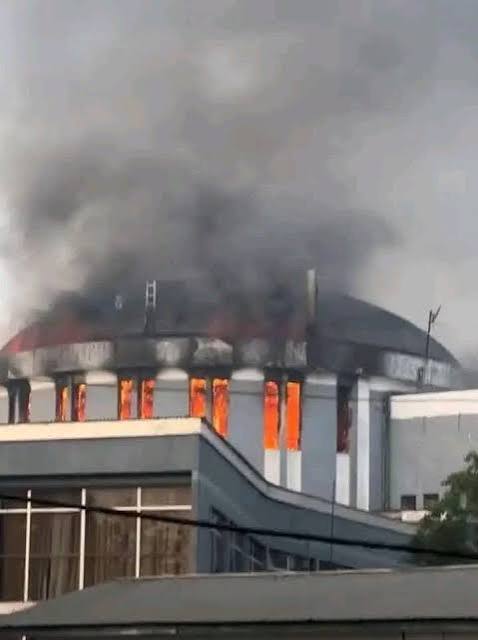
In a dramatic turn in the ongoing Capitol arson and attempted-murder trial, Criminal Court “A” Judge Roosevelt Z. Willie has removed another duly-sworn juror on grounds that she is a member of the opposition Congress for Democratic Change (CDC)—a decision the defense describes as “constitutionally alarming,” “legally inconsistent,” and “dangerously tilted against the accused.” The ruling, made despite Article 17’s protection of political association, has triggered sweeping concerns about judicial neutrality and set the stage for what defense lawyers say could become a defining moment for Liberia’s justice system.
The juror, Antoinette Mulbah (J30-9550), had already been vetted and jointly accepted by both prosecution and defense during voir dire. Even more troubling to defense lawyers is the prosecution’s earlier admission—on the record—that they were aware of her CDC membership but “did not challenge her because it was not an issue.” Political affiliation has never been a recognized legal basis for juror disqualification in Liberia, and observers say Judge Willie’s decision contradicts long-standing principles governing jury impartiality. For the defense, the ruling represents a stark departure from constitutional guarantees and “an unwarranted intrusion into a sacred democratic freedom.”
The removal order stems from a prosecution motion filed on December 1 accusing Mulbah of lying under oath and maintaining concealed political ties. But the defense argues that the State, which they characterize as being on a “juror-removal spree,” again produced no verified evidence—only photographs lacking sworn authentication, witness testimony, or any legally sufficient linkage. Prosecutors cited Supreme Court opinions such as Bestman v. Lewis, Sackor v. Republic, and Doe v. Republic, but the defense maintains that the citations collapse under scrutiny because the prosecution failed to establish even the minimum factual predicate required for juror disqualification. A ruling on the motion remains pending.
The controversy deepened when observers recalled that this is not the first time the State has attempted to remove a juror in this same trial based on “flimsy, unverified claims”. Only days earlier, the court rejected the prosecution’s effort to disqualify Juror J30-9819 using what defense lawyers derisively called “flying sheets”—unverified social-media photos allegedly showing the juror at a political campaign event. Judge Willie himself ordered the juror to examine the pictures, and she confirmed she was not the woman in them, identifying the person as her mother. With no authentication, mismatched records, and a recognition that digital images can be easily manipulated, the judge denied the motion outright.
The defense now argues that Judge Willie’s earlier insistence on evidence and authentication directly contradicts his current decision to remove Juror Mulbah without meeting those same standards. They say the inconsistency undermines confidence in the court’s neutrality and unfairly destabilizes a trial where several defendants remain incarcerated without bond. They further note that repeated, unsubstantiated prosecution motions to expel jurors suggest an effort to reshape the panel, not preserve fairness.
Court proceedings have nonetheless continued, with jurors previously sworn, Dickson T. Yarsiah, Jr. appointed as Foreman, and Audray Clinton as Secretary. The court also issued contempt writs against two bloggers accused of attempting to interfere with the jury process.
As the trial resumes, public scrutiny intensifies. The defense insists the Constitution—not political pressure—must guide the process and maintains that removing jurors based on unproven assertions threatens not just the defendants’ rights, but the integrity of Liberia’s entire jury system.