

-As Foreign Ministry Says It Has No Knowledge
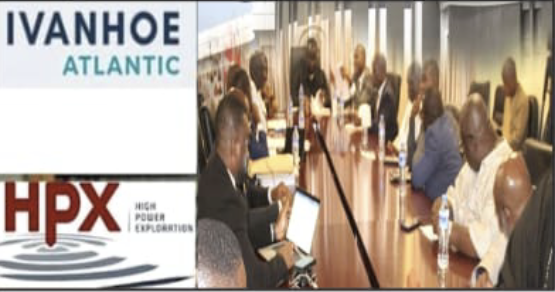
Monrovia: At a House of Representatives’ hearing on Tuesday, December 2, 2025, Liberia’s Foreign Ministry declared it has no knowledge of the status of the Implementation Agreement (IA) between the Republic of Liberia and the Republic of Guinea. This instantly prompted concerns from some lawmakers about whether a new, separate mining deal with a foreign company had violated Liberia’s international commitments and sidelined its neighbor.
By Jerromie S. Walters/Sub-Editor/Legislative Reporter wjerromie@womenvoicesnewspaper_i2sktp
The agreement, signed in 2019, is a legal framework for Guinean companies to use Liberian rail and port infrastructure for exporting their mineral products. This agreement has recently been at the center of controversy due to concerns that a proposed deal between Liberia and Ivanhoe Liberia (CAA) may have disregarded the Implementation Agreement’s procedures, particularly regarding transparency and a joint review process with Guinea.
The House Specialized Committee, investigating the Implementation Agreement (IA) with Guinea, heard testimony that laid bare substantial gaps in intergovernmental coordination and oversight. The 2019 pact established a legal framework for Guinean mining companies to use Liberian rail and port infrastructure, a cornerstone of regional economic cooperation recently thrown into doubt.
Deputy Foreign Minister for Administration, Gabriel H. Salee, informed the Committee that MoFA has no information regarding the current status of the agreement. “We have no idea about the status of this agreement. We didn’t participate at any level and cannot provide information at this time,” Deputy Minister Salee stated.
Representative Ivar Jones challenged the ministry’s position, noting it is the official custodian of Liberia’s treaties. He questioned how the government could ensure compliance with a bilateral agreement if its own foreign affairs office was unaware of its standing. Representative Jones further pressed on a fundamental legal point, asking whether Guinea’s legislature had ever ratified the agreement to make it binding on both nations.
“Did we share copies of our ratified agreement with our Guinean counterparts? If it is not passed there, it cannot be binding, regardless of our ratification here,” Representative Jones asked. The Foreign Ministry officials present did not provide a definitive answer, deepening concerns about the agreement’s foundational legitimacy.
The Ministry of Justice offered more context but did not resolve core uncertainties. Deputy Minister for Economic Affairs, Cllr. Charles D.F. Karmo, outlined the agreement’s history, tracing similar arrangements back to 1973. He described it as a “logistics operation” leveraging Liberia’s excess rail capacity and assured the committee that safeguards, including Liberia’s right to terminate the pact, were in place.
Cllr. Karmo stated that a 2021 communication between the two governments reflected a continuing consensus. He also asserted that companies like Ivanhoe Liberia, the logistical arm of Guinean miner SMFG, would not deploy private security in Liberia and that the arrangement functioned like a transshipment deal. However, his testimony did not directly address whether the specific procedures mandated by the 2019 agreement had been followed in recent negotiations.
Lawmakers expressed deep skepticism, focusing on the apparent lack of coordination with Guinea.
Montserrado County District #17 Representative Bernard Blue Benson insisted that no major progress could occur without Guinea’s explicit consent. Representative Michael Thomas revealed that Liberia seemingly was not invited to a recent ceremony in Guinea marking the dedication of a new rail segment, a potential diplomatic slight.
He also questioned the adequacy of background checks on Ivanhoe. Citing Article 3.3 of the IA, which requires mutual awareness and engagement, Representative Gleekia asked whether Liberia had formally consulted Guinean authorities recently. Representative Jeremiah Sokan on the other hand warned about proceeding without systematic bilateral alignment.
“It is problematic to undertake an agreement of this magnitude without ensuring our sisterly country is fully aligned. Are we acting out of urgency?” Representative Sokan asked. He hinted at fears that Liberia may be compromising a long-term regional framework for a standalone commercial deal.
The 2019 agreement was explicitly designed to prevent such unilateral actions. It established a detailed, multi-step approval process requiring joint oversight by Liberian and Guinean monitoring committees. Any company seeking access was to be vetted first by Guinea, then by a bilateral committee, before a standardized access agreement could be granted.
Crucially, the pact mandated the harmonization of laws, fees, and regulations to ensure fairness and predictability for all operators. However, evidence suggests the proposed CAA with Ivanhoe was negotiated directly between the company and Liberia, with no public record of the required bilateral committee reviews or of Guinea formally designating the project as approved.
This has since led experts to warn that the CAA, with its own distinct tax and fee structures, operates as a standalone deal that risks breaching the IA’s principle of uniform pricing and joint governance. By potentially sidestepping these institutions, the CAA threatens to replace a cooperative framework with a fragmented, unilateral approach.
The hearing concluded with the committee adjourning to gather more information next week. Its chairman, Hon. Foday E. Fahnbulleh, reaffirmed a commitment to transparency and legality. The inquiry follows growing institutional skepticism; last month, the Liberian Senate demanded “documentary evidence” of Guinea’s consent before debating the Ivanhoe deal.