


-Despite Defense Claims of Torture, Coercion
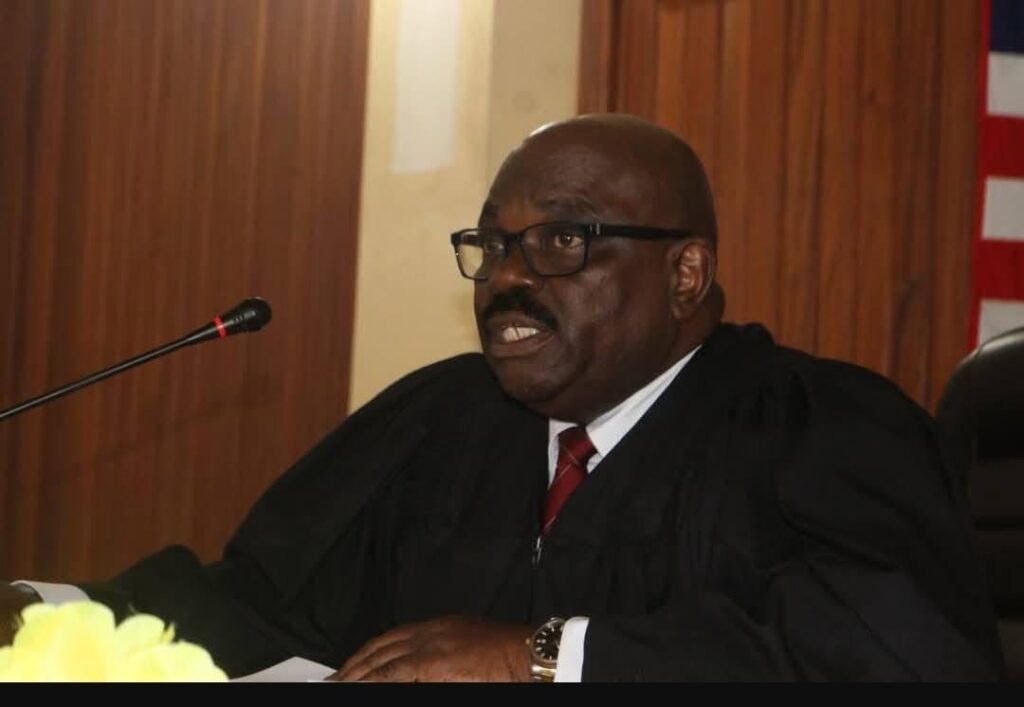
MONROVIA – In a contentious ruling at the Monrovia Criminal Court, Presiding Judge Rosevelt Z. Willie allowed several disputed statements to be admitted as evidence in an ongoing arson trial, despite forceful objections from the defense that the documents were obtained through torture, coercion, and procedural violations.
The defense argued that the statements—submitted by the prosecution—were neither written nor voluntarily given by the defendants, lacked required signatures, and contained material discrepancies compared to versions shared during discovery.
Citing Article 20 and 21 of Liberia’s 1987 Constitution and the Supreme Court precedent in Kolleh v. Republic, defense counsel insisted that confessions obtained through brutality or involuntarily must be excluded. They also noted repeated misspellings of defendants’ names and pointed out that some statements referenced individuals not on trial, such as Gabriel Fansieh and Robert W. Anderson.
Multiple defendants, including John Nyantee, Jerry Pokai, and Eric Susay, disavowed the statements in court. Nyantee denied being in detention on June 7, 2025—the date listed on his alleged confession—while Pokai claimed his fingerprint was forced onto documents under torture and that his name was misspelled as “Pokaina.”
Despite a medical report confirming the defendants were tortured, Judge Willie questioned why their lawyers did not object during the statement-gathering if coercion occurred. He also noted the defendants told doctors they were not sodomized, which he suggested undermined claims of severe abuse.
In his ruling, the judge invoked the Civil Procedure Law, Section 25.2, regarding judicial notice of historical facts, and stated that once a document is testified to and marked by a witness, it must be submitted to the jury. He ordered that only statements from defendants on trial be used, setting aside those attributed to non-parties.
The decision prompted renewed objections from the defense, which maintains the evidence was unlawfully obtained and violates constitutional safeguards against self-incrimination. The trial is set to continue with the disputed evidence now part of the court record.