

–CENTAL, Others Foresee Threats to Liberia’s Anti-Corruption and Other Gains
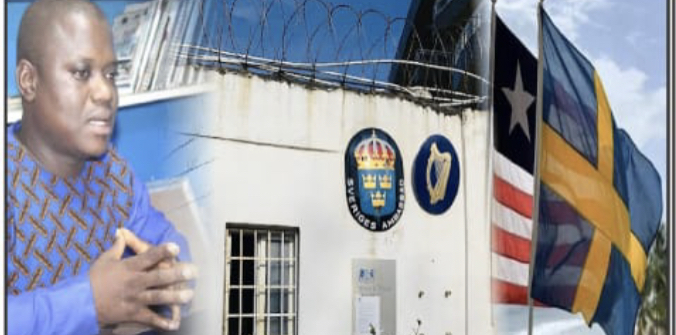
MONROVIA – Anderson Miamen, the Executive Director of the Center for Transparency and Accountability in Liberia (CENTAL) says the departure of Swedish development aid will leave a significant void in Liberia’s governance sector. The Embassy of Sweden in Monrovia announced Friday, December 5, 2025, that the Swedish government will phase out its bilateral development cooperation with Liberia and close its diplomatic mission here by the end of 2026.
By Jerromie S. Walters/wjerromie@womenvoicesnewspaper_i2sktp
Miamen gave his assessment in an interview with this paper on Sunday, noting, “The gap would be wide. Actually, I don’t lie to you, the gap will be wide. So we have staff, we have programs. I talked about the counties that we’re working actively, the engagement we’re having, and the support from them enables us to participate in activities. We were doing trainings for different institutions. We didn’t have to charge them for the trainings that we’re providing.” Like Miamen, renowned Liberian economist Samuel Jackson says… “It will be devastating”.
He stated the formal partnership, which began in August 2020, allowed CENTAL to expand its work from Monrovia into seven counties. According to him, Swedish funding enabled the group to hire and station staff in those regions for the first time, creating a sustained local presence for monitoring and civic engagement. This decentralization, as narrated by Maimen, was a direct result of the support.
Miamen noted that prior to the partnership, CENTAL’s county work was intermittent, but the Swedish program established continuous local operations in areas like Nimba and Bong. “It’s been a really rewarding journey. They’ve helped to scale up our working engagement. They’ve helped to make our presence felt in the counties. Prior to their partnership, even though we worked in the counties, but we didn’t have a sustained presence. We’ll go in, do a bit of work here and there, and come out. We were not even present in many other counties where we’re working right now. The partnership we have with them took us to seven counties, engaged in seven countries across,” he said.
A major achievement funded by the partnership, Miamen said, is the annual “State of Corruption Report.” He described it as the first consistent national assessment of the anti-corruption landscape produced by a local organization, with the fourth edition published last year. The Swedish government also helped CENTAL revive a key national coordination body, the National Integrity Forum. Miamen explained that the forum, which brings together agencies like the LACC and GAC, had been dormant for over six years before the funding restored its operations in 2021.
His words: “We have been producing the state of corruption reports. That’s the first time for a local organization to consistently produce a report that covers the anti-corruption landscape. What is happening, actions and actions, successes, challenges, lessons learned, race, next steps, and all those different things that put on the fight against corruption or the promotion of integrity, transparency, and accountability in Liberia. As I said, since 2021 we did the fourth edition last year, and we’re looking into producing the next edition.”
Furthermore, Miamen reported that Swedish support revitalized CENTAL’s public complaint center. The Advocacy and Legal Advice Center receives reports of corruption from citizens and forwards them to official institutions like the Liberia Anti-Corruption Commission. Public outreach programs grew significantly under the partnership, Maimen added. He cited a youth engagement initiative that works with university integrity clubs and secondary schools across the country to promote accountability values.
The organization’s public visibility also increased. Miamen stated that CENTAL’s Facebook following grew from under 5,000 to over 31,000 during the partnership, amplifying its messages on transparency and governance. “Our Facebook page, for example, had less than 5000 followers before the Swedish came
based on the work we’ve done with the support they provided, we now have more than 30 something 1000 followers on Facebook. We are more visible. If you’re talking about engagements, you’re talking about the scope of the things we’ve done, the research. We do the budget, tracking citizens’ engagement. There are just so many things that have resulted from the partnership.”
Sweden was a pioneering donor in its level of trust, according to Maimen. also, he revealed that CENTAL was the first Liberian organization to receive a grant exceeding one million dollars from the Swedish government for its National Integrity Building and Anti-Corruption program. However, Maimen warned that the funding withdrawal will create serious challenges. He predicted CENTAL will struggle to maintain its county-level staff and activities, potentially reducing its national coverage and community-level monitoring.
The loss will also halt free training programs that CENTAL provided to civil society groups, journalists, and government offices, Miamen said. These sessions on anti-corruption and accountability will likely become infrequent or cease without dedicated funding.
A weekly radio program on OK FM, which hosted free discussions on integrity, will go off the air, Miamen confirmed. He noted the show, funded by the partnership, served as a major platform for citizens and officials to discuss governance issues.
Capacity-building for staff will be sharply reduced, Miamen explained. He said Swedish support covered training opportunities both abroad and within Liberia, which will no longer be available, affecting the organization’s expertise. Maimen called on national authorities to improve domestic resource management to prepare for a future with less donor support.
“It’s been a great time working with them, and they will be missed, actually, but it also presents an opportunity for us to reflect as Liberians, giving all the work we’ve been seeing regarding properly managing our resources, these partners will not stay forever. The Americans left, Sweden is going. Who knows? Sweden, Norway, Ireland, and all these countries we kind of connected.”
He added, “So who knows what will happen if Sweden is leaving? They see, Sweden has a big brother, relatively so, if Sweden is leaving, it’s likely that these other institutions, these other ambassadors, may leave as well. We don’t have any information on that. I’m just saying it… inferring from what has been happening,” he maintained. CENTAL Executive Director emphasized: “We need to now as a country, do more and not wait for all these people to pack us before we act or put our house together. We need to do more to manage what we have. We can even donate to other countries if we manage our resources properly. So it’s a sad thing that we will continue to look up to these partners, that every time they talk about parking off, we are worried, there’s anger, there’s emotions, and all of that.”
Understandably, he says, “the work we’ve done with him, if you have somebody who’s been with you and talking about leaving, it will be sad. But the fifth side to it is that we need to do more to manage what we have properly.” At the same time, Maimen concluded that the reduction in these activities will affect not just his organization but Liberia’s overall anti-corruption efforts. Miamen stated that the gap left by Sweden’s exit could weaken civil society’s role in promoting transparency and holding the government accountable.
“If the support is not there for us to continue with those activities at the skill we had before, it will be a great negative for us, and not just us, but the country, in terms of active civil society participation in the fight against corruption and some of the efforts that we’ve been making to track what government has been doing to report or what government has been doing and to build capacity, provide citizens with tools that they can use to hold governments accountable,” he explained.
Sweden’s Development Strategy
Sweden’s development cooperation strategy with Liberia for the period 2021–2025 is designed to create the conditions necessary to improve the lives of people living in poverty and oppression, aligning with the 2030 Agenda and the Paris Agreement. With a total budget of SEK 1.85 billion (Approximately 175.565 million USD), primarily administered by the Swedish International Development Cooperation Agency (Sida) and the Folke Bernadotte Academy (FBA), the strategy responds to Liberia’s profound challenges as one of the world’s poorest nations.
To aid in addressing Liberia’s many complex issues, Sweden’s cooperation pursues integrated objectives across four key areas. It works to strengthen human rights, democracy, and the rule of law while actively fighting corruption and promoting gender equality. The strategy aims to foster peaceful and inclusive societies by addressing the root causes of conflict and supporting national reconciliation. It also promotes inclusive economic development by improving market access and creating opportunities for decent work, particularly for women and youth. Finally, a strong focus is placed on environmental sustainability, including the climate-resilient management of natural resources and increasing access to renewable energy.
Activities include support for civil society, the media, and anti-corruption efforts, alongside specific programs to combat gender-based violence and improve access to sexual and reproductive health and rights. The FBA concentrates on conflict prevention, security sector reform, and strengthening the rule of law, while Sida will manage initiatives related to economic development and environmental sustainability. Throughout implementation, Sweden ensures an integrated approach, seeks synergies with other actors, and adapts to changing circumstances, all while prioritizing accountability, learning, and transparency in reporting results.
Sweden’s Impending Departure:
In its public statement released by the embassy, Swedish officials described the decision as “difficult,” attributing it to overall budget reductions in Sweden’s international development cooperation framework. The move is part of a broader recalibration of Swedish aid, affecting several African nations including Zimbabwe, Mozambique, and Tanzania. According to the announcement, the phasing-out process will be conducted “in a responsible and orderly way,” with all bilateral cooperation operations scheduled to terminate by the end of August 2026.
The embassy itself will be closed during the course of that year. The statement was keen to clarify that the decision is solely a result of Swedish budgetary constraints and “is not in any way linked to policies or events in Liberia.” It emphasized that Swedish support for Liberia through multilateral channels—including global funding to international organizations and contributions via the European Union—will continue unaffected. Despite the withdrawal of direct bilateral aid, Sweden pledged to maintain and deepen its relationship with Liberia.
The embassy outlined an intention to “strengthen and broaden the partnership… beyond development cooperation,” specifically highlighting enhanced trade and business relations as a future priority.
“Sweden remains a steadfast partner to Liberia,” the statement read, underscoring the importance of shared priorities, values, and “strong historic ties” as a foundation for continued positive relations. The Embassy of Sweden in Monrovia is accredited to both Liberia and Sierra Leone. The implications of the closure for diplomatic relations with Sierra Leone were not immediately detailed in the release.
Sweden and Liberia have long-standing relations. The Embassy of Sweden was first established in 1961, but diplomatic relations stretch even further back. A trade agreement between Liberia and the Union between Sweden and Norway was concluded as early as 1864. During the 1960s to 1980s, the Liberian American Swedish Mining Company (LAMCO) was one of Liberia’s largest companies and had many Swedish employees in the country. Sweden was a contributor to the United Nations’ Mission in Liberia (UNMIL). Sweden also actively supported Liberia during the Ebola crisis.