

By Jerromie S. Walters
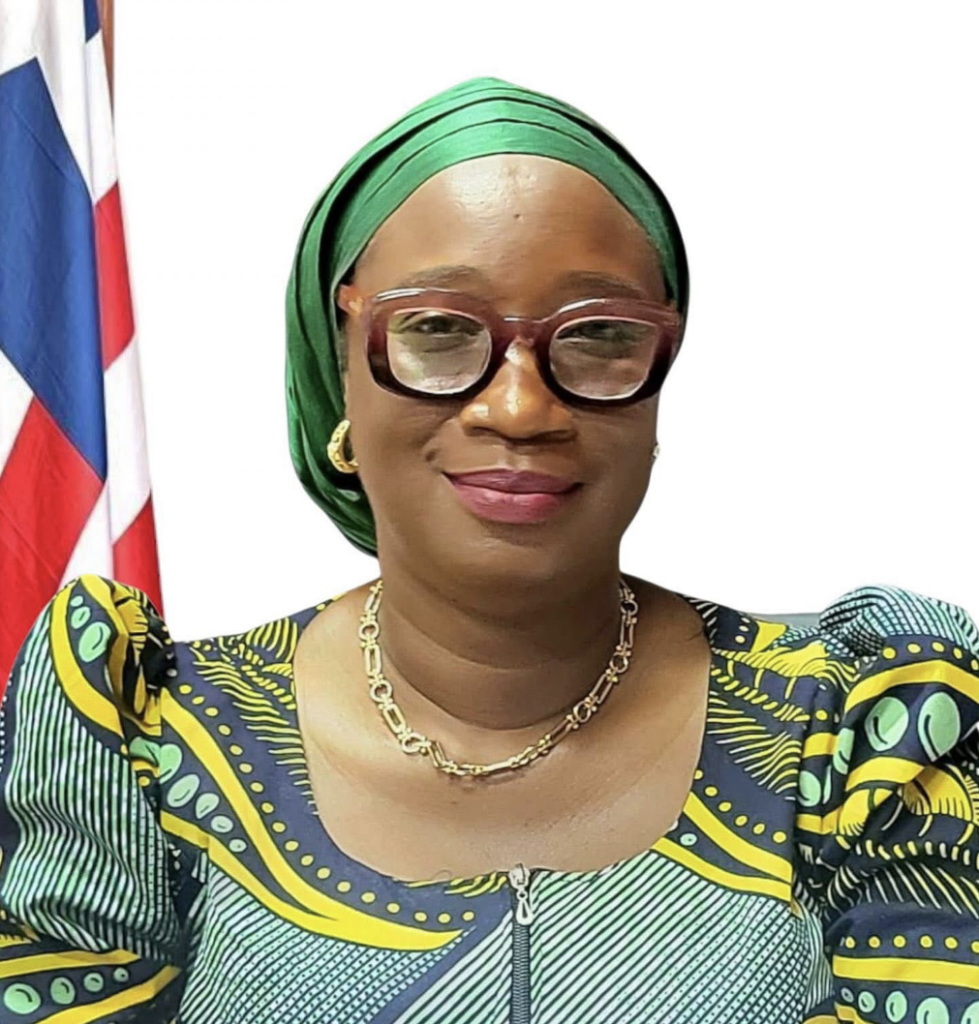
Monrovia: Liberia’s Minister of Gender, Children, and Social Protection has publicly alleged media bias following a critical evaluation of her tenure. Minister Gbeme Horace Kollie took to her official Facebook page on Tuesday, December 9, 2025, to address her ranking in Frontpage Africa’s annual Government Performance Report.
In the published report, Minister Kollie received a grade of “C” for her leadership over the past year. The minister’s response was pointed and indirect, suggesting financial influence played a role in the grading of other officials. She stated, “I don’t have money to carry newsmen and their family members on trips to deserve an ‘A’.”
This accusation implies that favorable media coverage and high grades are contingent upon providing financial perks to journalists. The remark has ignited a debate concerning the relationship between Liberia’s government officials and the press corps tasked with holding them accountable.
The Frontpage Africa report itself acknowledged some of the challenges Minister Kollie has highlighted publicly. It noted that the minister has frequently cited a severe lack of financing as a primary impediment to her ministry’s work. During a UN General Assembly session on Women, Peace, and Security, she underscored that chronic underfunding remains the greatest barrier to impact, despite Liberia’s gains in gender equality.
The report did document a significant achievement for the ministry in 2025 as a notable high point. Minister Kollie presided over the opening of a new Peace Hut and Cassava Processing Plant in Nyehn, Todee District, which is run by Plan International Liberia and funded by the United Nations Peacebuilding Fund. This initiative aims to support women’s roles in peacebuilding and economic empowerment, particularly in rural communities.
The project has engaged a substantial number of citizens, according to the ministry’s data. So far, 1,140 Peace Hut members have been organized, with 945 currently active. The initiative also includes 1,080 young women, with 1,037 active participants, and involves 400 boys and young men, 365 of whom are actively engaged.
Furthermore, the ministry launched a new strategic plan during the year designed to address persistent issues like child protection and gender-based violence. This formal planning was cited as a step toward a more structured governmental response to these social ills.
However, the Frontpage Africa review identified major ongoing failures as clear low points. Gender-based violence remains widespread across Liberia with little evidence of decisive ministerial action on several high-profile cases. Systemic barriers, including limited access to justice and a prevailing culture of impunity, continue to obstruct progress.
A stark example emerged in September 2025 when President Joseph Boakai suspended a deputy minister of Youth and Sports following serious allegations of raping a minor. The Liberia National Police and the Ministry of Gender are involved in the investigation, which has seen one arrest and a manhunt for another suspect.
This case underscores the persistent challenges faced by women and children, who often remain in vulnerable positions. Many women are concentrated in the informal economy with limited access to credit, formal employment, and social protections, and gaps in financial literacy and business training persist.
The performance report graded other ministers across a spectrum. Foreign Affairs Minister Sara Beysolow Nyanti received an “A” for achievements that included reinforcing Liberia’s commitment to regional bodies, securing €108 million in European Union grants, and reforming the passport system to improve security and accessibility.
Minister Kollie’s public accusation, therefore, places her “C” grade in direct contrast with the higher marks given to colleagues. Her comments frame her evaluation not as a reflection of her ministry’s outcomes but as a consequence of her unwillingness to financially cultivate media relationships.
The incident raises questions about the criteria used in such media-led performance assessments and the pressures on public officials in Liberia. It remains to be seen whether this exchange will prompt further scrutiny of the ministry’s record or of the media’s role in evaluating governmental performance.