

-In the Liberian Legislature

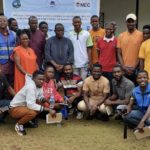
MONROVIA – The Legislative Monitoring Coalition of Liberia (LEMCOL) on Monday, December 15, 2025, released a report revealing a mixed performance by the Liberian National Legislature, praising its adherence to democratic debate rules while flagging chronic delays, major gender disparities, and systemic transparency failures.
The report, summarizing observations from nine plenary sessions between November 4 and December 11, 2025, was funded by the European Union and the Embassy of Sweden. It assessed the Legislature on three core indicators: Inclusion, Transparency, and Public Participation.
On a positive note, the coalition confirmed all observed sessions respected formal procedures, such as lawmakers speaking only when recognized. Discussions consistently focused on critical national issues, with finance, public sector governance, and infrastructure dominating the agenda.
However, the monitoring uncovered significant operational shortcomings. A primary concern was punctuality; not a single session began at the official 10:00 AM start time. Senate sessions routinely commenced between noon and 2:00 PM.
The report highlighted a severe transparency deficit. Individual lawmakers’ voting records are not published, with only vote totals recorded in the House of Representatives, shielding legislators from direct accountability. The Legislature’s official website is non-functional, forcing the public to rely on civil society groups for basic documents like bills and reports.
Critical work, including most committee meetings and the revenue hearings for the national budget, is conducted behind closed doors. Furthermore, lawmakers have not submitted written reports on their representations at international parliamentary sessions like ECOWAS.
Gender inequality within the legislative process was pronounced. Despite perfect attendance by female senators, women contributed to debates in only three of the nine sessions monitored. In five sessions, no women spoke at all. Male legislators exclusively sponsored bills in five sessions, with only two bills independently introduced by women during the entire period.
Public engagement was found to be minimal. While sessions were live-streamed and open to observers, citizens’ petitions were rarely discussed. Lawmakers did not reference constituency feedback during debates. Only two citizen petitions were formally presented in the nine-session period.
The report noted several significant legislative actions, including the passage of a $1.25 billion national budget for 2026, the advancement of the Women and Girls Protection Act, and the approval of major petroleum contracts.
To address the identified gaps, LEMCOL issued key recommendations to the Legislature. These include commissioning a full systems audit by the General Auditing Commission, opening committee meetings to civil society and media observers, and activating a functional website with real-time legislative information. The coalition also urged specific measures to mentor women lawmakers and for legislators to actively solicit constituent views on pending bills.
The Legislative Monitoring Coalition of Liberia is a consortium of sixteen civil society and media organizations focused on promoting transparency, inclusion, and public participation in the National Legislature. This monitoring effort is part of the broader Liberia Electoral Support Project Plus (LESP+), implemented by UNDP, UN Women, and the Netherlands Institute for Multi-party Democracy (NIMD).