

-In Capitol Arson Trial
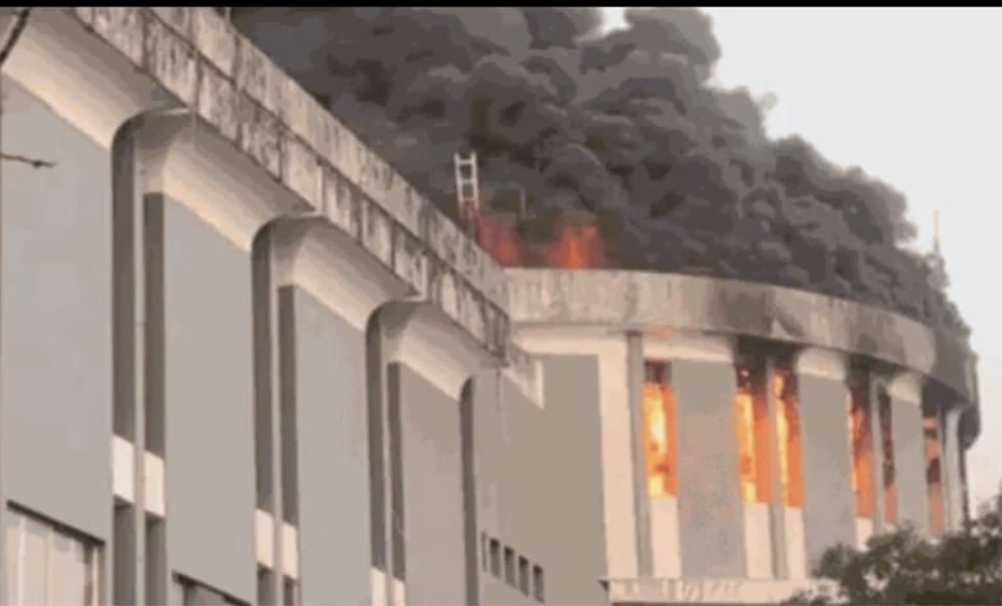
Criminal Court “A” this week heard forceful challenges to the prosecution’s case as defense counsel laid out allegations of police coercion, evidentiary manipulation, and speculative interpretation of contested audio recordings in the high-profile trial over an alleged plot to burn the Capitol Building.
During continued cross-examination of the prosecution’s prime witness, defense lead counsel Cllr. Arthur T. Johnson placed the conduct of the Liberia National Police (LNP) at the center of scrutiny. He alleged that more than fourteen pickup trucks carrying armed officers were dispatched to the residence of defendant Thomas Etheridge, an operation the defense portrayed as excessive and intimidating. According to Cllr. Johnson, Etheridge was compelled by police to hold a bottle of Clorox during the encounter, a claim presented as evidence of coercive tactics rather than lawful investigation.
The defense further asserted that on January 13, 2025, LNP Inspector General Gregory O.W. Coleman, together with prosecution witness Rafael Wilson, transported Etheridge from LNP headquarters to the National Security Agency (NSA). There, the defense alleged, officers again attempted to force Etheridge to hold the same Clorox bottle, reinforcing claims of sustained pressure and misconduct by state authorities.
Another central allegation raised by the defense concerned Etheridge’s cellphone, which was reportedly in police custody since December 18, 2024. Cllr. Johnson alleged that police attempted to use the device to place a call to former Speaker Amos Koffa with the statement, “Chief, I received the money.” Prosecutors objected to this line of questioning, and the court sustained the objection, instructing the witness not to respond.
Beyond claims of misconduct, the defense directly challenged the foundation of the prosecution’s theory of the case, which relies heavily on an audio recording said to capture defendants discussing a “Plan B.” Prosecutors contend the phrase referred to setting fire to the Capitol Building after earlier efforts failed. The defense rejected that interpretation, stressing that the recording contains no explicit reference to arson or burning the Capitol.
According to defense counsel, references in the audio to “parking chairs” were misconstrued by the prosecution and instead relate to seating arrangements and renovation activities previously carried out in the Joint Chamber. Cllr. Johnson argued that discussions about such renovations predated October 2024 and accused prosecutors of recasting ordinary legislative or facility-related matters as evidence of a criminal conspiracy.
The authenticity of the audio recording itself emerged as a major fault line in the proceedings. The defense alleged that the recording may have been generated or altered using artificial intelligence, asserting that investigators fabricated or manipulated evidence to implicate the defendants. Defense attorneys pointed to testimony indicating that similar audio recordings could be easily produced using widely accessible technology, raising concerns about reliability and verification.
On that basis, the defense urged the court to restrict testimony on the recording’s authenticity to qualified voice experts, warning of the growing dangers posed by AI-generated voice impersonation, digital manipulation, and misleading audio artifacts in criminal prosecutions.
Tensions peaked during cross-examination when Cllr. Johnson questioned whether the LNP generated and packaged the audio recordings presented by the state. Prosecutors objected, arguing the question was argumentative, opinion-based, unconstitutional, and violated the witness’s right against self-incrimination. Presiding Judge Roosevelt Z. Willie sustained the objection.
Prosecutors have denied any fabrication, insisting that the recordings accurately reflect discussions among the defendants and demonstrate a criminal conspiracy rather than lawful activity. The defense, however, maintains that the state’s case rests on coerced conduct, contested technology, and interpretive assumptions unsupported by direct evidence.
As testimony continues, the court’s determination on the admissibility and credibility of the disputed recordings is expected to weigh heavily on the outcome, with the defense pressing the argument that the prosecution’s case is built more on conjecture and questionable methods than on proven criminal intent.