

-Nimbains React to Pres. Boakai’s Second Year in Office
By Shallon S. Gonlor | shallonsgonlor@gmail.com
NIMBA COUNTY, Liberia — Scores of local citizens and residents in Nimba County, many of whom are loyal to the ruling Unity Party, are slapping President Joseph Nyuma Boakai’s administration with a harsh label as the ‘continuance of failed leaders,’ in Liberia.
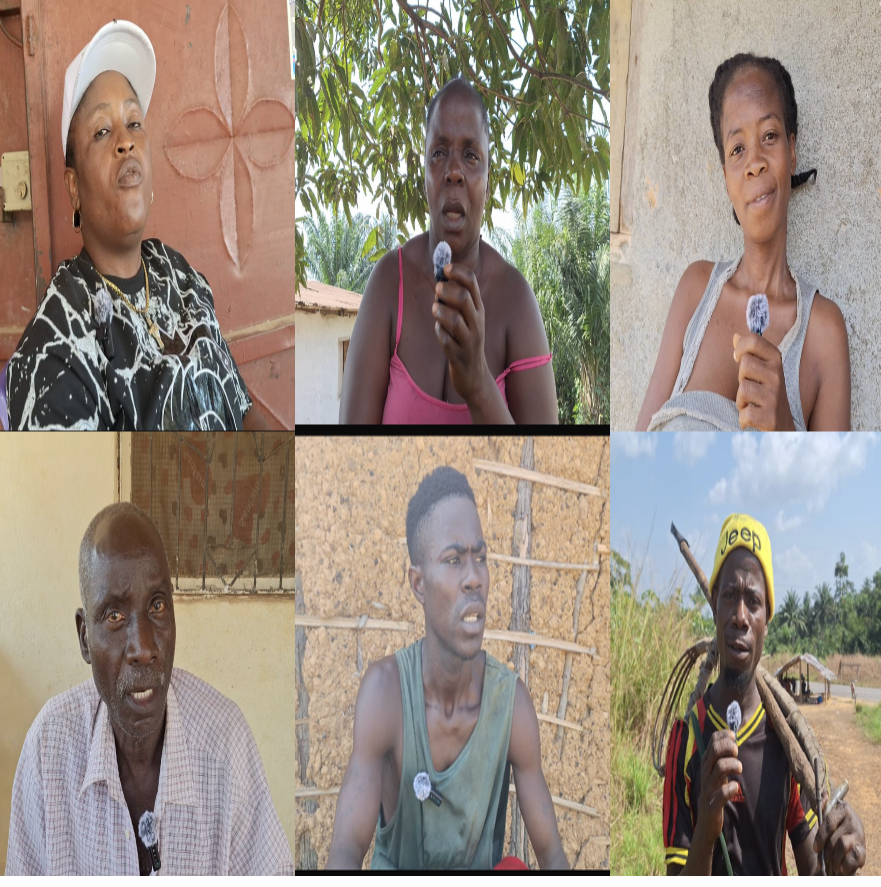
In a candid door-to-door interview with WomenVoices Newspaper over the weekend, citizens in Nimba County gave a blunt assessment of President Boakai’s first two years in office as they reflected on 2025’s end without notable rural infrastructure developments. Their message was clear – emphasizing disappointment and the hard cost of living.
President Joseph Nyuma Boakai has declared that his rise to the presidency was never fueled by personal ambition, but by a lifelong commitment to service and an unwavering desire to transform the living conditions of ordinary Liberians. He reflected on a life shaped by hardship, perseverance, and public service, while outlining his administration’s rescue and development agenda centered on Agriculture, Roads, Rule of Law, Education, Sanitation, and Tourism (ARREST).
Meanwhile, residents expressed frustration over the lack of progress in the president’s governance ARREST Agenda for Inclusive Development, most especially in rural Liberia, echoing a sentiment that the government has dropped the ball on delivering meaningful change. “We’re tired of empty promises,” one resident said. “It’s like they’re stuck in a loop of talking but doing nothing.”
A lot of t of those spoken to complained about what they consider the administration’s failure to address systemic issues has bred disillusionment. Blessing T. Dennis painted a grim picture, speaking to the harsh reality Liberians face daily – a perpetual struggle to make ends meet, with food insecurity looming large. He questioned the efficacy of President Boakai’s agriculture program – touted as a cornerstone of his agenda – wondering aloud if it’s equipped to tackle the country’s crippling food sufficiency crisis.
He said the president’s vision for agricultural sustainability – an important endeavor for Liberia to feed itself – is a step in the right direction, but he is skeptical about swift implementation. With two years already behind the president and promises yet to materialize, Mr. Dennis expressed with a mix of concern and doubt, wondering if the president’s remaining four years would turn things around.
Mr. Dennis emphasized further that Liberia’s reliance on imported staples, like rice, is taking a toll on households. “The price is uncontrollable and increasingly high,” he said, painting a dire picture of poor families going to bed hungry due to economic strain. With over 60% of food staples imported, the nation is vulnerable to price shocks – a harsh reality for a country striving to overcome deep-rooted food security challenges.
“The status quo is unsustainable,” Mr. Dennis stressed. “Liberia can’t keep feeding its citizens with imported food.” He highlighted that the majority of Liberians, in rural and urban areas alike, face severe food insecurity and extreme poverty. The root of the problem is that most farming is subsistence-based, with smallholders lacking access to tech, quality seeds, and fertilizer, resulting in low output.
Mr. Dennis wants President Boakai to focus and put time into action. Leveraging his decades of expertise, he urged the president to move beyond promises and invest in agriculture – boosting local production through better inputs, tools, and market access.
Janet Flomo, a mother of several, also shared her concerns, highlighting the crippling road challenges in rural Nimba County, in light of the ruling government’s road priority under its ARREST pillar.
“It’s a daily struggle,” she said, explaining how bad road conditions isolate communities, making it tough for citizens to access basic social services in nearby cities. Janet also reflected on governments’ campaign promises and persistent failure, saying like President Boakai’s ruling party’s ‘Rescue Mission,’ is yet to build farm to market roads, and so, local farmers can’t transport their produce to markets, sick people – including pregnant women, the elderly, and children face life-threatening delays getting to health facilities, and overall, progress is stalled.
“Development can’t happen without roads,” Janet stressed, pleading for government attention to fix the infrastructure gap. She called out the government’s unfulfilled campaign promise, specifically the pledge to fix feeder roads across rural Liberia with yellow machines before the end of President Boakai’s tenure.
Marthaline Suah also spoke, and not holding back, slashed at President Boakai’s lack of push for the ‘Rule of Law’ – a cornerstone of his administration’s agenda.
She reminded everyone that the rule of law is about accountability, transparency, and equality under the law. She said no one is above the law, laws are made democratically, applied fairly, and adjudicated impartially. But, Ms. Suah argued that the president has had a limited focus, emphasizing that justice is hampered and power is exercised arbitrarily. For her, it’s a missed opportunity to cement a stable society where laws protect fundamental rights through independent courts.
President Boakai’s ARREST Agenda for Inclusive Development puts education front and center, prioritizing infrastructure (new schools), quality improvements (learning outcomes, teacher support), and increased access – especially in underserved areas. But George Paye paints a harsh reality for rural areas. “Time wasteful” and “death trips” are what he calls the struggling schools and crumbling facilities.
He blasted the government’s limited support for government-run schools, saying it’s hampering kids’ futures and denying them quality education. “Their access is being blocked,” he stressed. Mr. Paye challenged the government to go beyond just building decent schools, but to create a resilient, equitable, and effective education system that meets Liberia’s developmental needs – emphasizing that is what is missing.
Speaking further, the citizens said politicians often make promises they do not fully keep, noting that agriculture, roads, rule of law, education, sanitation, and tourism – the many political manifestos of President Boakai are not fully thought through in advance. They said the practicalities of implementation, potential unintended consequences, and interactions with existing policies would lead to delays or shelving of a pledge, therefore, the president should slow down and focus on actionable plans for those projects already earmarked.