

-As EPA Links Erratic Rainfall to Climate Change
By Vaye A. Lepolu
Monrovia: Liberia’s Environmental Protection Agency (EPA) has declared climate change a present and accelerating crisis, directly linking erratic rainfall to immediate threats against national food security, coastal survival, and infrastructure integrity, while outlining a multi-million-dollar defensive plan.
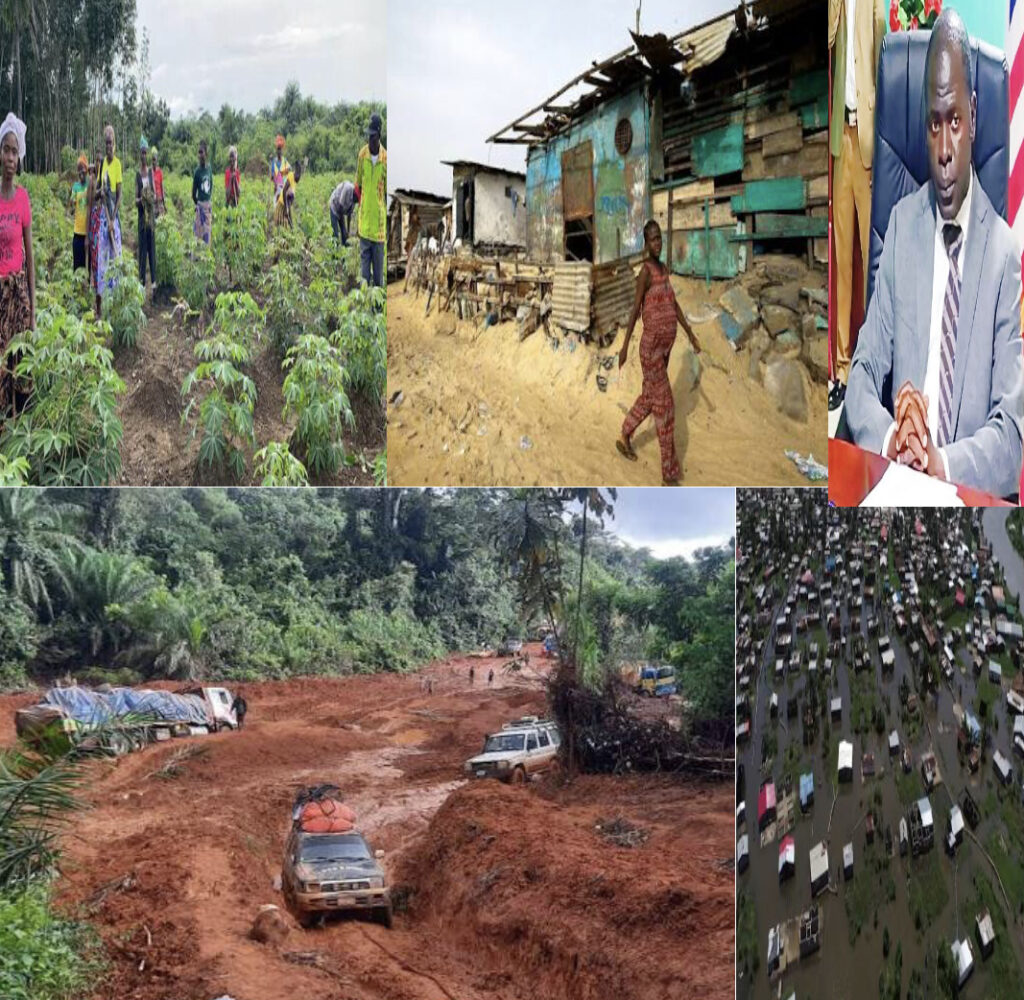
At a news conference on Thursday, the Environmental Protection Agency (EPA) issued a stark national warning, stating that climate change is no longer a future concern but a current force actively degrading Liberia’s development foundations. EPA Executive Director Emmanuel Urey Yarkpawolo stated the country’s foundational seasonal rhythms have collapsed, with heavy rains and flooding now common in the traditional dry season, crippling planning and resilience.
“Today, that dependable rhythm no longer exists,” Yarkpawolo said, noting that the disruptive weather is directly endangering agriculture, infrastructure, coastal communities, and long-term national development.
The agency cited the abnormal rainfall of 2025 and early 2026, which displaced thousands and destroyed homes, as clear evidence of this dangerous new normal impacting Monrovia and beyond.
These events are rooted in global climate change, where rising temperatures increase atmospheric moisture, leading to heavier, off-season rains and stronger storms for Liberia. The first major impact is on coastal existence. With over 560 kilometers of coastline, nearly 60% of Liberia’s population lives at risk from the projected sea-level rise of up to one meter by 2100.
The second is on food production. Unpredictable rainfall is devastating Liberia’s rain-dependent agriculture, causing seeds to rot, crops to fail, and harvests to decline, thereby raising food prices and insecurity. Compounding these global threats, local environmental degradation—like deforestation and wetland destruction—is weakening Liberia’s natural defenses against flooding and extreme weather.
The tangible development impacts are already severe, manifesting as delayed road projects, skyrocketing maintenance costs, washed-away feeder roads, and intensified urban flooding. In response, the government is deploying a financial and scientific counter-strategy, starting with a US$10 million grant secured for climate-resilient agriculture and improved water management for smallholder farmers.
A parallel US$10 million project is establishing a modern meteorological center to provide accurate early warnings and guide farmers’ planting decisions in the shifting climate. Through international partnerships, advanced science is being applied to adapt staple crops, with work underway to reduce rice production time from 120 to 80 days to match shorter growing seasons.
Domestically, the EPA is strengthening enforcement of environmental laws, regulating polluting industries, and protecting forests, aligning these actions with the national ARREST Agenda for resilience.
Director Yarkpawolo emphasized that government action alone is insufficient, calling on every citizen to protect natural buffers, maintain drainage systems, and adopt sustainable practices.
He ended with a grave reminder that climate change is already damaging daily life, urging a collective national effort to build resilience and secure Liberia’s future from this escalating crisis. Weather patterns in Liberia are traditionally divided into two distinct tropical seasons, but recent shifts driven by climate change have introduced significant irregularities.
Rainy Season (May – October): Characterized by the West African Monsoon, this period features heavy, torrential rainfall, particularly along the coast. Monrovia is one of the wettest capital cities in the world, receiving up to 5,000 mm of rain annually.
Dry Season (November – April): Historically a period of reduced rainfall and lower humidity. Between December and February, dry, dust-laden winds blow from the Sahara, reducing visibility and cooling temperatures at night, particularly in the northern highlands.
March and April are typically the hottest months, with temperatures reaching up to 32°C (90°F) or higher.
Early 2026 highlights a “troubling shift” in these established patterns. Rain increasingly occurs during the traditional dry season, disrupting farming schedules and crop harvesting. Rainfall has become more intense and short-lived in some areas, leading to flash floods even outside the peak monsoon months.
Mean annual temperatures have increased by approximately 0.8°C since 1960. Warming is occurring more rapidly in the northern interior regions compared to coastal zones. Humidity remains high (90%–100%) during the rainy season. A phenomenon known as “middries” often occurs in August, where there is a brief relative decrease in rainfall despite heavy cloud cover.