


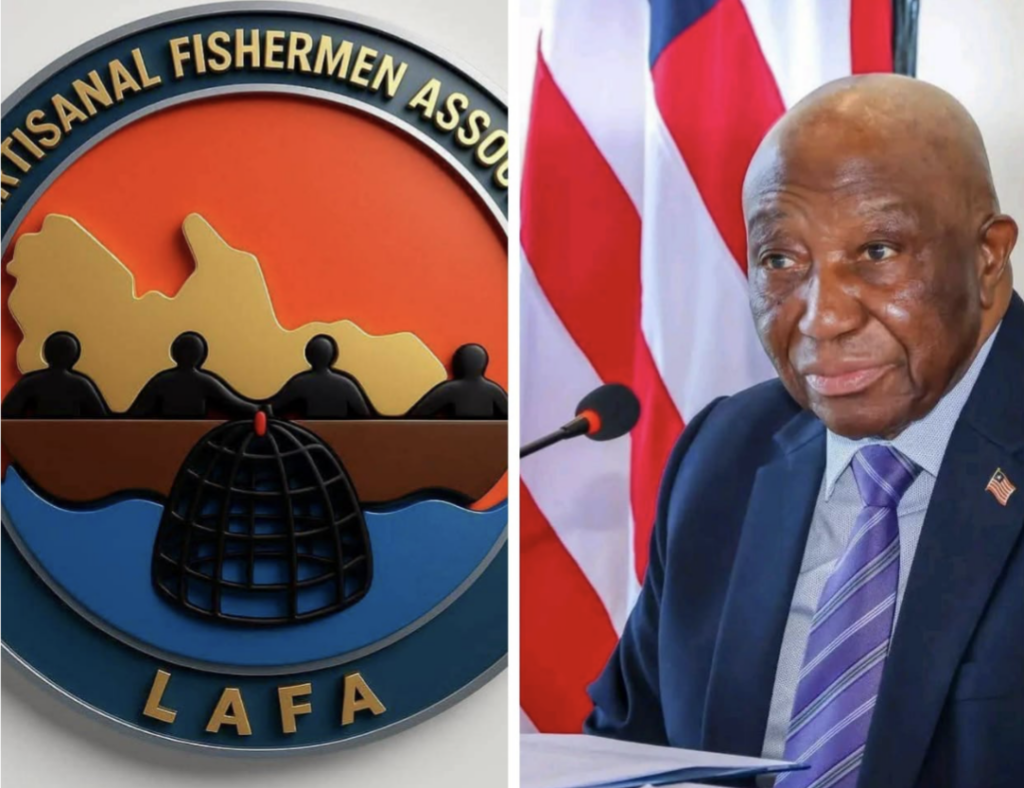
The Government of Liberia has announced a reduction in canoe license fees, a move widely seen as a strong policy signal to support the country’s artisanal fisheries sector and improve the livelihoods of small-scale fishers. The decision is expected to ease the financial burden on artisanal fishers who have long struggled with rising operational costs while trying to meet regulatory requirements.
Authorities say the reduction will encourage more fishers to formally register their canoes, promote legal and responsible fishing practices, and strengthen sustainable fisheries management across the country.
Artisanal fishing plays a critical role in Liberia’s food security, employment creation, and the economic stability of coastal and inland fishing communities.
The government’s action underscores its recognition of the sector’s importance to national development.
The Liberia Artisanal Fishermen Association (LAFA) has commended the National Fisheries and Aquaculture Authority (NaFAA) for the initiative, particularly praising Director General J. Cyrus Saygbe Sr. for what it described as a timely and principled response to concerns raised by fishers.
LAFA noted that the decision reflects a leadership style based on consultation, accountability, and respect for fishing communities, and has helped restore confidence and strengthen trust between regulators and fishers. In a mandatory message to canoe owners and operators, LAFA called on all fishers to immediately register their canoes and fully comply with licensing and fisheries regulations.
The association stressed that the reduction in fees is a privilege achieved through advocacy and dialogue and must be respected through discipline and compliance.
“LAFA will not tolerate or defend any form of violation, including the operation of unregistered canoes or the disregard of fisheries laws,” the association said, warning that non-compliance undermines the credibility and future progress of the artisanal fisheries sector.
LAFA described the policy reform as both an opportunity and a responsibility, urging fishers to work in unity and partnership with the government to secure sustainable livelihoods, protect marine resources, and build a stronger future for the coming generations.
The association also extended its appreciation to President Joseph Nyuma Boakai, thanking him for his leadership and for easing the economic burden on fishers and their families through the policy decision.