

-As President Boakai Delivers 3rd SONA Today
By Jerromie S. Walters & Vaye Abel Lepolu
Monrovia – President Joseph Nyuma Boakai will today deliver his third State of the Nation Address (SONA) to the Legislature, outlining his administration’s agenda and reporting on the nation’s condition as mandated by the Constitution. The address comes amid a complex backdrop: while international institutions project modest economic growth for Liberia, driven by mining, agriculture, and a new IMF credit facility, citizens remain deeply concerned about the high cost of living, unemployment, and the poor state of essential services.
Article 58 of Liberia’s Constitution requires the President to present the administration’s legislative program and a report on the Republic on the fourth working Monday of January. Today’s address is expected to detail the nation’s fiscal health, including government expenditure and income. The economic outlook for 2026 is cautiously positive, with GDP growth projected near 5.4%.
This growth is underpinned by the International Monetary Fund’s Extended Credit Facility (ECF), which supports structural reforms, governance improvements, and investment. However, the World Bank notes that this positive trajectory depends on successful reforms and remains vulnerable to global economic shifts. Despite these macroeconomic indicators, many Liberians express dissatisfaction with daily hardships.
The soaring prices of basic commodities, chronic unemployment, and the inadequate state of electricity, roads, education, and healthcare dominate public discourse. Although the government has made progress in infrastructure and international relations, citizens and analysts alike are calling for today’s speech to move beyond generalities. There is a strong demand for clear, actionable plans that directly tackle job creation, infrastructure development, and the reliable provision of basic utilities like water and electricity.
What Liberians Expect:
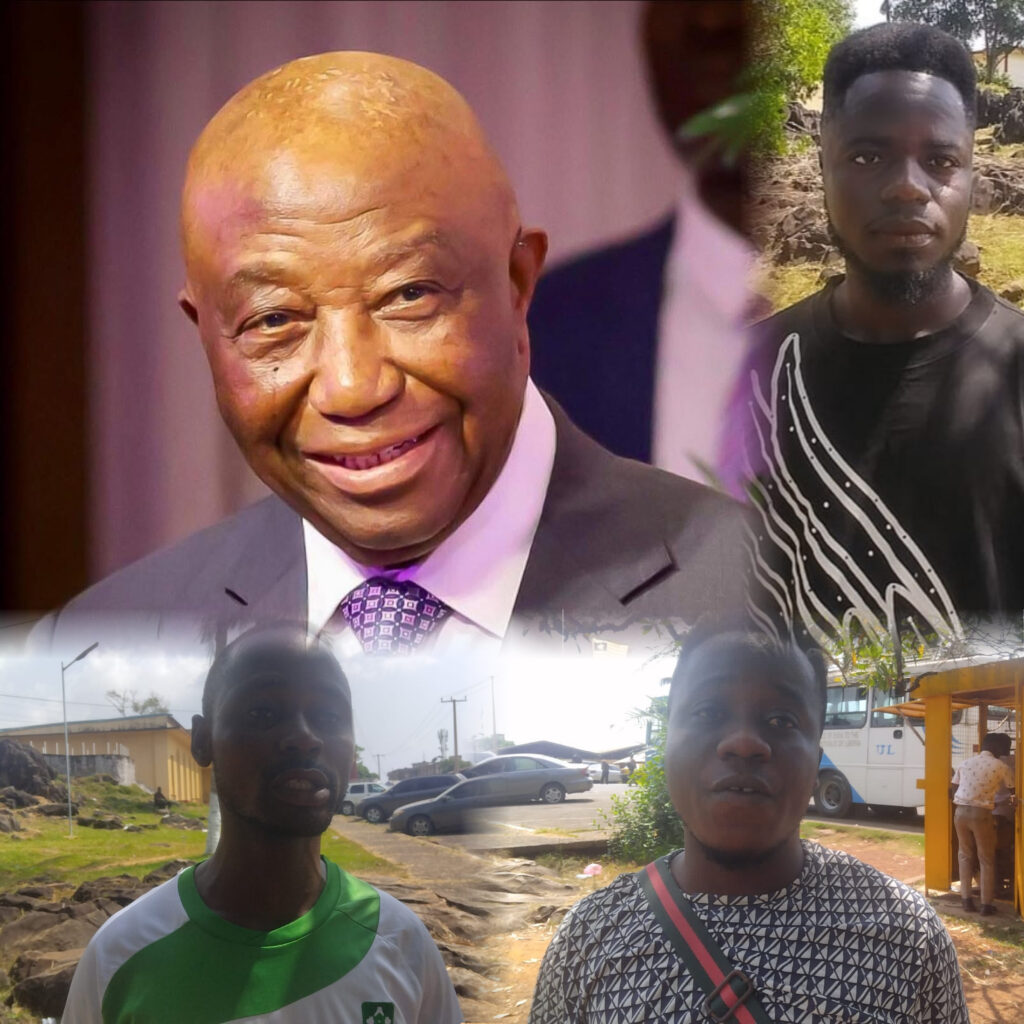
Liberians anticipate concrete commitments to accountability, practical solutions, and measurable improvements in their daily lives. A son of Grand Cape Mount County, Muhammad Gray articulated a widespread expectation for decisive action. “President Boakai needs to be conscious about bringing the change Liberians truly need,” Gray stated.
Gray emphasized that while some development is visible, progress remains insufficient for the majority. He specifically urged the President to address the civil service salary harmonization policy, which continues to adversely affect many government workers.
“The issues of salary increases and the harmonization policy affecting civil servants must be addressed on Monday,” Gray said.
He further called for presidential action against underperforming ministers and directors. “Liberians voted for services, and we need those services delivered,” Gray added. Gray also stressed the critical need for healthcare reform. He expects the President to outline plans for hiring more professional health workers and upgrading facilities nationwide.
“We have many health facilities that lack nurses and doctors. Our people need to be healthy to hustle,” Gray asserted, noting the severe shortage of medical professionals in rural areas. In Monrovia, University of Liberia student Kehwon P. Tokpak expressed skepticism about the address. Tokpak said he anticipates no new direction, arguing that previous speeches have recycled themes without yielding tangible outcomes.
“Nothing is really changing. The President keeps repeating the same messages while the living conditions of librarians, teachers, and young people remain the same,” Tokpak criticized. He pointed to unfulfilled campaign promises, such as the deployment of promised heavy-duty equipment, or “yellow machines.” Tokpak acknowledged some visible progress in certain counties but argued it falls short of the national “rescue” agenda.
“Development in a few areas is not enough. The President came on a rescue agenda, and that rescue must be felt by ordinary people,” he stated.
Meanwhile, Bushroad Community resident Fredrick Gongar urged the President to use the platform to announce specific economic measures aimed at reducing hardship and stabilizing the nation’s finances.
Gongar emphasized the need for transparency regarding government negotiations and infrastructure agreements. “For the economy to improve, the President should tell us what agreements have been made and what actions are already taking place,” he said. He raised urgent concerns about road infrastructure, warning that poor connectivity isolates rural communities and stifles economic activity. Gongar demanded clear updates on the status of major road and bridge projects.
On education, Gongar highlighted deteriorating school facilities where students learn under difficult conditions. He echoed concerns about the healthcare sector, particularly rural clinics that remain critically understaffed. “Some health centers have only one worker handling everything. The government must explain what it has done and what it plans to do to employ more health workers,” Gongar emphasized.
The occasion:
The 2026 State of the Nation Address (SONA) will be delivered in the courtyard of the Capitol Building, due to the fire damage to the traditional venue, the Joint Chambers. The relocation ensures the constitutional mandate for the President’s annual report is fulfilled.
At the Ministry of Information’s regular press briefing last week Thursday, Mr. Robert Benjamin Haynes, Director of Press for the House of Representatives, reaffirmed the Legislature’s commitment to upholding Article 58 of the 1986 Constitution.
Access to the venue will be strictly controlled. Only individuals with official invitations or pre-issued access passes will be admitted—a rule applying equally to members of the 55th Legislature, dignitaries, and the media. Mr. Haynes urged all attendees, including journalists and the public, to fully cooperate with security and protocol personnel. He emphasized that the open setting necessitates heightened vigilance to ensure the safety of the President, the First Lady, dignitaries, and all citizens present.
For citizens unable to attend, the address will be broadcast live across the nation by the Liberia Broadcasting System (ELBC) and streamed on multiple media platforms, enabling Liberians at home and abroad to follow the proceedings. The official program will commence at 2:30 p.m. with the ushering of guests and dignitaries. The arrival of the Diplomatic Corps, international partners, former heads of state, the Chief Justice, and Associate Justices will be announced by the Chief of Protocol.
President Boakai is expected to deliver his Annual Message promptly at 4:00 p.m., outlining the administration’s achievements, addressing national challenges, and presenting policy priorities for the coming year. The Legislature has designated January 26 as a special working day. Legislative staff are encouraged to work from home and follow the address via radio broadcast.
Normal legislative business will resume on Tuesday, January 27. In conclusion, Mr. Haynes assured the public of the Legislature’s full preparedness to host the President and called on all stakeholders to contribute to a peaceful, secure, and successful State of the Nation Address.
Boakai’s Second SONA:
In his second annual message delivered to the 55th Legislature, President Joseph Nyuma Boakai, Sr. emphasized a vision of unity, progress, and inclusive development for Liberia. Titled “Rescue to Development: Implementing the ARREST Agenda,” the address highlighted the government’s achievements over the past year and outlined ambitious plans for the future.
Reflecting on the resilience of the Liberian people, President Boakai expressed gratitude for the trust placed in him by the citizens and reiterated his commitment to fostering peace and stability in the nation. “Your dedication to keeping the peace reflects our conviction that progress must be grounded in unity and national solidarity,” he stated, acknowledging the challenges faced during a year marked by both progress and adversity.
The President’s address came at a critical juncture, a year after a significant transition in leadership that captivated the democratic world. He underscored the importance of cooperation among all branches of government, calling for transparency and mutual respect to advance the nation’s goals.
Legislative Agenda and Economic Outlook
President Boakai commended the Legislature for passing key legislation, including a $41.3 million spending bill aimed at addressing urgent needs across various sectors. He urged lawmakers to prioritize outstanding proposals, such as the Presidential Transition Bill and the Local Government Bill, to facilitate development and empower the youth through initiatives like the Liberia Youth Service Program.
The President provided an optimistic economic outlook, citing a revised GDP growth rate of 5.1% for 2024, driven by strategic investments in mining, agriculture, and infrastructure. He noted significant achievements in reducing inflation and improving international reserves, while also highlighting the government’s commitment to enhancing financial governance and expanding access to finance for small and medium enterprises.
Addressing social issues, President Boakai emphasized the importance of gender equality in governance, revealing that women hold 39% of ministerial positions and 40% of superintendent appointments. However, this has dropped to less than 30%. He announced initiatives aimed at empowering women and protecting children, including the launch of a National 116 GBV Call Center and a $1.8 million allocation for the Liberia Women Empowerment Project.
The President also outlined plans to enhance education and health services, committing to improved access to quality healthcare and educational resources for all Liberians. Initiatives such as the “One Child, One Chair” program and substantial investments in public health infrastructure were highlighted as key steps toward addressing historical inequities.
In an era of climate change challenges, President Boakai reaffirmed Liberia’s commitment to environmental sustainability, detailing efforts to establish coastal defenses and enhance climate reporting. He also announced significant progress in the telecommunications sector, with plans to expand digital infrastructure and promote financial inclusion through innovative technologies.
As the address concluded, President Boakai called for national unity and collaboration across political divides, urging all Liberians to work together for a prosperous future. “Let us with compassion continue to stand united as we move forward, hand in hand, toward a prosperous and inclusive future for our nation,” he implored.
With a focus on the ARREST Agenda for Inclusive Development, the President’s message resonated with a vision of hope and resilience, setting a tone of optimism for the year ahead as Liberia strives for progress and stability.
Efforts:
The Joseph Nyuma Boakai Government records Liberia’s highest budget, amounting in the tone of US$1.2 billion for 2026. The historic 2026 budget delivers massive funding increases to infrastructure, security, and energy while imposing steep cuts on the agriculture sector and key governance bodies. The spending plan was formally submitted to the National Legislature on Friday, November 7, 2025.
A review of the expenditure lines reveals the Ministry of Public Works emerging as the biggest winner. Its allocation has skyrocketed from US$41.3 million in 2025 to a staggering US$114.3 million in 2026, a 177% increase intended to accelerate road construction and national rehabilitation projects.
Similarly, the Liberia Electricity Corporation (LEC) received a monumental boost, with its budget leaping from US$4.8 million to US$50 million, a more than tenfold increase that signals a major push to resolve the nation’s perennial power crisis. The security sector is another major beneficiary.
The Ministry of Justice saw its budget jump to US$62.2 million from US$43.3 million, while the National Security Agency was allocated US$22.2 million, up from US$13.9 million. The Liberia National Police and the Liberia Drug Enforcement Agency also received significant bumps, with the LDEA’s budget more than doubling to US$7.7 million. The Judiciary received an increased allocation of US$32.7 million, up from US$24.9 million, reinforcing the third branch of government.
Conversely, several critical institutions face severe budget reductions. The most dramatic cut is to the Civil Service Agency (CSA), which saw its allocation slashed by over two-thirds, from US$8.9 million to just US$2.9 million. The Ministry of Agriculture also faced a surprising reduction, with its budget falling from US$10.6 million to US$9.5 million.