

By: Sampat JMB Kpakimah
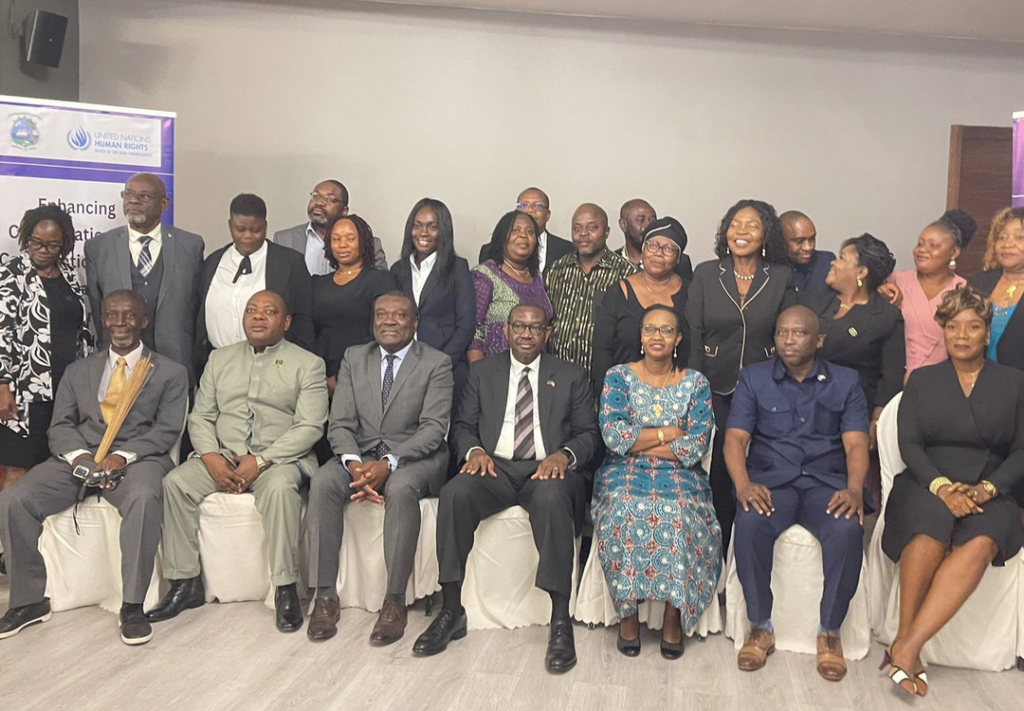
MONROVIA – As Liberia moves decisively to establish special courts addressing its wartime past and systemic corruption, a cohort of 35 national lawyers has completed specialized training to equip them for the historic judicial task ahead.
The two-day intensive workshop, which concluded Thursday, January 29, was designed to strengthen the capacity of Liberian legal professionals on transitional justice, international human rights law, and the prosecution of complex crimes. The training comes at a pivotal moment, with the establishment of a War and Economic Crimes Court (WECC) and a National Anti-Corruption Court (NACC) advancing in the country.
Organized by the UN Human Rights Office (OHCHR) in partnership with the Liberian National Bar Association (LNBA), the Association of Female Lawyers of Liberia (AFELL), and the Organization for Women and Children (ORWOCH), the program underscored a critical need: ensuring Liberian lawyers are prepared to lead and participate effectively in these groundbreaking processes.
“As the establishment of these courts moves forward, it is essential to ensure that national lawyers are equipped to contribute meaningfully to their design, implementation, and operation in alignment with international human rights norms,” said Christian Mukosa, OHCHR Representative in Liberia. “This includes supporting victims’ participation and upholding due process and fair trial standards.”
High-level opening remarks from the Minister of Justice, the Judiciary, the UN Resident Coordinator, and leaders of legal institutions highlighted the government’s resolve to address impunity and the crucial role of a skilled national bar. The Minister of Justice affirmed the government’s dedication to “equipping our legal professionals with the tools, knowledge and support required to provide a judicial response… aligned with international legal standards.”
Notably, 20 of the 35 participating lawyers were women, emphasizing a focus on gender-responsive justice. A participating female lawyer stressed this priority: “We need to ensure the judicial mechanisms… are gender focused. This training equips us to provide a gendered justice response.”
The curriculum covered foundational principles of transitional justice, investigation and prosecution frameworks for international crimes, modes of liability, and specific modules on crimes against children and the gender dimensions of atrocity crimes. The aim was to foster a victim-centered approach to addressing gross human rights violations committed during Liberia’s civil conflicts.
“The strong commitment expressed by the lawyers demonstrates the necessity of equipping them with the skills needed to represent victims before the future WECC and NACC,” added Mr. Mukosa.
This workshop forms part of OHCHR’s broader project to support inclusive and victim-centered transitional justice processes in Liberia, signaling a concerted effort to build domestic expertise for the nation’s long-awaited reckoning with its past.