

By Vaye Abel Lepolu
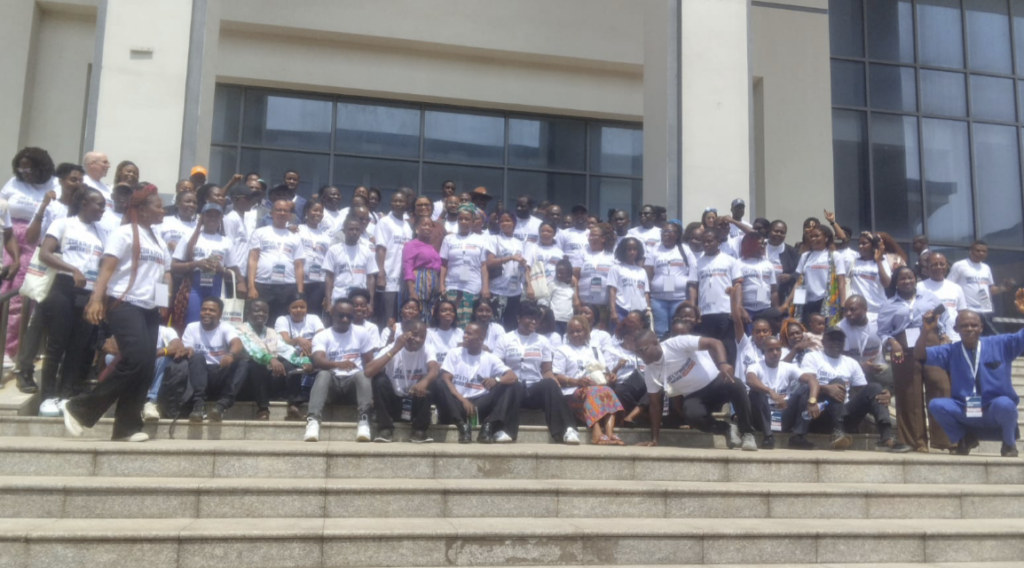
Liberia has reached a historic milestone in its long and difficult journey toward justice and national healing, following the successful conclusion of a National Conference on Transitional Justice, which brought together representatives from all 15 counties for the first time in the country’s post-war history.
The landmark gathering united civil society organizations, survivors of war, youth groups, women’s movements, traditional leaders, legal experts, government officials, and international partners under a single national platform with one shared goal,to advance justice, accountability, reparations, and reconciliation for Liberia.
Under the theme ” call to Action on Transition Justice For Liberia Now”
However, the coordinator for LCSIT Mr. Seidu Swaray described the conference as a foundational moment in the evolution of transitional justice activism in the country a movement that has passed through many phases over the years but has now entered a new, more unified and strategic stage.
“Today, history has been made. A foundation has been laid that will shape Liberia’s transitional justice process for the next 10 to 15 years,” one of the coordinators stated. “For the first time, voices from all 15 counties have come together in unison, speaking with one voice for justice.” he said
In further ,the conference marks a major shift from fragmented advocacy efforts toward a coordinated national movement. Over the past years, town hall meetings were held across the counties, culminating in this national convergence that produced a unified platform of recommendations and outcomes.
Participants emphasized that the process is not only about the establishment of a War and Economic Crimes Court, but about the full implementation of transitional justice mechanisms, including:
Truth-telling and historical accountability
Reparations for victims and survivors
Trauma-informed justice processes
Community healing and reconciliation
Institutional reforms
Economic justice and social repair
The conference also highlighted the importance of inclusivity, ensuring that women, youth, persons with disabilities, survivors, rural communities, and marginalized groups are fully represented in the justice process.
Meanwhile, the central outcome of the discussions was a renewed national focus on reparations, as recommended by Liberia’s Truth and Reconciliation Commission (TRC). Participants stressed that reparations are not optional, but a state responsibility, and must include medical support, psychosocial services, economic empowerment, education, and livelihood restoration for survivors and affected communities.
Civil society leaders across Liberia called for reparations to be integrated into national development planning and government budgeting processes through existing ministries and agencies, rather than treated as a distant or external program.
The conference outcomes will directly inform the design, structure, and operations of the proposed War and Economic Crimes Court. Organizers confirmed that the recommendations from the conference will be compiled into a national policy document and formally submitted to relevant national institutions, including the Office responsible for the establishment of the court.
The approach, they emphasized, will reflect Liberian realities, combining international best practices with local contexts, traditions, and community needs.
“This process will influence how the court is designed, how it operates, and how it serves the people. It will not be a foreign model imposed on Liberia, but a Liberian justice model shaped by Liberian voices,” an organizer said.
Speakers cllr .Tiawon Gongloe repeatedly stressed that justice in Liberia must go beyond legal prosecution alone. Transitional justice, they noted, must also include community-level justice, everyday accountability, ethical leadership, civic responsibility, and cultural transformation.
The hosting of the conference is a good path in towards the country Justice system and it citizens to be educated to push Justice for all Liberia and mostly especially people that has been victimized during the war.
Cllr. Gongloe highlighted the role of young people, women’s groups, market women, traditional authorities, educators, and community leaders as justice champions, responsible for spreading awareness, promoting ethical values, and modeling justice in daily life.
The conference concluded with a strong message of national ownership, emphasizing that transitional justice in Liberia must be led by Liberians for Liberians.
“This is a Liberian process. Without the voices of survivors and communities, justice will never be complete. Every person here matters. Every voice matters. Every story matters,” a closing statement declared.
All the CSO’s organization announced that the final consolidated recommendations from the conference will be shared with the public and the media in the coming weeks, forming the basis for sustained national advocacy, policy engagement, and institutional reform.
As Liberia continues its post-war recovery journey, the conference stands as a defining moment ,not just as an event, but as the foundation of a long-term national movement for justice, accountability, healing, and reconciliation.