

-Through Partner Coordination Platform to Align Development Efforts with AAID Agenda
By Jerromie S. Walters
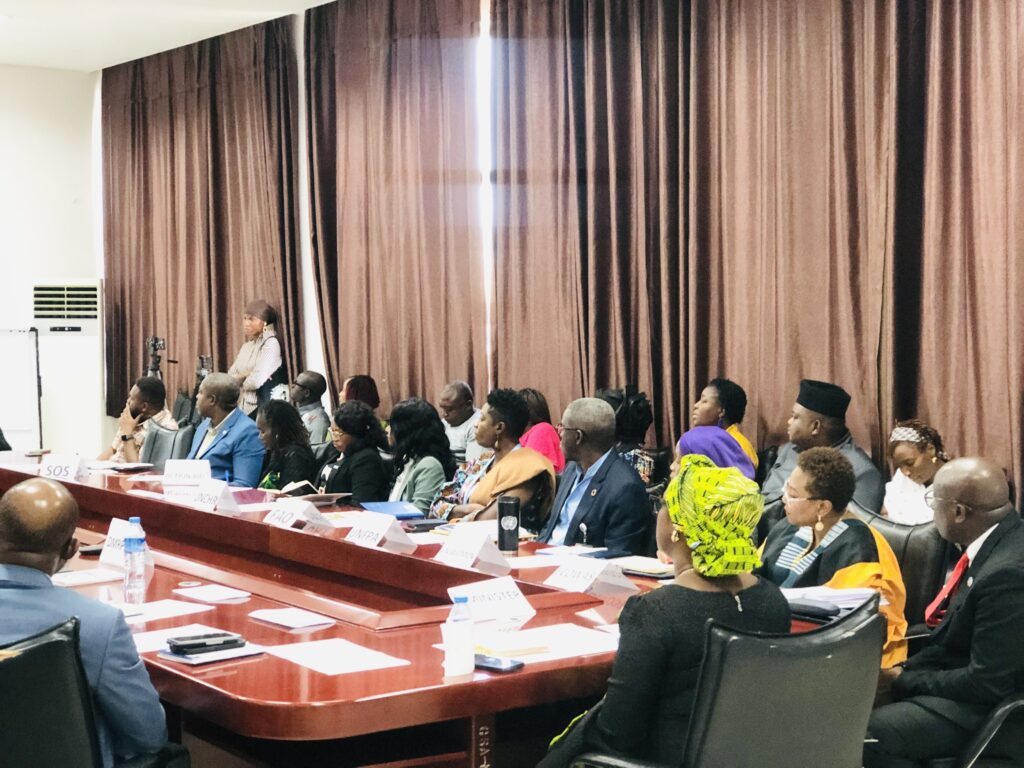
The Ministry of Gender, Children, and Social Protection (MGCSP) convened its First Partner Coordination Meeting on Tuesday, February 17, 2026, bringing together international and development partners to strengthen collaboration on gender equality, child protection, and social welfare programs across Liberia.
Held at the Ministry’s 3rd Floor Conference Room at the EJS Ministerial Complex, the gathering fulfilled a commitment to establish a structured engagement framework aimed at enhancing collective impact and accountability within the sector. In her opening remarks, Hon. Gbeme Horace-Kollie, Minister of MGCSP, welcomed attendees and outlined the objectives of the new Partner Coordination Platform.
She emphasized that the platform would serve as a strategic mechanism to ensure coherent collaboration between government institutions and development partners, moving beyond mere discussion to achieve measurable results. Following the Minister’s comments, the meeting turned to its central focus: aligning partner interventions with Liberia’s national development framework, the ARREST Agenda for Inclusive Development (AAID) 2025-2029.
The Ministry delivered a comprehensive presentation on the AAID. The presentation specifically highlighted Strategic Policy 22, which focuses on Inclusive Social Development, and detailed Programs 47 through 50 under Pillar Six of the Agenda. These programs form the core of the Ministry’s mandate and address critical areas of human capital development, social inclusion, and good governance.
To support effective monitoring and accountability, the Ministry introduced a standardized reporting template designed to harmonize data collection across all partner organizations. This tool aims to ensure consistent reporting practices and enable results-based decision-making to strengthen service delivery nationwide.
Discussions on coordination modalities occupied a significant portion of the meeting, with participants engaging in productive dialogue on several practical matters. Partners and Ministry officials agreed to establish clear timelines for submitting program updates using the new standardized tools. They also deliberated on the frequency of future coordination meetings, seeking to balance the need for regular engagement with the operational realities of partner organizations.
Additionally, participants committed to designating focal persons within both the Ministry and partner entities to streamline communication and maintain clear lines of accountability. Throughout these discussions, the Ministry emphasized that the success of the AAID’s ambitious goals depends fundamentally on four key elements: more collaboration, efficient coordination, effective communication, and timely reporting.
MGCSP-AAID Programs, Targets, and Interventions:
The Ministry of Gender, Children, and Social Protection has outlined a series of programs, targets, and interventions under Strategic Policy 22, Inclusive Social Development, as part of the AAID. The objective of Program 47 (Inclusive Policies and Systems), considers the removal of barriers to inclusion and participation for vulnerable populations by strengthening and enforcing policies, laws, and regulations, and increasing awareness of gender issues.
Key targets by 2029 include achieving coverage of child protection services in all counties, ending child marriages, increasing women’s representation in Government leadership positions from 11% to 30%, and promoting equity in Parliament representation. Key interventions involve supporting systematic legal and policy review and reform with a focus on discriminatory laws, strengthening institutional capacity for inclusive policy enforcement, and enhancing women’s political participation.
It also considers undertaking inclusive governance reforms, strengthening and enforcing child protection laws, and strengthening community engagement to promote positive discrimination towards inclusion.
Program 48 (Sexual and Gender-Based Violence) aims to strengthen preventive measures and coordination mechanisms to foster accountability, shift social norms, and enhance support services in addressing Sexual and Gender-Based Violence (SGBV). Key targets by 2029 include reducing the incidence of SGBV by 50% and increasing access to SGBV services by 30%.
Key interventions include improving data quality and systems on GBV, strengthening and enforcing SGBV legal frameworks—including the eradication of FGM and other harmful traditional practices—strengthening community engagement and social behavior change, expanding SGBV prevention and survivor support services, improving the inter-agency coordination mechanism and implementing the GBV accountability framework nationwide, and enhancing coordination to improve GBV response services.
The objective of Program 49 (Inclusive Integrated Social Protection) and Welfare is to increase access for women and vulnerable groups—including persons with disabilities, children, girls, and youth—to quality regular and special education, ensure their basic human rights and access to a dignified quality of life, and improve the safety and welfare of children and the elderly. Key targets by 2029 include increasing the participation of girls in empowerment and leadership projects by 30%, ensuring that 80% of women and vulnerable groups complete digital literacy training.
This program also endeavors to increase child protection and welfare services to reach 200,000 children, and provide cash transfers for economic empowerment to 16,000 members of vulnerable groups. Key interventions involve enhancing girls’ empowerment and leadership development, strengthening and expanding child protection services, and providing social cash transfers for economic empowerment.
Program 50 (Economic Empowerment of Women and Vulnerable Groups) seeks to increase access for women and vulnerable groups to productive resources, business services, and opportunities to improve their economic status and well-being. Key targets by 2029 include providing support to 1,500 children with special needs, increasing the capacity and leadership of women in climate-resilient eco-tourism services, and supporting an increase in financial inclusion coverage to 75% for women, persons with disabilities, and vulnerable groups.
Key interventions include developing women’s productive capacity for climate-smart agribusiness and entrepreneurship, integrating climate-resilient and ecological practices in agriculture, energy, and alternative livelihoods, providing support to veterans’ agribusiness production, developing the productive capacity of persons with disabilities for agribusiness, and developing veterans’ productive capacity for agribusiness and entrepreneurship.