


-Boakai Urged to Intervene in LNP Ex-Spokesperson’s Exit
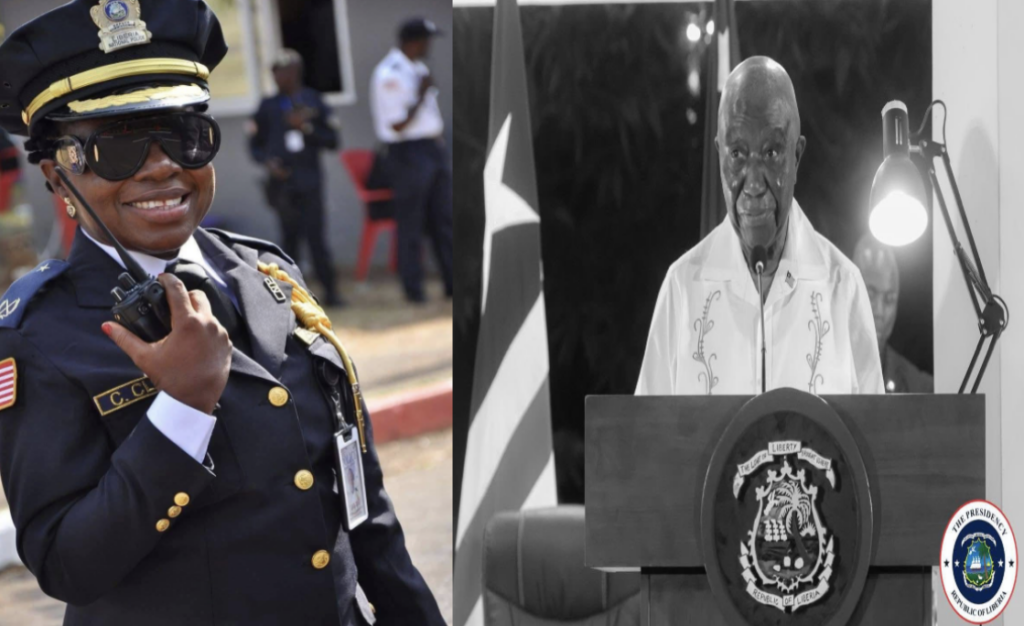
By Jerromie S. Walters
Monrovia, Liberia – February 2026 – A controversy is engulfing the Liberia National Police (LNP) following the sudden relief and transfer of its first female police spokesperson, Deputy Commissioner of Police (DCP) Cecelia G. Clarke. The move by Police Inspector General Gregory Coleman has been met with sharp criticism from activists and raised serious questions about due process, adherence to legal statutes, and the treatment of women in Liberia’s security sector.
Prominent Liberian activist and former student leader Martin K. N. Kollie has called for President Joseph Boakai to intervene, arguing that DCP Clarke’s rights were egregiously violated and demanding her immediate reinstatement pending an independent investigation.
At the heart of the dispute is the legality of the transfer itself. According to documents provided by Kollie, DCP Clarke was appointed and commissioned as Deputy Commissioner and Head of the Press and Public Division on May 1, 2024—a historic moment marking the first time a woman held the post in the LNP’s 68-year history. She served in the role for nearly two years until February 17, 2026, when, according to Kollie, she was relieved of her post “effective immediately” and reassigned on the sole instruction of IG Coleman.
Kollie contends that this unilateral action by the Inspector General is a direct violation of the Liberia National Police Act of 2016.
“Someone has to tell Police IG Gregory Coleman that this decision was wrong. Permit us to do so with all of our facts,” Kollie stated.
The legal argument hinges on Section 22.88(b)(iv) of the Police Act, which explicitly outlines the procedure for transferring officers. The law stipulates that for commissioned officers**—a category that includes Deputy Commissioner Clarke—the determination to transfer “shall be made by the majority of the Directorate.” In contrast, the IG has the sole power to transfer only Non-Commissioned Officers.
Kollie’s analysis points out that there is no evidence, nor was any reference made in the transfer letter, to a decision by the Directorate—the collective body of the LNP’s top leadership. As defined in Section 22.75 of the same act, the Directorate comprises the Inspector General and the Deputy Inspectors General for Administration, Operations, Training, and Crime Services. The absence of a majority decision, Kollie argues, renders the transfer procedurally null and void.
Further complicating the matter is the application of the Civil Service Agency Act. Citing Section 66.14 of the 1972 Executive Law, Kollie argues that law enforcement officers are considered civil servants, making them subject to the 2012 Civil Service Standing Order. The sudden and immediate nature of DCP Clarke’s relief, he asserts, is a “flagrant violation” of Chapter 4, Section 2.2 of these standing orders, which govern proper administrative procedures for such actions.
DCP Clarke’s departure was formalized in a resignation letter, effective the same day, February 17. In it, she cited nearly two years of “persistent workplace discrimination, operational constraints, limited institutional support, structural barriers affecting the performance of my office, and difficulties in team collaboration” as the reasons for her decision to step down from the high-profile role.
Kollie’s statement referenced a Facebook post from DCP Clarke on December 21, 2025, where she wrote: “The LNP has one spokesperson and that mandate is my office to uphold. Stop the undermining, misrepresentation, and stereotyping that you are noted for. My silence is not stupidity.”
This public cry for help, Kollie argues, was ignored by IG Coleman and internal mechanisms, setting a dangerous precedent. “This discourages female participation in the security force, and could be interpreted as discrimination amid a male-dominated national force,” Kollie warned. According to LNP statistics cited in the appeal, the force is composed of 3,568 males (80.5%) and just 864 females (19.5%). The manner of DCP Clarke’s exit, he contends, widens this gap and tarnishes the LNP’s image.
While acknowledging that the newly appointed spokesperson, Sam Collins, is a capable individual, Kollie insists the focus must remain on the process. “The circumstances leading to the relieve and sudden transfer of Clarke is not just a cause for national concern, but it calls into question the reputation of the police force. Hence, we are calling for an independent investigation and for Pres. Boakai to intervene and reinstate madam Cecelia Clarke.”
In her resignation, Mrs. Clark framed her departure as a decision reached after “careful reflection.” In her statement, she detailed the challenges that have marked her tenure, including “persistent workplace discrimination, operational constraints, limited institutional support, structural barriers affecting the performance of my office, and difficulties in team collaboration.”
Despite her efforts to address these issues internally while maintaining the highest standards of professionalism, Clarke stated that recent developments made it clear that resigning was “in the best interest of both myself and the institution.”
During her time as Police Spokesperson, Clarke was the public face of the LNP, tasked with strengthening public communication and institutional transparency.
She expressed pride in her service, noting it was a privilege to contribute to building trust between the public and the security sector. “As one of the few women to serve in such a visible leadership position within the LNP, I have embraced this responsibility with integrity, vision, and a deep sense of professionalism,” her statement read.
While stepping down from the spokesperson role, Clarke expressed gratitude for the opportunity to serve the Liberian people and thanked her colleagues and partners who supported the LNP’s work. In her parting message, she offered a hopeful vision for the institution’s future.
“I hope the institution will work to strengthen its system to promote fairness, inclusion, professionalism, and a healthy workplace for all officers, irrespective of gender, experience, or background,” she wrote.
DCP Clarke has pledged her full cooperation to ensure a smooth transition. She concluded her statement by wishing the Liberia National Police “continued success in fulfilling its mandate of serving and protecting the public.”