

By Jessica Cox
The Liberian government’s flagship “yellow machines” project, a significant investment aimed at improving rural roads and bolstering nationwide maintenance capacity, came under intense scrutiny this week as officials faced pointed questions from the press and public regarding its funding, management, and deployment.
At the Ministry of Information’s regular press briefing, Acting Minister Daniel D. Sando sought to address a growing list of concerns about the initiative, which involves the procurement of hundreds of pieces of heavy equipment. The questions, posed by reporters, reflected a public demand for greater transparency and clarity on a project that represents a major government expenditure.
A central point of contention was the project’s financing. Reporters pressed for details on the total cost and the funding mechanisms, questioning whether the procurement was funded directly by the government or through loans. In response, Minister Sando clarified that the project is “100 percent government-funded.” He explained that while the National Road Fund (NRF) has made an upfront payment to suppliers, this will be reimbursed by the government through a financing arrangement with the United Bank for Africa (UBA).
Minister Sando emphasized that the NRF’s involvement is consistent with its legal mandate, as revenue from petroleum levies is constitutionally designated for road maintenance and infrastructure. However, this explanation did not fully satisfy all queries. Journalists requested further details, including the total contract value, the repayment timeline, the applicable interest rate, and whether the legislature’s approval was sought or obtained. While the Minister maintained the arrangement is lawful, attendees suggested that full public disclosure of the financing agreement would help eliminate any residual doubts.
Questions also turned to the management and accountability structures once the machines are deployed to the counties. With a history of public assets falling into disrepair due to misuse or lack of maintenance, reporters sought assurances on operational responsibility.
Minister Sando outlined a new oversight structure, stating that President Boakai has established a national “yellow machine committee,” which will be decentralized to the county level. He noted that resident engineers from the Ministry of Public Works will be embedded within county teams to supervise the equipment. He described the system as a balance between centralized policy oversight and local implementation.
Nevertheless, journalists called for the publication of formal operational guidelines. They requested clear protocols outlining reporting lines, maintenance responsibilities, financial controls, and disciplinary measures for any misuse or negligence. Observers noted that for the initiative to succeed where others have failed, it must be underpinned by a structured management system and a dedicated funding stream for ongoing maintenance.
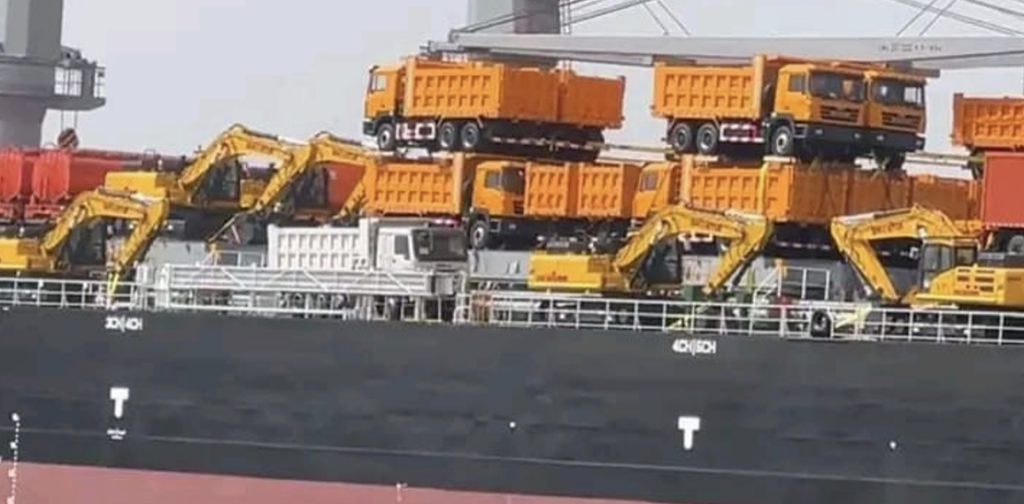
Another point of confusion centered on the exact number and type of machines acquired. During the briefing, different figures were mentioned, creating ambiguity. It was explained that a standard “set” of equipment consists of approximately 19 pieces, including graders, loaders, compactors, dump trucks, water trucks, and low-bed carriers, with an additional 20 pickups reportedly part of the overall procurement. Total figures of 285 and 305 machines were both cited during the session, a numerical inconsistency acknowledged by the Minister.
To resolve this, Minister Sando stated that the yellow machine committee would publish a detailed inventory online to clarify the final count and composition. Participants were told that this documentation could be released in time for the next ministerial briefing.
Finally, stakeholders sought clarity on the distribution plan. When asked about which counties would receive the equipment and when, the Minister indicated that allocations were based on assessed road infrastructure needs. According to the preliminary plan, larger counties like Nimba, Bong, and Lofa are slated to receive two sets of machines, while most other counties are expected to receive one set each.
A full delivery schedule and the names of designated receiving authorities in each county have not yet been formally released. The public was informed that these distribution timelines, along with the detailed inventory, would be shared once finalized by the committee. Specific details regarding warehousing locations and the asset tracking systems to be used before and after deployment were also not fully outlined during the briefing.