

By Sampat JMB Kpakimah
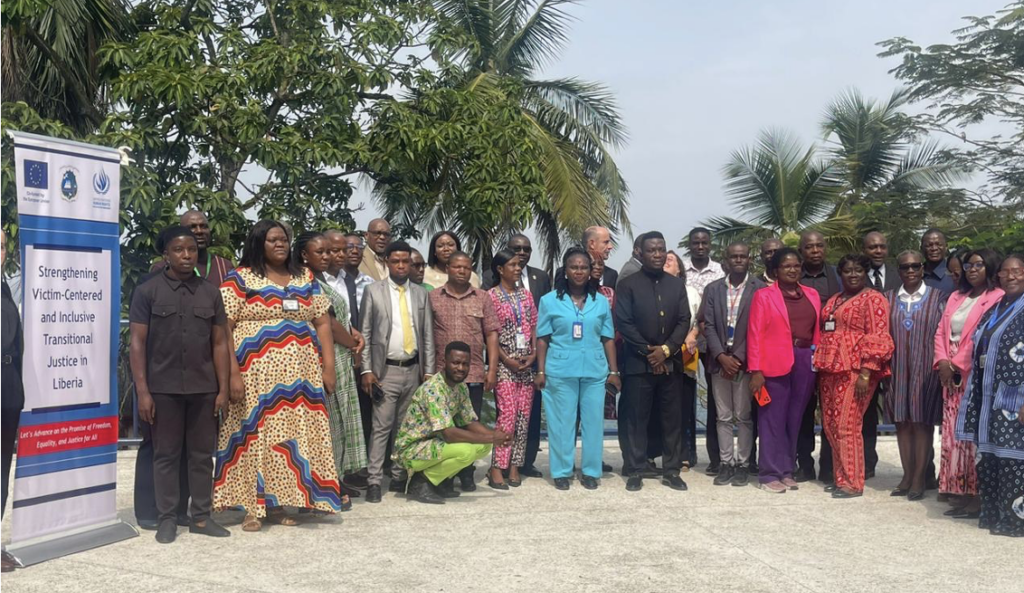
A one-day workshop held on Thursday in central Monrovia marked the official launch of the European Union–Office of the United Nations High Commissioner for Human Rights (EU–OHCHR) Project on Transitional Justice (2026–2027). The event aimed at strengthening Liberia’s legislative capacity to advance accountability and reconciliation.
It also represents the first time staff of the Liberian Legislature are undergoing formal training on transitional justice (TJ) norms and standards. According to the stakeholders, the initiative is designed to build the capacity of parliamentary staff, who play a critical role in reviewing and advising on bills, including those that will enshrine into law the statutes establishing the War and Economic Crimes Court (WECC) and the National Anti-Corruption Court (NACC), along with other transitional justice-related legislation.
Speaking at the program, the Country Representative of the Office of the United Nations High Commissioner for Human Rights (OHCHR), Christian Mukosa, underscored the significance of the joint project and reflected on achievements made in collaboration with the Liberian Government over the past year in promoting social justice.
He said the project seeks to ensure accountability, while promoting participation and inclusion of marginalized groups, particularly women and youth, in justice processes. Mr. Mukosa recalled President Joseph Nyuma Boakai’s January 26 address, emphasizing that lasting peace and reconciliation cannot be achieved without justice.
According to him, strengthening the rule of law remains essential not only for national stability but also for attracting donors and investors. “The government has made significant strides toward establishing functional justice initiatives,” he noted, adding that a credible justice system reassures development partners and builds public trust.
The OHCHR Representative highlighted the involvement of staff from both the House of Representatives and the Senate, describing them as key actors in supporting lawmakers. He stressed that legislative staff provide critical research and technical advice to their principals and must be well-versed in human rights standards and anti-corruption measures.
Their expertise, he said, is vital in ensuring that proposed laws meet international standards and effectively address Liberia’s transitional justice needs.
The workshop, he added, aims to strengthen their knowledge base to better support lawmakers in processing legislation related to accountability, human rights, and anti-corruption.
Mr. Mukosa further stressed the need for justice processes to remain inclusive and participatory. He noted that the United Nations continues to collaborate with civil society organizations (CSOs), academia, and the Independent National Commission on Human Rights (INCHR) to promote inclusivity.
He described workshops and open discussions on justice sector reform and cultural justice as essential platforms for encouraging participation and respectful debate. Participants were urged to actively engage and ensure that their recommendations contribute
Also speaking at the event, INCHR Chairperson Cllr. Dempster Brown highlighted the mandate and challenges of the Commission, particularly in the post-war period. He referenced the destruction and institutional setbacks the Commission faced following Liberia’s civil conflict and emphasized the importance of upholding international standards in its operations, in consultation with the United Nations.
Cllr. Brown clarified that while the Commission does not possess direct enforcement powers, it plays a vital role in defending and promoting human rights, monitoring government activities, and issuing independent opinions. He described the Commission as a gateway to democracy, political stability, and economic development, warning that the absence of strong human rights promotion and protection undermines peace and discourages investment.
Discussions at the workshop also focused on the close relationship between anti-corruption, human rights, and democracy. Speakers emphasized that corruption weakens democratic institutions and undermines sustainable development. Participants noted the importance of engaging representatives from Liberia’s anti-corruption institutions to deepen collaboration and strengthen accountability mechanisms.
Also addressing the gathering was Andy Brooks, Country Director of UNICEF, who emphasized the importance of institutional support for transitional justice processes, particularly as they relate to children. Mr. Brooks highlighted the need to strengthen civic education within Liberia’s school curriculum, noting that many Liberian children have a limited understanding of the country’s history, including the civil war and its consequences.
Reflecting on the war years, he recounted the grave violations suffered by children, including recruitment into armed groups and being forced to commit atrocities. He stressed the importance of accountability, particularly for those bearing the greatest responsibility for recruiting and exploiting children during the conflict.
The UNICEF Country Director expressed hope that the establishment of the War and Economic Crimes Court and related mechanisms will advance justice and support the work of the Ministry of Justice, while acknowledging that sustained resources will be required to ensure meaningful progress.
He concluded by reaffirming UNICEF’s commitment to supporting justice initiatives that protect children’s rights and promote long-term peace. The program brought together members of the Liberian legislative staff, government officials, representatives of the Liberia Anti-Corruption Commission (LACC), the Office of the Speaker, and partners from international organizations.