

-Convenes High-level Dialogue In New York
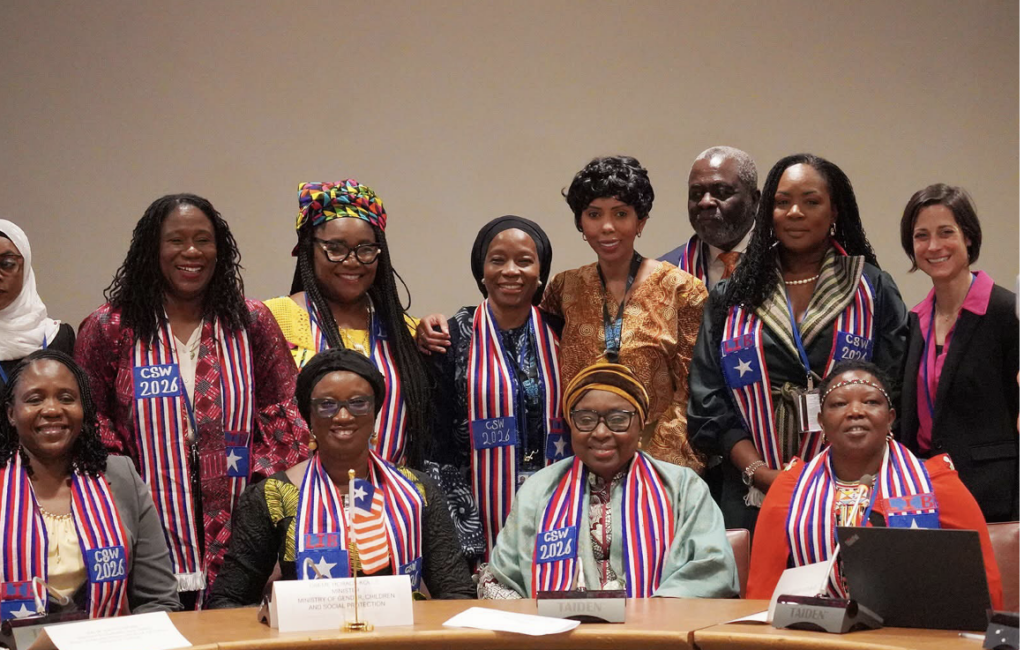
The Ministry of Gender, Children and Social Protection of Liberia, in collaboration with the Permanent Mission of Liberia to the United Nations, on Monday, March 16, 2026, convened a high-level dialogue on the margins of the 70th Session of the Commission on the Status of Women (CSW70) at the United Nations Headquarters in New York as part of its campaign to end the practice of Female Genetal Mutilation (FGM). Held under the theme “Accelerating the Path to Protection: A Regional Exchange on Ending Female Genital Mutilation (FGM)”, the dialogue brought together senior government officials from Africa, development partners, civil society leaders, and regional experts to exchange lessons on strengthening laws, enforcement, survivor protection, and community engagement to end the harmful practice of FGM.
Delivering opening remarks at the event, Liberia’s Minister of Gender, Children, and Social Protection, Hon. Gbeme Horace-Kollie, reaffirmed the Government of Liberia’s commitment to ending harmful traditional practices and highlighted ongoing efforts to advance the proposed Women and Girls Protection Act of 2025. She stressed that legislation must be matched by enforcement, community engagement, and inclusive justice systems that are responsive to the needs of women and girls. “The President of the Republic of Liberia reaffirmed our country’s unwavering commitment to end harmful traditional practices. That declaration was not symbolic. It was a clear statement of political will. Today we build on that commitment.” She added.
The discussion underscored Liberia’s determination to translate political will into practical action. Several speakers emphasized that ending FGM requires multi-layered and unorthodox approaches that cannot be captured or considered under the prevailing design and structure of donor-funded programmes. Drawing from the lessons and experiences of different countries and regions in Africa, participants noted the importance of investing in prevention, survivor-centered response systems, and efforts to shift harmful social norms.
Providing context at the onset of the discussion, Amb. Juli Endee, Executive Director of Liberia Crusaders for Peace, noted that the National Council of Chiefs and Elders of Liberia announced a three-year moratorium on FGM in 2022, with traditional leaders and practitioners increasingly engaging in dialogue around alternatives, including livelihood support and non-harmful cultural pathways. She stressed the importance of moving from moratorium to durable legal protection while respecting communities and supporting positive change from within.
Serving as Special Guest, Amb. Jaha Dukureh, UN Women and UN FGM Ambassador, reminded participants that the path to ending FGM is “not a straight line” but one that requires patience, humility, trust, and respect for community-led change. She called for practical, culturally grounded solutions that support communities as they redefine dignity, belonging, and opportunity for girls, including alternative rites of passage and economic opportunities for former practitioners.
Representatives from Tanzania, Kenya, and The Gambia shared experiences in adopting anti-FGM laws, implementing multi-sectoral strategies, supporting survivors, and working with communities to challenge long-standing norms. Their contributions highlighted that legal reform must be backed by public awareness, institutional coordination, data, protection services, and sustained investment.
Making her contribution to the discussion, Mrs. Ipato Korema, Chairperson of the Anti-Female Genital Mutilation (FGM) Board of Kenya, informed the gathering about the rise in the medicalization of FGM and her efforts are intensifying in her country to confront the growing challenge.
Dr. Dorothy Gwajima, Minister of Gender of Tanzania shared experience with legal sanctions, safe houses, one-stop centers, and police gender desks. According to Dr. Gwajima, FGM should be legally treated like other criminal cases in which body parts are decapitated.
For her part, the Minister of Gender, Children, and Social Welfare of The Gambia, Hon. Fatou Kinteh, reflected on decades of advocacy, public sensitization, and legislative progress driven by government, civil society, youth, and development partners.
During the program, development partners reaffirmed support for Liberia’s efforts.
Madam Julia Constanze Braunmiller of the World Bank Group’s Women, Business and the Law project emphasized the value of comparative legal data and evidence-based policymaking, while Madam Comfort Lamptey, UN Women Liberia Country Representative, described Liberia as being at a meaningful and promising moment in its journey toward stronger protection for women and girls. Lamptey noted that the pending legislation to ban the practice of FGM reflects broad consultation and growing national consensus, while stressing the need for effective implementation and community trust once the law is adopted.
Highlighting the broader importance of women’s leadership in Liberia and across the world, Madam Ellen Pratt Harris, Executive Director of the Ellen Johnson Sirleaf Presidential Center, said that advancing the rights and dignity of women and girls goes hand in hand with ensuring that women are present in decision-making spaces as legislators, ministers, judges, and community leaders.
Offering closing remarks, Amb. Lewis G. Brown II, Permanent Representative of Liberia to the United Nations, emphasized that ending FGM must be approached as a national and “all-of-societal” initiative. He identified political will, community ownership, and sustained investment as essential pillars in the road to protection, and called for continued collaboration, shared learning, and action to ensure that justice includes access to health, dignity, and protection for every woman and girl.
The side event, moderated by Madam Faith Akovi Cooper, formed part of Liberia’s broader engagement at CSW70 and reflected the country’s commitment to advancing the rights, safety, and dignity of women and girls through regional cooperation, survivor-centered policy reform, and sustained national action.
The Commission on the Status of Women (CSW) is the main global inter-governmental body dedicated to promoting gender equality, and the rights and empowerment of women. It is a functional commission of the Economic and Social Council (ECOSOC).