


-To Curb Power Theft and Boost Service Delivery
By Jessica Cox
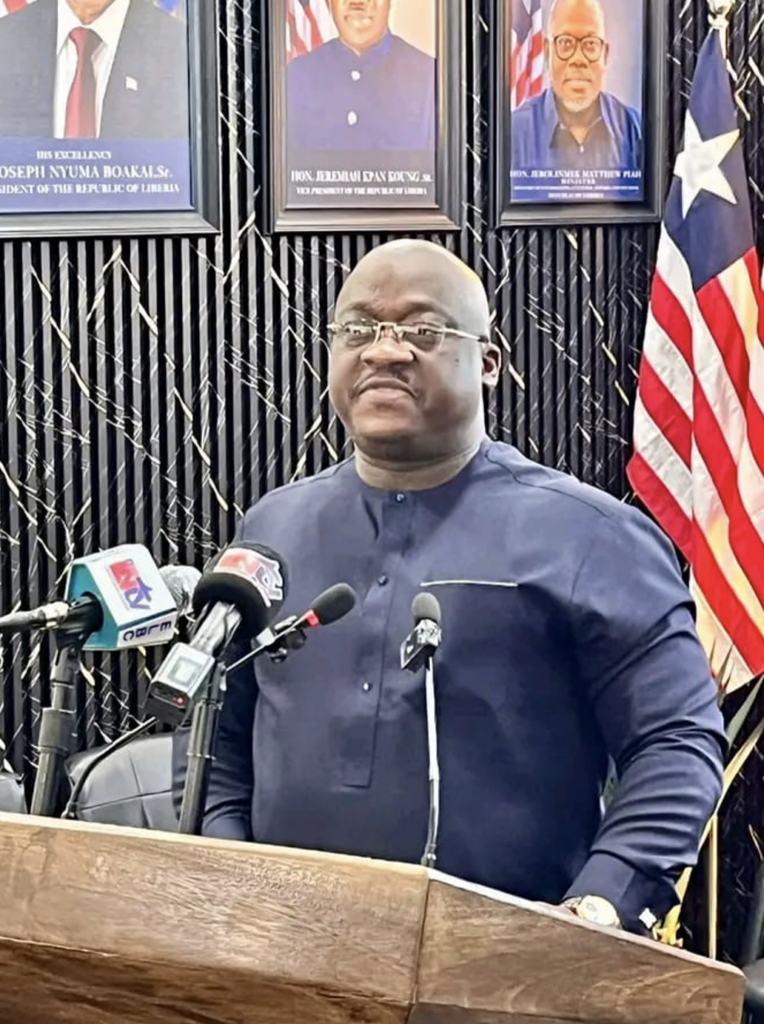
Monrovia, Liberia — The Liberia Electricity Corporation (LEC) has pledged to tackle rising electricity demand, high system losses, and power theft with the imminent launch of a modern smart meter system, the Managing Director, Mohammad M. Sherif, announced on Tuesday.
The smart meter initiative, set to be rolled out in phases, will feature centralized monitoring that allows all electricity meters to be tracked in real time from LEC’s headquarters.
The system is designed to enhance transparency, improve billing accuracy, and reduce illegal connections, which currently contribute to losses estimated at over 50 percent of generated power.
Speaking at the Ministry of Information press briefing in Monrovia, Sherif also detailed ongoing efforts to stabilize the national grid amid growing demand.
Liberia’s electricity consumption has surged from roughly 80 megawatts in recent years to about 143 megawatts, driven by grid expansion, increased customer connections, and renewed public confidence in electricity services.In the short term, the return of a repaired 8-megawatt unit at the Mount Coffee Hydropower Plant is expected to provide a modest boost to Liberia’s constrained generation capacity.
Sherif noted that the unit had been out of service for several years and will come online within the month, easing supply pressures temporarily. Despite this, generation capacity has not kept pace with demand, prompting the country to rely heavily on imported electricity through the West African Power Pool, which currently contributes between 40 and 60 megawatts daily to stabilize the grid.
LEC has reported progress in expanding and upgrading the distribution network, replacing over 400 transformers and extending service to previously underserved communities. Street lighting projects in key parts of Monrovia have also been completed.
However, technical inefficiencies, aging infrastructure, and widespread electricity theft continue to undermine these gains. “Reducing losses is as critical as increasing generation,” Sherif said, emphasizing that the smart meter rollout will directly target illegal connections and improve accountability.
To address immediate shortages, the government is exploring the deployment of thermal power plants, which can quickly add capacity to the system, though at higher operational costs. Looking ahead, Liberia aims to expand its generation capacity to 700 megawatts by 2030, using a diversified mix of hydro, solar, and thermal energy. Sherif noted that global supply chain challenges, including competition for energy-intensive technologies, have slowed the acquisition of new generation equipment, making careful planning and phased implementation essential.
While acknowledging ongoing load shedding, Sherif stressed that Liberia’s challenges are not unique to the region. He assured citizens that LEC remains committed to delivering reliable, affordable, and sustainable electricity, with the smart meter system expected to mark a significant step toward reducing theft and improving service delivery.