

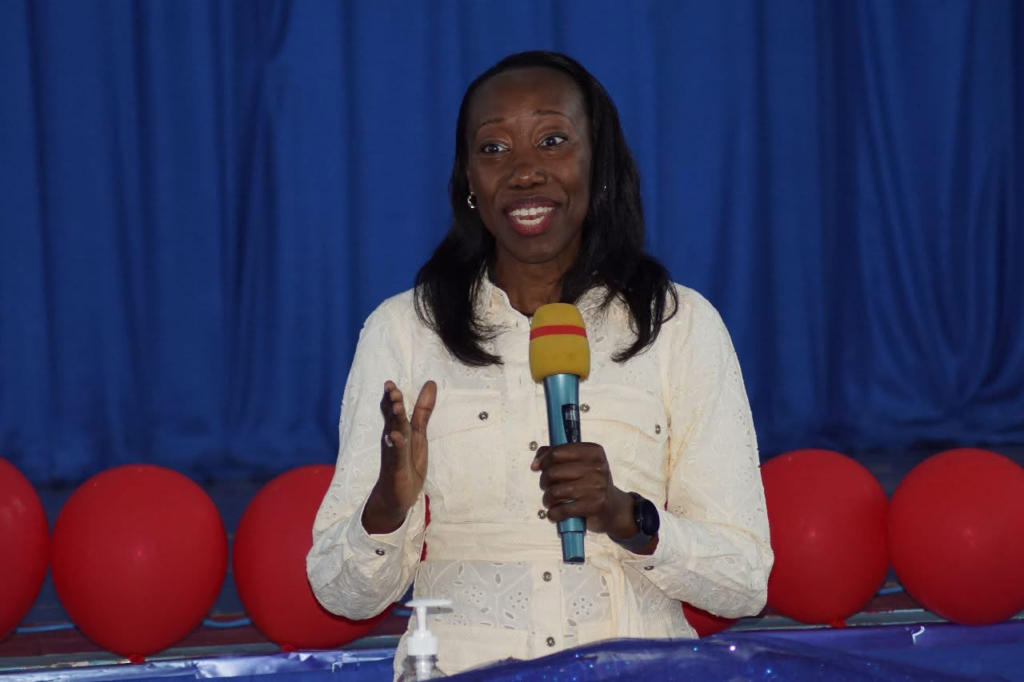
MONROVIA – World Bank Liberia Country Manager Georgia Wallen has emphasized the importance of strong environmental and social risk management as a core component of effective development delivery, speaking at a training workshop for project implementation units across the Bank’s portfolio in Liberia.
The Environmental and Social Framework training, held April 28, 2026, at the Royal Grand Hotel, brought together staff from multiple project implementation units (PIUs) involved in World Bank-funded projects across the country.
Wallen told participants that the training is timely, noting that the World Bank Liberia’s Country Partnership Framework for fiscal years 2025 to 2030 places strong emphasis on building foundations for more and better jobs, strengthening governance, and enabling private investment. She said none of these objectives could be achieved without strong environmental and social risk management during implementation.
According to Wallen, environmental and social risks—whether related to worksites, community impacts, sexual exploitation and abuse, sexual harassment, occupational health and safety, or grievance handling—directly affect development outcomes. She stated that when risks are well managed, projects move faster, communities engage meaningfully, and trust in institutions increases. Conversely, she noted, poor risk management leads to project delays, disputes, and loss of credibility.
The Country Manager said effective implementation of the Environmental and Social Framework directly supports the World Bank Group’s twin goals of ending extreme poverty and promoting shared prosperity on a livable planet. She explained that poor environmental and social performance disproportionately harms the poorest, weakens inclusion, and undermines sustainability.
Wallen also highlighted the gender dimension, describing it as especially important for Liberia. She noted that the World Bank Group’s Gender Strategy explicitly states that preventing and responding to gender-based violence and sexual exploitation and abuse is essential to inclusive growth and women’s economic participation. In a high-GBV-prevalence setting such as Liberia, she said, inadequate risk management in these areas can exclude women and girls from project benefits and erode community confidence.
The training, Wallen said, is also about the future of Liberia’s institutions. She pointed out that one of the Country Partnership Framework’s central objectives is to strengthen borrower systems so that environmental and social risk management becomes embedded in national practice rather than relying on ad hoc project arrangements. Consistent environmental and social monitoring, credible grievance mechanisms, and effective use of tools such as the Environmental and Social Incident Response Toolkit, she added, are essential building blocks of that system.
Over the past years, Wallen said, the World Bank team has invested heavily in hands-on support, including clinics, supervision support, and ongoing coaching, because stronger systems cannot be built through one-off training. She described the current clinic as part of a longer journey to improve implementation quality across the portfolio.
Looking ahead, Wallen told participants that expectations will continue to rise, with environmental and social performance increasingly shaping portfolio risk assessments, implementation ratings, and how progress is viewed by the government and the World Bank Group. She said strong systems reduce risks for communities, implementing agencies, and the country as a whole.
Wallen concluded by describing environmental and social risk management as ultimately about delivery—delivering infrastructure that is safe, services that are inclusive, and investments that strengthen trust between citizens and the state. She said this is central to Liberia’s development path and to the programs being implemented together with the government.
She thanked participants for their commitment and said she looked forward to seeing how the clinic would contribute to stronger environmental and social systems and better results on the ground.