

By Vaye Abel Lepolu
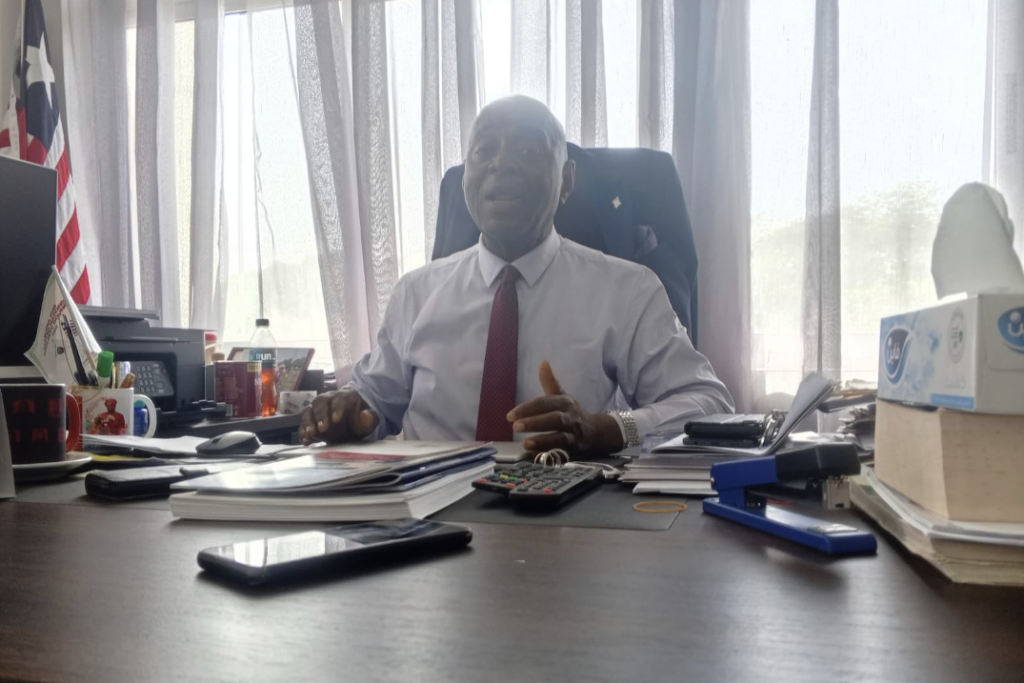
MONROVIA – The Director General of the Foreign Service Institute of Liberia, Reginald B. Goodridge, says the institution is championing economic diplomacy and national transformation while calling on diplomats to prioritize patriotism, professional conduct, and institutional growth over personal gain.
During an interview at the Institute, Goodridge emphasized that economic diplomacy, patriotism, and quality education will shape Liberia’s future and strengthen its international representation. Goodridge explained that countries practice diplomacy differently around the world due to cultural differences, though they continue to uphold the same core diplomatic principles.
Nations such as Spain, Britain, Germany, India, and China apply diplomacy based on their own traditions and cultural realities. He argued that African countries must also develop diplomatic approaches that reflect African interests and priorities. “One of the things driving African diplomacy right now is economic diplomacy,” Goodridge said. “We must project economic diplomacy in ways that allow our countries and people to benefit more.”
He stressed that development and economic opportunities are essential to improving the lives of ordinary citizens, including access to better housing, education, transportation, and living standards.
“It is the right of our people to live better lives,” he noted. “Therefore, when officials negotiate agreements on behalf of the country, they should not put themselves first. The interest of the Republic and its people must always come first.”
The Foreign Service Institute boss also disclosed plans for an expansion project at the Ministry of Foreign Affairs complex, which will support the Institute’s growth and activities. The project will be highlighted during the Institute’s anniversary activities scheduled for the end of October. The Institute is working closely with the Ministry of Foreign Affairs and several development partners to secure support for the initiative.
On institutional development, Goodridge said the Institute focuses on sustainability rather than dependency on handouts from government.
“We do not believe in panhandling,” he said. “We want ministries, agencies, public corporations, and autonomous institutions to send their senior staff for training. The fees generated will help improve the Institute and strengthen our systems.”
Since assuming leadership about 18 months ago, Goodridge noted significant progress. When he arrived, the school operated with only one class and a small student population. Today, the Institute has expanded to five classes with more than 120 students enrolled. He also highlighted the Institute’s strict admission standards: out of more than 400 applicants, only about 100 students earned admission.
Goodridge stressed that diplomats must be broadly educated and capable of engaging intelligently on global issues. “A diplomat must know geography, geopolitics, history, literature, science, culture, and foreign policy,” he said. “If you cannot hold an educated conversation while representing your country, your country loses respect.”
Rather than focusing on challenges, the Director General said the Institute remains committed to opportunities that can transform the mindset of Liberians and inspire patriotism, self-esteem, and transformational leadership. “Our mission is to help Liberians think positively and become motivated to improve not only themselves but also their communities and country,” he stated.
Reflecting on Liberia’s years of civil conflict, Goodridge acknowledged that many young people grew up without proper guidance and support. However, he expressed confidence that the nation can still move in a positive direction. “You may not be able to change the direction of the wind,” he concluded, “but you can change the direction of the sail.”