


By Jessica Cox
Monrovia: The Liberia Medical and Dental Council (LMDC) has concluded a nationwide stakeholder engagement and deployed sixty-five intern doctors across the country, reaffirming its commitment to strengthening professionalism, accountability, and healthcare service delivery.
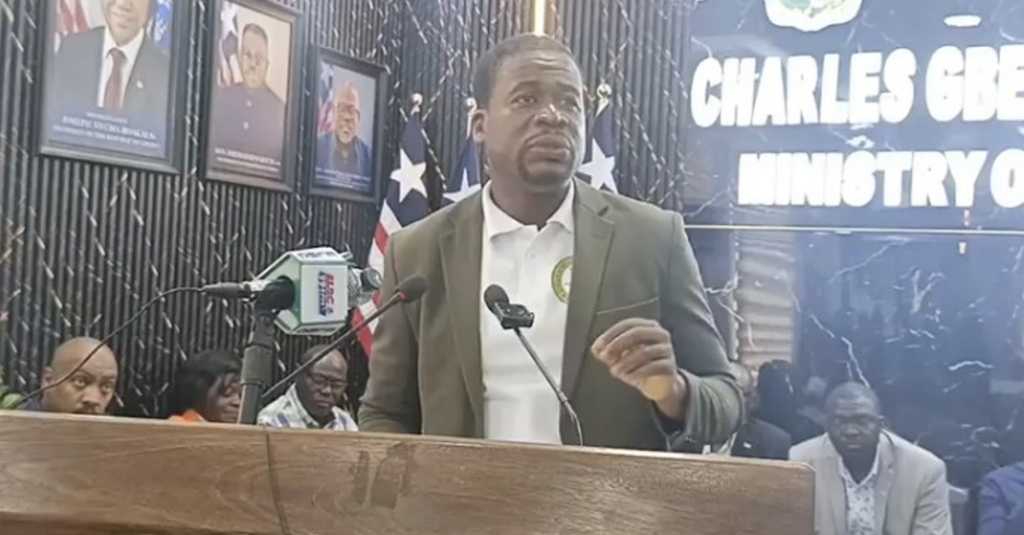
Speaking Tuesday at the Ministry of Information’s regular press briefing in Monrovia, LMDC Chairperson Dr. Ayun K. Cassell III announced that the Council completed a 15-day nationwide stakeholder engagement exercise in April 2026. The exercise was designed to promote ethical medical practice, improve patient care, and enhance regulatory compliance within Liberia’s healthcare system.
The engagement brought together health professionals and administrators from Montserrado, Bong, Nimba, Grand Bassa, Rivercess, Maryland, River Gee, Grand Gedeh, Sinoe, Grand Kru, Gbarpolu, Bomi, Grand Cape Mount, and Lofa Counties. Participants included County and District Health Officers, physicians, registered nurses, midwives, surgeons, hospital administrators, and other sector actors.
LMDC officials, including Registrar General Dr. Augustus G. Quiah, Medical and Research Director Joseph J. Colmah, and Deputy Medical and Research Director Dorbor Kolubah Kabba, led the engagement sessions. During the meetings, they presented on customer service in healthcare delivery, medical ethics, surgical practice, and healthcare regulations in Liberia.
They emphasized treating patients with dignity, fairness, and professionalism regardless of social status, political affiliation, or personal relationships.
The LMDC also used the engagements to stress the need for healthcare practitioners to adhere strictly to professional ethics and national regulatory standards amid ongoing efforts to improve public confidence in Liberia’s healthcare sector.
In a related development, Dr. Cassell announced that the Council has deployed at least sixty-five intern doctors—forty males and twenty-five females, trained both locally and internationally—to major health facilities across Liberia to strengthen clinical capacity and address gaps in healthcare delivery. According to the LMDC, twelve of these doctors obtained medical education from institutions in Cuba, China, The Gambia, Russia, Ukraine, Sudan, Kenya, the Philippines, and the A.M. Dogliotti College of Medicine.
The doctors have been assigned to several major referral and regional hospitals, including the John F. Kennedy Memorial Medical Center, ELWA Hospital, St. Joseph’s Catholic Hospital, the 14 Military Hospital, J.J. Dossen Memorial Hospital, Jackson F. Doe Memorial Regional Referral Hospital, United Methodist Hospital, and DUSIDE Hospital.
The internship program, which remains mandatory before full licensure and independent medical practice in Liberia, will run for one year and involve rotations through Obstetrics and Gynecology, Pediatrics, Internal Medicine, and Surgery under the supervision of senior consultants and hospital management teams. The LMDC divided the program into three trimesters with periodic evaluations designed to assess clinical competence, professionalism, and ethical conduct. Dr. Cassell warned that interns found engaging in misconduct or demonstrating poor performance could face disciplinary measures, reassignment, additional ethical training, or repetition of clinical rotations in keeping with established medical regulations.
Meanwhile, the Council has intensified preparations for a nationwide Health Facilities Assessment expected to commence later this month across Liberia’s fifteen political subdivisions. According to LMDC authorities, the exercise will assess the cleanliness, operational standards, staffing, and legal compliance of both public and private medical institutions throughout the country.
Speaking on behalf of the Council’s technical team, Mr. Colmah disclosed that several in-house training sessions have already been conducted for assessment personnel to ensure professionalism, confidentiality, integrity, fairness, and neutrality during the nationwide exercise. He urged assessment teams to avoid confrontational behavior and instead engage healthcare institutions with empathy, impartiality, and professionalism while maintaining personal safety and observing ethical standards.
The LMDC further stated that serious concerns identified during the assessment process will promptly go to appropriate committees and relevant authorities for timely intervention. Dr. Cassell noted that the assessment initiative forms part of broader national efforts to strengthen healthcare governance, improve accountability, ensure regulatory compliance, and restore public trust in Liberia’s health sector following years of systemic challenges.
He called on all public and private health institutions across Liberia to cooperate fully with assessment teams as the Council works to promote transparency, quality assurance, and improved healthcare outcomes nationwide.