


-NPHIL Acting Director General Says Reflecting on Liberia’s Experience
By Jessica Cox
Monrovia: The Acting Director General of the National Public Health Institute of Liberia (NPHIL), Dr. Sia Wata Camanor, says there are no confirmed or suspected Ebola cases in Liberia, but the country remains on alert due to rising regional outbreaks and cross-border movement risks.
The World Health Organization(WHO) has declared the current Ebola outbreak in the Democratic Republic of the Congo (DRC) and Uganda a Public Health Emergency of International Concern (PHEIC). This declaration is driven by a surge in cases linked to the rare Bundibugyo virus strain, for which no approved vaccines or specific treatments exist. Currently, there are over 500 suspected cases across the region, with least 131 reported deaths.
Speaking at the regular press briefing of the Ministry of Information, Dr. Camanor warned that Liberia remains at heightened risk due to increasing regional outbreaks and cross-border movement. “Preparedness is not an option; it is a national security priority,” Dr. Camanor declared, emphasizing that Liberia’s painful experience during the 2014 Ebola epidemic has significantly strengthened the country’s public health systems.
The NPHIL chief disclosed that health authorities have activated a national Ebola preparedness and response mechanism, heightened screening at airports and border entry points, and intensified coordination with regional and international partners, including the World Health Organization, Africa Centres for Disease Control and Prevention, and the U.S. Centers for Disease Control and Prevention.
According to Dr. Camanor, all travelers entering Liberia must now complete health declaration forms, while authorities closely monitor those arriving from high-risk countries. “Ebola has an incubation period of two to 21 days, meaning a person can enter the country without symptoms. That is why surveillance at our ports of entry is extremely critical,” she explained.
She reiterated that Liberia currently has no active, suspected, or confirmed Ebola cases, but noted that the country’s porous borders make vigilance essential.
Dr. Camanor said NPHIL has begun reviewing and updating national Ebola standard operating procedures, while ensuring that laboratories maintain sufficient testing supplies and diagnostic capacity for at least six months in the event of an outbreak.
She further disclosed that more than 200 trained field epidemiologists are stationed across Liberia’s health districts to support rapid outbreak detection and response. On broader public health matters, Dr. Camanor highlighted major institutional achievements made by NPHIL over the past six months, including increased compliance with recommendations from the General Auditing Commission—from 61 percent to 81 percent.
She also announced that NPHIL recently achieved a 95.75 percent score under the government’s Performance Management and Compliance System, earning national recognition for institutional excellence.
In strengthening Liberia’s health workforce, she disclosed that 29 technical staff previously funded through internally generated resources have now been transitioned to the government payroll through collaboration with the Civil Service Agency.
However, Dr. Camanor appealed for the urgent enrollment of 42 point-of-entry surveillance volunteers onto the government payroll, describing them as critical frontline workers protecting Liberia’s borders.
On disease surveillance, she said Liberia’s public health reporting system currently records 99 percent reporting completeness and 98 percent timeliness nationwide—indicators she described as evidence of a highly functional disease detection system.
Providing updates on ongoing outbreaks, Dr. Camanor said Liberia has recorded 1,676 confirmed mpox cases since 2022, with 1,663 recoveries and eight deaths, resulting in a low case fatality rate of 0.5 percent.
She noted that while all 15 counties were previously affected, Liberia now has only five active mpox cases nationwide. “This sharp decline demonstrates the effectiveness of our coordinated response efforts,” she said.
Regarding Lassa fever, the NPHIL Director General disclosed that Liberia has recorded 236 confirmed cases and 73 deaths since 2022, a high fatality rate of 31 percent. She added that there are currently no active Lassa fever cases in the country. Dr. Camanor also raised concern over continuing measles outbreaks, revealing that Liberia has documented more than 20,000 measles cases and 112 deaths since 2021, with 185 active cases presently spread across 11 counties.
She attributed the resurgence partly to disruptions in childhood vaccination during the COVID-19 pandemic, which left many children without complete immunization protection. According to her, the Ministry of Health and NPHIL are conducting targeted vaccination campaigns and intensified surveillance in affected communities. Dr. Camanor warned Liberians against spreading misinformation during disease outbreaks, stressing that rumors can undermine national response efforts.
“We encourage the public to remain vigilant, practice regular hand hygiene, report unusual illnesses promptly, and seek early medical care,” she urged.
She concluded by thanking the Government of Liberia, county health teams, laboratory personnel, health workers, international partners, and the Liberian media for their continued support in safeguarding the country’s public health system.
Liberia’s Ebola Experience:
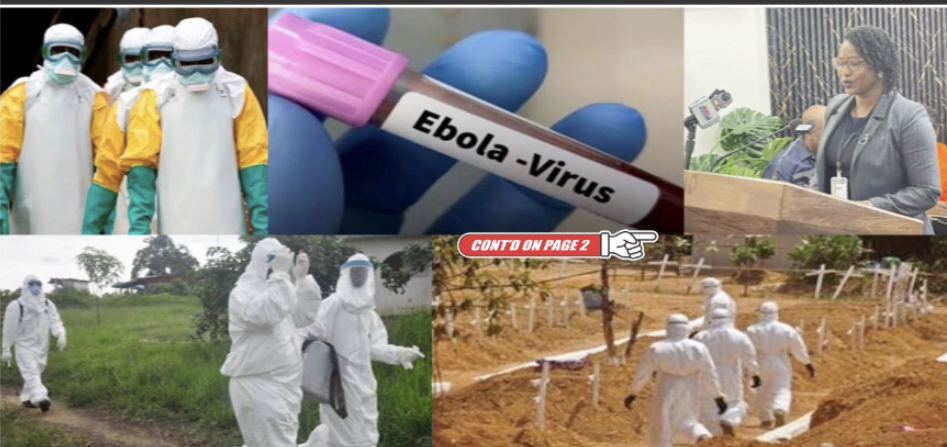
Ebola disease is a rare, severe, and often fatal viral illness that primarily affects humans and non-human primates. The 2014–2016 Ebola outbreak devastated Liberia, making it the hardest-hit country with nearly half of all deaths recorded during the epidemic. In total, Liberia documented 10,672 cases and 4,809 deaths, which represented roughly 40 percent of the fatalities across West Africa. The crisis escalated with terrifying speed, as the capital city of Monrovia saw between 300 and 400 new cases every week during the peak months of August and September 2014. The overall fatality rate for infected Liberians was 53.3 percent, but for health workers who bravely treated patients, the rate was a staggering 81.8 percent.
Liberia’s initial response was paralyzed by a weak healthcare system that had never fully recovered from years of civil war. Many clinics lacked running water or electricity, which caused infections to skyrocket among medical staff. Widespread fear of the unknown Ebola Treatment Units led many sick people to avoid seeking care, and some communities believed the disease had no cure at all.
The tide turned only when international organizations shifted from coercive measures to community-based strategies. Organizations like Oxfam trained local Liberians to go door-to-door, where they dispelled dangerous rumors about bleach showers or body snatching. When a new case appeared in a remote village, specialized Rapid Isolation and Treatment teams, known as RITE teams, were deployed within hours to stop the chain of transmission. Safe burial teams replaced traditional washing rituals with dignified practices that proved crucial to halting the virus’s spread.
Even after the epidemic ended, survivors continued to struggle with lifelong consequences. Many suffer from Post-Ebola Syndrome, which includes severe joint pain and vision loss so serious that farmers and hunters can no longer work. Humanitarian groups burned survivors’ mattresses and clothes to kill the virus, which left widows like Musu, who lost her husband and five sons, without savings or tools to rebuild their lives. Persistent stigma has also lasted for more than ten years, with survivors often shunned at weddings and their children banned from playing with neighbors.