

By Jessica Cox
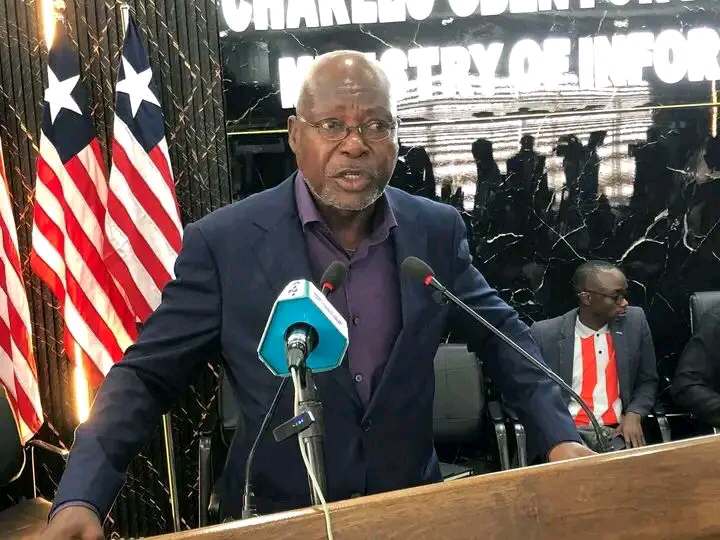
MONROVIA, Liberia – Governance Commission Chairperson Prof. Dr. Alaric K. Tokpa has renewed calls for a comprehensive review of Liberia’s 1986 Constitution, arguing that the country’s current amendment process is cumbersome, expensive, and ill-suited to addressing the broad governance challenges confronting the nation.
Speaking at the Ministry of Information’s regular press briefing, Prof. Tokpa outlined the rationale behind a major constitutional review initiative being undertaken jointly by the Governance Commission and the Law Reform Commission. The effort will begin with a two-day high-level public policy dialogue scheduled for June 10–11 at Monrovia City Hall under the theme: “Review of the 1986 Constitution of Liberia: Imperatives, Challenges and Prospects.”
According to Prof. Tokpa, the dialogue is intended to reignite national interest in constitutional reform and revisit recommendations from previous review efforts that have remained largely dormant for more than a decade. “The Governance Commission, together with the Law Reform Commission, believes the time has come for Liberia to have a serious national conversation about the future of its Constitution,” he said. “As our society evolves and new governance realities emerge, we must ensure that our constitutional framework remains responsive to the needs and aspirations of the Liberian people.”
A central focus of Prof. Tokpa’s remarks was the complexity of Liberia’s constitutional amendment process. He noted that under Chapter XII of the 1986 Constitution, proposed amendments must first secure the approval of two-thirds of both Houses of the Legislature before being submitted to a national referendum conducted by the National Elections Commission.
In addition, amendments must be published and widely disseminated through government information channels, and where multiple constitutional changes are proposed, each proposition must be presented separately to voters. Prof. Tokpa argued that while these provisions were designed to safeguard democratic participation, they have also created significant logistical and financial challenges.
“When numerous constitutional provisions require amendment, the country may be compelled to organize multiple referenda to comply with constitutional requirements,” he explained. “That process can become costly and administratively burdensome, particularly when government faces competing national priorities.”
He said these realities have prompted policymakers to consider a broader review of the Constitution rather than relying solely on piecemeal amendments.
The Governance Commission Chairperson also highlighted the work of the Constitution Review Committee established in 2013 under former President Ellen Johnson Sirleaf and chaired by former Chief Justice Cllr. Gloria Musu-Scott.
According to Prof. Tokpa, the committee conducted one of the most extensive public consultations in Liberia’s history, traveling across all 73 electoral districts and gathering the views of approximately 56,729 citizens between 2013 and 2015.
The committee’s final report was presented to President Sirleaf in August 2015, but many of its recommendations have yet to be fully implemented.
“That report remains an important national resource,” Prof. Tokpa said. “It captured the aspirations, concerns, and expectations of thousands of Liberians regarding governance and constitutional reform. We believe it deserves renewed examination.”
The upcoming dialogue will include a formal assessment of the committee’s findings and recommendations.
Prof. Tokpa identified several issues that emerged during previous consultations and continue to demand national attention. Among them are the participation of women and young people in governance, the inclusion of persons with disabilities in national decision-making processes, and questions surrounding the role of Liberians living abroad in electoral and governance systems. He noted that Liberia has undergone significant social, political, and economic transformations since the adoption of the 1986 Constitution, making it necessary to evaluate whether existing constitutional provisions adequately address contemporary realities.
“There have been major changes both within Liberia and around the world,” he said. “Our governance framework must be capable of responding to these evolving circumstances.” Another major theme of the planned constitutional dialogue is decentralization.
Prof. Tokpa emphasized that successive governments have promoted local participation in governance through county development planning and other decentralization initiatives. However, he argued that many of these efforts remain vulnerable because they are not firmly anchored in constitutional guarantees.
“No society can achieve sustainable development without the active participation of its citizens,” he said. “The people who are affected by policies should be part of shaping those policies. Decentralization must be protected and strengthened through constitutional safeguards.” He added that empowering counties, districts, and local communities remains critical to improving governance outcomes and enhancing citizen ownership of development initiatives.
Linking constitutional reform to Liberia’s broader development goals, Prof. Tokpa said the country must continue building institutions that promote peace, reconciliation, accountability, and national unity.
Reflecting on Liberia’s post-war recovery, he stressed the importance of maintaining social cohesion while pursuing governance reforms. “After experiencing conflict, we must continue working together to ensure that peace and reconciliation remain at the center of our national agenda,” he said. “That is the foundation upon which sustainable development is built.
The Governance Commission Chairperson encouraged citizens, policymakers, civil society organizations, academics, youth groups, women’s organizations, and the media to actively participate in the upcoming constitutional dialogue. The event will feature expert presentations examining the need for constitutional review, ambiguities and limitations within the current Constitution, historical and theoretical perspectives on constitutional reform, findings from the Gloria Musu-Scott Committee report, and the adequacy of existing amendment provisions.
Discussants will also provide critical reflections aimed at generating practical recommendations for future action. Prof. Tokpa concluded by reaffirming the Governance Commission’s legal mandate to review laws and recommend constitutional reforms that promote good governance, national unity, and sustainable development. “As Liberia continues its democratic journey, constitutional review is not simply a legal exercise,” he said. “It is an opportunity for national reflection, consensus-building, and charting a path toward a stronger and more inclusive future.”