

-On War Crimes and Anti-Corruption Court Bills
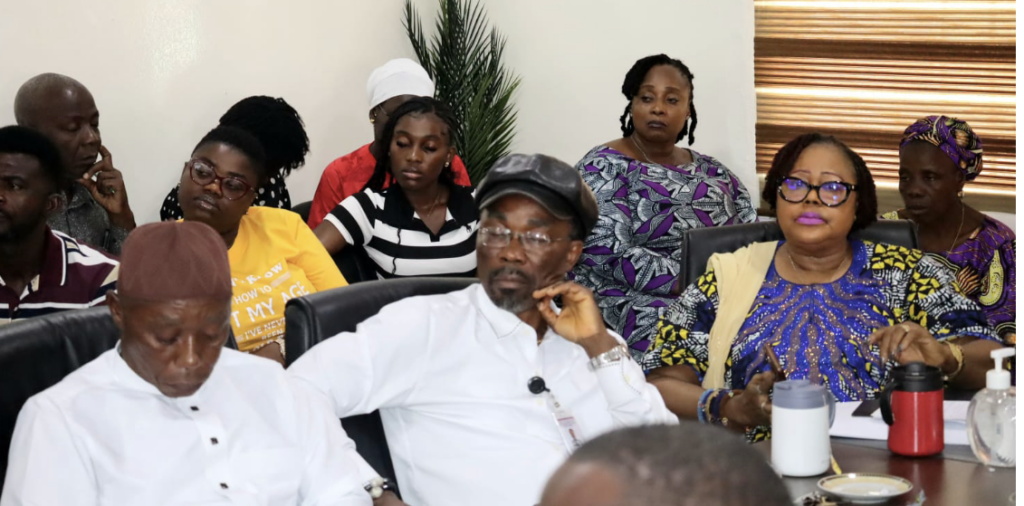
MONROVIA – The Office for the Establishment of the War and Economic Crimes Court for Liberia (OWECC-L) has launched a technical training series for its staff, civil society organizations, and transitional justice actors to strengthen understanding of the two bills currently before the Liberian Legislature .
The hands-on training initiative, announced by OWECC-L Executive Director Dr. Cllr. Jallah A. Barbu, is designed to prepare key stakeholders for the implementation of the proposed War and Economic Crimes Court and the National Anti-Corruption Court once the necessary legislation is enacted .
Speaking at the opening of the training, Dr. Barbu explained that the sessions focus on Joint Resolution No. 001 of 2024 and Executive Order No. 164, which provide the legal and policy framework for advancing the establishment of both courts .
The training provides participants with an opportunity to examine the provisions of the proposed laws, discuss their implications, and better understand the timelines outlined in Executive Order No. 164 .
According to Dr. Barbu, the interactive sessions will also allow transitional justice actors to share their perspectives and contribute to the ongoing national dialogue surrounding the two courts .
He emphasized that the technical training is the first in a series of capacity-building programs that will continue as the Legislature deliberates on and eventually passes the two bills .
President Joseph Nyuma Boakai submitted the two proposed bills to the National Legislature in May 2026, calling for swift legislative action on the measures designed to address long-standing governance and justice challenges .
The proposed War and Economic Crimes Court is intended to respond to recommendations of the Truth and Reconciliation Commission and commitments under the Accra Peace Agreement . It would provide a specialized judicial mechanism to adjudicate allegations of war crimes, crimes against humanity, gross human rights violations, and economic crimes committed during Liberia’s periods of instability .
The National Anti-Corruption Court, established through a new Title 17(a) of the Liberian Code of Laws Revised, would dedicate a specialized tribunal exclusively to corruption cases .
The Liberian Senate has referred both bills to its Judiciary Committee for comprehensive scrutiny . The committee is now tasked with consulting on and assessing the bills’ legal, constitutional, and operational impacts, after which it will report back to Plenary for further legislative action .
The training initiative forms part of OWECC-L’s broader efforts to ensure that key stakeholders are well-informed and prepared to support the implementation of the courts once the necessary legislation is enacted .
The office has also launched a national outreach campaign extending to all fifteen counties and the Liberian diaspora to build public understanding and engagement around the transitional justice process . The campaign, themed “Justice for All,” aims to foster inclusive dialogue among survivors, communities, and stakeholders .
President Boakai has reaffirmed his administration’s commitment to establishing both courts, stating in a recent communication to the Legislature that the initiative reflects Liberia’s duty to combat impunity, uphold international humanitarian law, and promote reconciliation through accountability .
The proposed Anti-Corruption Court, according to the President, would target cases of public fund misuse, abuse of office, illicit enrichment, and other corruption offenses undermining Liberia’s development.