-As Flood-Hit Communities Call for Gov’t Intervention
By: Sampat JMB Kpakimah
MONROVIA – The National Disaster Management Agency (NDMA) warns that more than 100,000 people face significant risk from climate-related hazards during the 2026 rainy season. NDMA Public Relations Officer Archievego Menneah Doe confirmed the agency’s forecast on Friday, citing predictions of above-normal rainfall.
Meteorologists expect up to 15 inches of rain, with the most severe weather occurring during the peak months of August and September. The NDMA has identified 323 flood-prone communities nationwide. Montserrado, Margibi, Grand Gedeh, Grand Bassa, and Sinoe counties face the highest risk of destruction, including property damage, roof displacement from high winds, and widespread flooding.
“It is anticipated that not less than 100,000 persons will be affected by climate-related hazards,” Doe said. He attributed much of the urban flooding to the encroachment on wetlands and ongoing deforestation, noting that rural areas with more vegetation suffer less severe consequences.
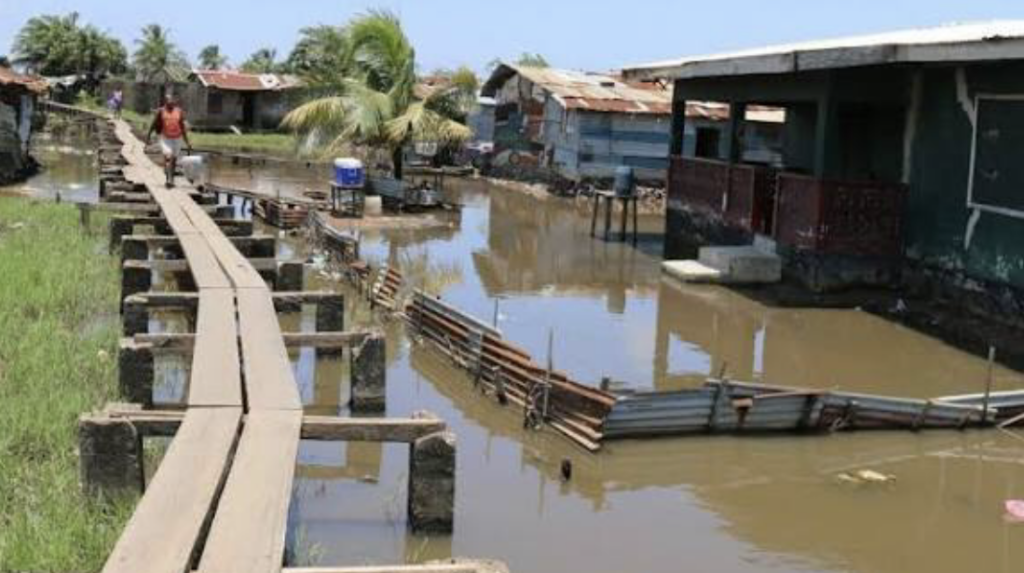
While the NDMA focuses on prevention and warnings, residents in impacted areas say the government must provide structural solutions. In the Neezoe community of Paynesville, flooding regularly disrupts daily life and forces schools to close. Community Chairperson Titus M. Sonyah acknowledged recent support from the Liberia National Red Cross Society and the Paynesville City Corporation, which provided cleaning tools to clear clogged drains. However, Sonyah said these measures are insufficient.
“One of the major problems is that the drainage system is poorly designed,” Sonyah said. “We need government intervention to properly construct and redirect the drainage channels so water can flow freely.” Residents expressed growing frustration over the lack of permanent infrastructure. Patience Kiamue, a local mother, noted that impassable roads frequently prevent children from attending school during the rainy season.
Youth Chairperson Eshun B. Jolokleh criticized local political leadership for failing to address the crisis. He stated that despite consistent community-led cleanup campaigns, the recurring floods require engineering projects that exceed the community’s capacity.
“We are doing our part as a community, but the flooding continues because the problem requires a permanent solution,” Jolokleh said. The NDMA continues to urge residents in low-lying areas to remain vigilant as the intensity of the rainy season increases.