-Sen. Dillon, Others Push Back
By Jerromie S. Walters
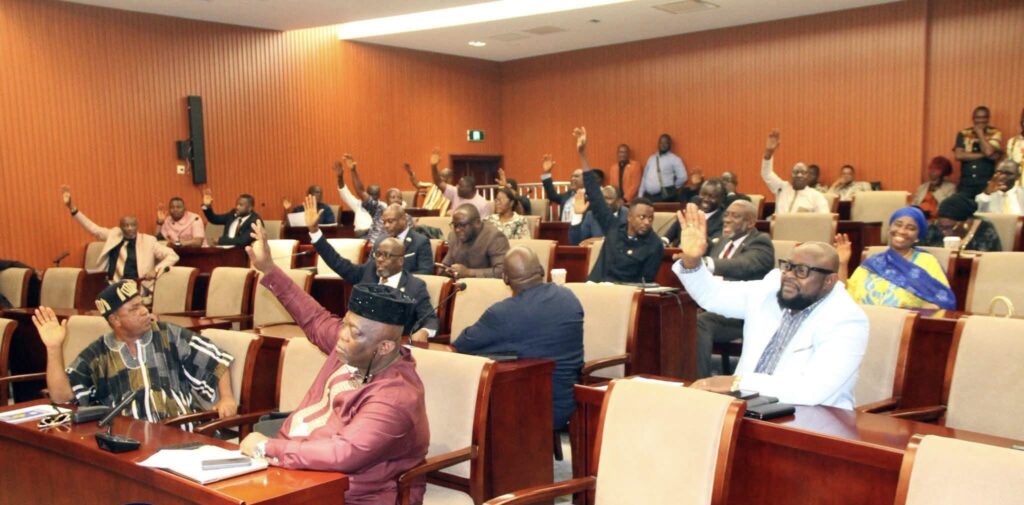
Monrovia, Liberia — The House of Representatives has voted to expand Liberia’s electoral constituencies from 73 to 89, but the proposed increase has triggered swift constitutional objections casting uncertainty over whether the new seats will ever materialize.
While the House unanimously endorsed the resolution forwarded to the Senate, the central contention is not the census data itself—but whether the Legislature has overstepped its authority by effectively determining the number of seats assigned to counties.
The resolution prescribes a population-tier formula based on the 2022 census, which recorded 5.25 million people—up from 3.47 million in 2008. The House maintains that increasing constituencies to 89 ensures proportional representation and complies with constitutional mandates under Articles 39, 80(d), and 80(e).
But opponents argue the House has confused its role.
Montserrado County Senator Abraham Dillon publicly challenged the move, stating: “The Legislature has no authority to SET and ASSIGN legislative seats by Counties; the Legislature can only set THRESHOLD from new population figures… It is the authority and function of the National Elections Commission to determine ‘apportionment’ of SEATS.” Dillon vowed to “set this matter straight and right” when the resolution reaches the Senate.
Meanwhile, Nimba County District #6 Representative Musa Bility has already authorized legal counsel to commence constitutional proceedings before the Supreme Court—not to obstruct democracy, he said, but to resolve a fundamental timing question.
“The census was conducted before the 2023 General Elections, yet no threshold was prescribed before those elections took place,” Bility noted. “This raises an important constitutional question that should be answered by the Supreme Court before any further legislative action proceeds.”
Bility emphasized that the case “is not about politics” but about “constitutional governance, the rule of law, and preserving the integrity of our democratic institutions.”
The Constitutional Framework
The Committee’s report, presented by Chairman Representative Thomas Romeo Quioh, anchors the resolution on three constitutional provisions:
· Article 39 – mandates a national census every ten years.
· Article 80(d) – empowers the Legislature to prescribe population standards based on census results.
· Article 80(e) – requires the NEC to reapportion constituencies accordingly.
The House insists its role ends at setting the threshold, leaving apportionment to the NEC. Critics, however, view the population-tier formula as a de facto assignment of seats—a distinction that could determine the resolution’s fate.
If enacted, the framework would increase constituencies from 73 to 89, remaining within the constitutional cap of 100. Every constituency must stay within a single county, per Article 80(e). The current map, based on the 2008 census, has been used for the 2011, 2017, and 2023 elections despite significant population shifts.
The resolution now awaits concurrence in the Liberian Senate, where Dillon and others have signaled fierce opposition. Simultaneously, the Supreme Court may soon be asked to weigh in on whether the House’s action violates the separation of powers—and whether the delayed 2023 reapportionment renders the current effort constitutionally flawed.
The House maintains the framework will “strengthen constitutional governance” and ensure fair representation. But with the Senate divided and the judiciary potentially intervening, the fate of Liberia’s 89 proposed seats remains anything but certain.