-Marks Golden Jubilee
By Jerromie S. Walters
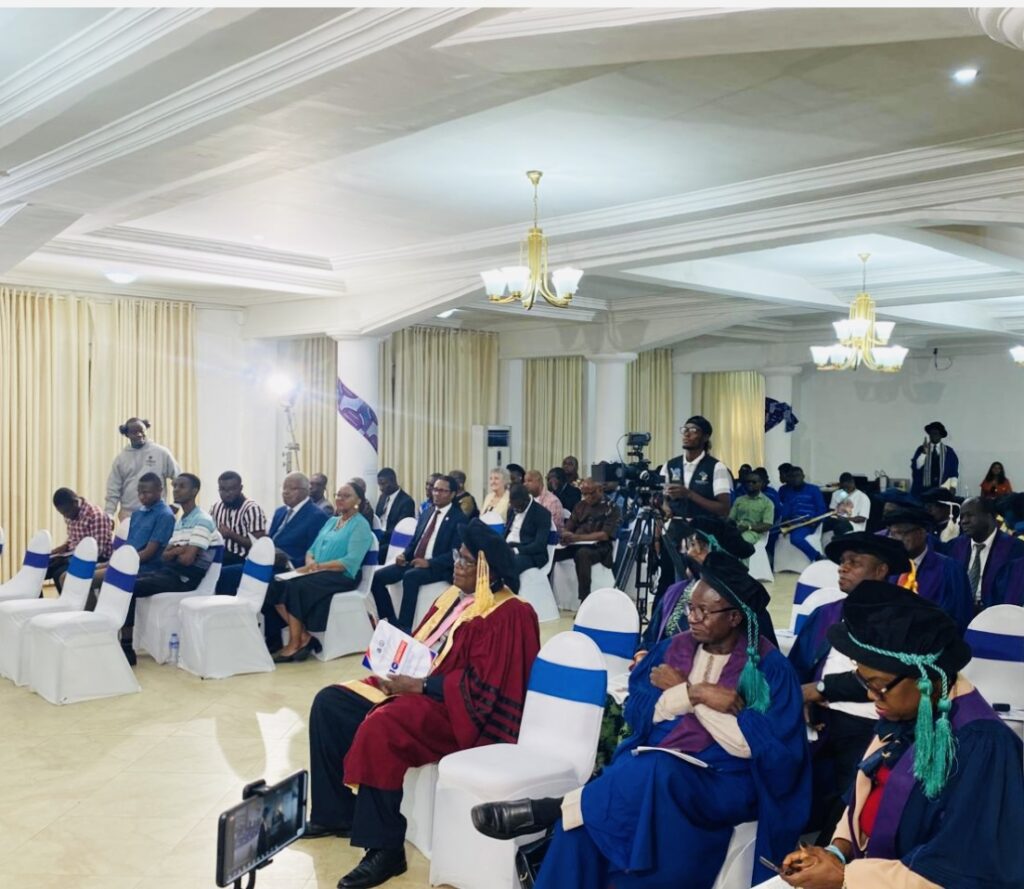
Monrovia, Liberia – The Liberia Chapter of the West African College of Physicians held its 10th Annual General and Scientific Meeting on Friday, July 17, 2026, commemorating the regional College’s 50th anniversary while charting a course for the future of specialist medical care in Liberia.
The gathering was held at the Sinkor Palace in Congo Town, and it brought together distinguished physicians, government officials, and health partners under the theme “WACP @ 50: Celebrating a Legacy and Envisioning the Future,” with the Liberia Chapter adopting the sub-theme “Envisioning the Future of Specialist Care in Liberia: Resilience, Equity, and Sustainability.” For WACP, the event marked a substantial juncture as it was established as one of the foundation chapters of the West African College of Physicians when the regional body was formed in 1976.
Dr. Musu J. Duworko, Chapter Chairperson and College Vice President, welcomed attendees with a message that emphasized the importance of the occasion. “Today, we do more than open a conference,” Dr. Duworko said. “We celebrate a remarkable institution, reflect on a proud journey, and renew our commitment to the future of medicine and public health in Liberia, West Africa, and beyond.”
She stressed the need for innovation and resilience in medical training. “The future we envision must be one in which medical training is innovative, research is locally relevant, specialist care is more accessible, and physicians are equipped to lead transformation across the entire health sector,” she said. “Envisioning the future means preparing physicians not only for today’s realities but for tomorrow’s demands.”
Dr. Duworko also noted that health systems in Liberia and across the region must become more resilient, equitable, and responsive to the changing needs of the population, particularly in confronting infectious diseases, rising non-communicable diseases, maternal and child health challenges, mental health needs, and the continuing importance of emergency preparedness and workforce development.
The keynote address:
In her keynote address Dr. Roseda E. Marshall delivered a comprehensive assessment of Liberia’s health sector journey, tracing the evolution of medical institutions and training programs, and offered several key recommendations to transform the sector and ensure the sustainability of specialist care in the country.
Her first recommendation called for the development of a National Road Map to formulate a 10-year developmental plan that aligns the Liberia College of Physicians and Surgeons specialty outputs directly with the national development agenda, including health and education. She emphasized the need for strategic coordination between medical training and national priorities to ensure that the country’s specialist workforce is equipped to address Liberia’s most pressing health challenges.
Her second recommendation focused on the development of a National Action Plan that would implement immediate, time-bound interventions to scale up residency intakes and faculty recruitment. Dr. Marshall stressed the urgency of expanding the training pipeline to meet the growing demand for specialist care across the country.
The third recommendation called for the establishment of a STEM institution open to all qualified students from the 15 counties, with programs targeting secondary and early tertiary education to feed and inspire the next generation of medical trainees. She highlighted the importance of cultivating interest in science and medicine from an early age and ensuring that students from all parts of Liberia have access to quality education that can lead to careers in healthcare.
Another recommendation urged the Government of Liberia to provide incentives that would encourage students to enter the residency program. She noted that financial barriers and lack of support structures often deter talented young physicians from pursuing specialist training, and called on the government to prioritize investment in the country’s future medical workforce.
The keynote speak also spoke extensively about the birth and development of key health institutions in Liberia, including the A.M. Dogliotti College of Medicine, the John F. Kennedy Medical Center, and the Liberia College of Physicians and Surgeons, highlighting the struggles and triumphs that have shaped medical education and specialist care in the country.
Dr. Marshall drew on her own remarkable journey, from her early education at Bromley Mission School in the Township of Virginia, where she was named valedictorian of her class, to her academic excellence at Tuskegee University, where she earned a Bachelor of Science degree in Biology with honors in 1966 and graduated as salutatorian. She went on to earn a Master of Arts degree in Zoology with emphasis in parasitology from the University of Massachusetts, Amherst, in 1968, before returning to Liberia to work in the Histology Laboratory at the newly established A.M. Dogliotti College of Medicine.
Goodwill messages and more:
The proceedings continued with goodwill messages from key health sector partners, including the Ministry of Health, the World Health Organization, the Liberia College of Physicians and Surgeons, the Liberia Medical and Dental Association, the University of Liberia College of Health Sciences and others.
For the World Health Organization (WHO) Liberia, the existence of the West African College of Physicians and its Liberian Chapter has left an incredible mark in the health sector over the decades, through strengthening healthcare delivery. “The college has been steadfast in its mission,” the proxy of the WHO Representative to Liberia added.
From his end, Dr. Tamba of the John F. Kennedy Memorial Hospital (JFK), characterized the gathering as a vital beacon for recognizing the services of physicians who he described as the bedrock of healthcare in the country and region. “On behalf of the JFK Medical Center, I wish you a highly successful annual general and scientific meeting and an impactful outcome,” he said.
Honoring Liberia’s Medical Pioneers
The 19th Joseph N. Togba Lecture served as the centerpiece of the event and was delivered by Dr. Roseda E. Marshall, a pioneering Liberian pediatrician and retired Professor at the A.M. Dogliotti School of Medicine at the University of Liberia. Dr. Marshall, whose distinguished career spans more than four decades, is widely recognized as a pioneer in pediatric medicine and has devoted her life to child health, public health, medical education, and national service.
The lecture series is named after Dr. Joseph Nagbe Togba, Sr., a distinguished Liberian physician who holds the distinction of being the only Black African signatory to the Charter of the World Health Organization and the first African to serve as President of the World Health Assembly. Dr. Togba, who served as WACP College President from 1979 to 1980, remains one of Liberia’s most celebrated medical statesmen and his legacy continues to inspire generations of Liberian physicians.
During the ceremony, the Chapter presented the 2026 Distinguished Service Award to Dr. Angela O. Benson in recognition of her decades of service to health systems strengthening and medical education. Dr. Benson, a graduate of the University of Liberia’s A.M. Dogliotti Medical School, has served in leadership roles with UNICEF and the World Health Organization across Africa and has been a strong advocate for women’s and children’s health throughout her career. She is also co-founder of the Benson Hospital in Paynesville.
The scientific sessions featured presentations addressing a wide range of health issues affecting Liberia and the West African region. Researchers and clinicians presented findings on diagnostic challenges in resource-limited settings, including case reports on Cushing’s Disease in a young Liberian female and profound post-thyroidectomy hypothyroidism presenting as myxedema psychosis.
Presenters also shared findings on the integration of routine diabetes services across secondary and tertiary health facilities in Liberia, with a national implementation and program-performance evaluation covering the period from 2020 to 2024.
Other topics included the contemporary management of common cardiovascular diseases in West Africa, lifestyle medicine and the prevention of non-communicable diseases, occupational health and safety at Liberia’s premier referral hospital, and associations between COVID-19 and Ebola risk and prevention behaviors and mental health outcomes among adults in Liberia.
Dr. Philip Z. Ireland, Dr. Mohammad A. Abdullahi, Dr. David Okior, Dr. Readon C. Ideh, and Dr. Zoebon B. Kparteh were among the presenters who shared their research and clinical experiences with the gathering. The conference also included the Chapter’s Annual General Meeting, where members reviewed the Treasurer’s and Secretary’s reports, discussed achievements and plans for the coming year, and held elections for leadership positions.
Liberia has been a foundation member of the West African College of Physicians since its establishment and has contributed significantly to the regional body’s governance and academic life. Liberian Fellows have served as College Presidents, including Dr. Joseph N. Togba from 1979 to 1980, Dr. J. M. Bankole-Jarret from 1989 to 1990, Dr. V. E. Sirleaffrom 2001 to 2002, Dr. Benson S. Barh from 2011 to 2012, and Dr. Rose Jallah Macauley from 2023 to 2024.
The Liberia Chapter currently comprises 48 Fellows and 13 Members, with a growing body of physicians-in-training preparing for College examinations and future specialist service. The Chapter has strengthened its institutional life through regular meetings, strategic planning, examination mentorship, scientific programming, community outreach, and collaboration with national and regional partners.
The adoption of the 2023-2027 Strategic Plan has marked an important turning point in Chapter development, with emphasis on education, training, research, administration, financial sustainability, external partnerships, ethics, professionalism, and Chapter welfare. The Chapter has also deepened collaboration with the Ministry of Health, the Liberia College of Physicians and Surgeons, A. M. Dogliotti College of Health Sciences, JFK Medical Center, and other key institutions.
The West African College of Physicians was formally established in 1976 as a regional postgraduate medical training institution for West Africa. The Liberia Chapter, one of the foundation chapters, is dedicated to advancing postgraduate medical education, professional standards, and health system leadership in Liberia through training, research, and collaboration with national and regional partners.