

-As UL Faculty and Staff Association Demands Her Resignation
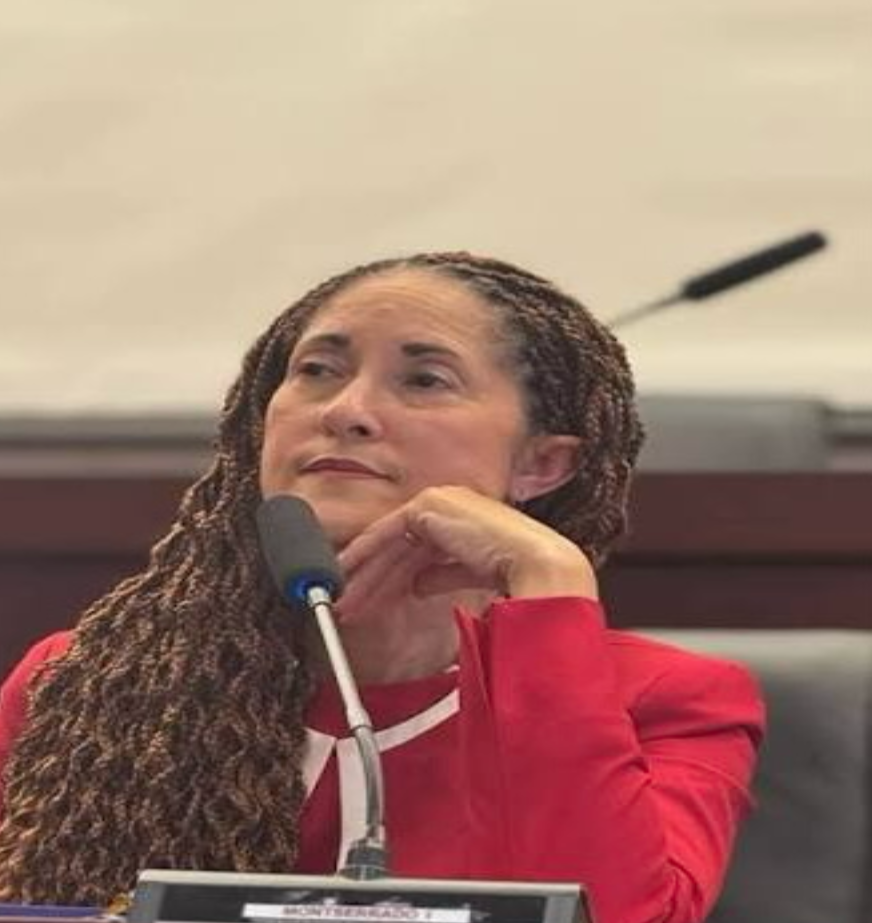
Monrovia, Liberia – Tensions at the University of Liberia have reached a tense point as the institution’s faculty and staff association has issued a work stoppage order and demanded the immediate resignation of President Dr. Layli Maparyan, accusing her of dictatorial leadership and violating the university’s founding charter.
In a press statement released Thursday, the University of Liberia Faculty and Staff Association (ULFASA) rejected two recent communications from Dr. Maparyan that threatened deans, directors, and department chairs, while also condemning what it termed a “PRC-styled ‘decree 88′” communication that allegedly grants the president powers not authorized by the university’s governing documents.
ULFASA’s statement characterizes Dr. Maparyan’s leadership style as “a show of grave dictatorship and a Nazi-styled leadership” — language that underscores the depth of the crisis gripping Liberia’s largest public university.
At the center of the dispute is the purported endorsement of a Human Resources Manual by a board committee, which ULFASA argues is “ultra vires” — beyond legal authority — as it violates key provisions of the university’s by-laws. According to the faculty association, only the full Board of Trustees has the authority to approve policy and program decisions, not individual committees.
Legal and Constitutional Questions
The association is invoking both the University of Liberia Charter and the Liberian Constitution in its challenge to the president’s authority. Specifically, ULFASA points to Article II, Section 2 of the university’s by-laws, which outlines the institution’s objectives to “promote the interest of the state and the growth and improvement of the University.”
More significantly, the faculty group alleges that Dr. Maparyan has attempted to “assign unto herself the power to determine association and disassociation by employees,” a move they say violates the Constitution of Liberia’s protections on freedom of association.
“While the Charter and the By-Laws clearly outline the roles and responsibilities of officers of the University, it lays out a clear procedure on the governance of the University and the powers therein,” the statement reads.
Perhaps most consequentially, ULFASA has reaffirmed that a resolution passed by its General Assembly remains “active and in full fulfillment,” directing all faculty and staff to remain disengaged from academic and administrative activities until their demands are met.
“All offices and academic units must remain closed,” the association declared, warning that any supervisor or director attempting to coerce staff into violating the mandate will face “prompt action.”
The statement was jointly signed by Eric T.S. Patten, Secretary General of ULFASA, and E. Martin Weah, II, Secretary General of ULSA, indicating a unified front between faculty and staff bodies.
Thursday’s escalation follows a previously issued “VOTE OF NO CONFIDENCE” in Dr. Maparyan’s leadership, which ULFASA now cites as justification for its demands. The association argues that the president’s recent communications only validate their position that she has exceeded her authority under the university’s governance structure.
The association has directed all members to look exclusively to ULFASA leadership for “official updates and the way forward,” signaling a deepening institutional rift that appears far from resolution.
Dr. Layli Maparyan’s Ascendancy
Dr. Layli Maparyan was appointed as the 16th President of the University of Liberia (UL) in late December 2024, officially assuming her duties on January 10, 2025. Appointed by Liberian President Joseph Nyuma Boakai, Sr., she became only the third woman to lead the 163-year-old flagship institution.
Dr. Maparyan is a globally renowned scholar with over three decades of experience in higher education, gender studies, and psychological research. Prior to her presidency, she served as the Executive Director of the Wellesley Centers for Women (WCW) and a Professor of Africana Studies. She previously taught as an Associate Professor at Georgia State University and an Assistant Professor at the University of Georgia.