


-Burphy Calls For Judicial Independence, Rule of Law
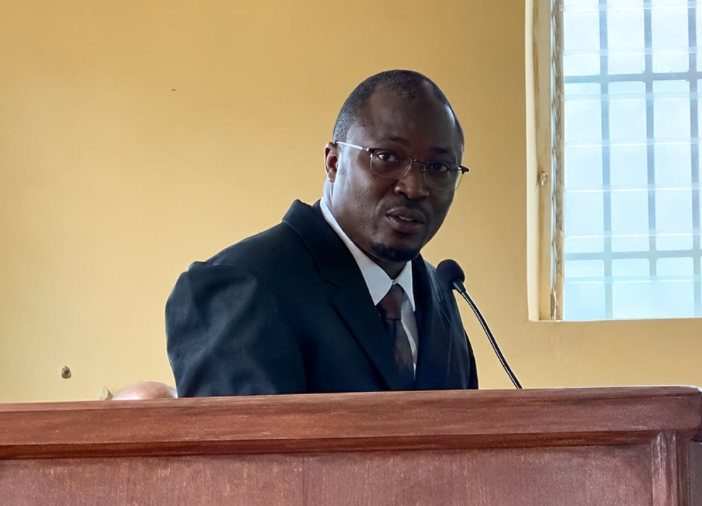
Newly admitted Liberian attorney Richlue O. Burphy, has issued a passionate call for an independent Judiciary, warning that political pressure, public opinion, and undue interference could undermine the administration of justice and threaten the constitutional rights of ordinary citizens.
He spoke during the opening of the 5th Judicial Circuit of Liberia, where he had the opportunity of responding to the Presiding Judge’s charge on behalf of his colleagues as they were admitted into the Liberian Bar and took their solemn oath as Attorneys-at-Law.
In an address centered on one of the most fundamental pillars of constitutional democracy, Burphy stressed that judicial independence must not be viewed as a privilege reserved for judges, lawyers, or the legal profession.
Instead, he described an independent Judiciary as a constitutional safeguard belonging to every Liberian, arguing that citizens cannot enjoy meaningful justice when courts are subjected to political influence, public pressure, or interference from powerful interests.
“The independence of the Judiciary is not a privilege for judges or lawyers. Rather, it is a constitutional safeguard for every citizen,” Burphy emphasized.
He urged the Judiciary to be allowed to perform its constitutional responsibilities without undue interference from the Executive, Legislature, media, or the court of public opinion, while acknowledging that the media and citizens have an important responsibility to hold public institutions accountable.
According to Burphy, accountability and judicial independence must, however, coexist within the boundaries of constitutional democracy.
He cautioned that when public pressure, political influence, or media commentary begins to interfere with judicial functions, the consequences extend beyond judges and lawyers, directly affecting citizens seeking justice.
“Justice must be determined by the law, the facts, evidence, and due process,” he stressed, making clear that judicial decisions should not be dictated by political pressure, popularity, or public sentiment.
His message, however, comes at a time when Liberia’s justice system continues to face intense public scrutiny, particularly over politically sensitive cases and growing demands for accountability from citizens, civil society organizations, and the media.
For Burphy, however, the credibility of the justice system depends on ensuring that courts remain guided by the Constitution and established legal procedures rather than the changing demands of public opinion.
The admission ceremony marked a significant milestone for Burphy and his colleagues, with family members, friends, legal professionals, and supporters traveling from near and far to witness their entry into the legal profession.
Among those present were Sam McClain Buoay, Jenneh D. Smith, Burphy Faithjoy, Ayee Vampelt, Stephen Hill, Ethel Mccrumada, Augusta Nimely, Mother Hannah H. Charlie, Prophet C. Jaaman Karnley, and legendary lawyer Cllr Varney G. Sherman who also gowned Burphy.
Burphy also highlighted the special presence and support of families who made significant sacrifices to attend the occasion, and described their prayers, sacrifices, encouragement, and support as an integral part of the journey toward becoming members of Liberia’s legal profession.
The newly admitted attorney also thanked the Liberia National Bar Association through the Grand Cape Mount Bar, the leadership of the 5th Judicial Circuit, the Bench, the Clerk of Court, and others whose contributions helped make the opening ceremony successful.
Meanwhile, Burphy’s admission now comes with what he described as a solemn responsibility to protect the dignity of the legal profession and defend the principles upon which Liberia’s justice system is founded.
He emphasized that becoming a lawyer is not merely a professional achievement but a constitutional responsibility requiring commitment, integrity, and courage.
“As members of the legal profession, we have a solemn responsibility to uphold the dignity of the profession and to defend the principles upon which our justice system is founded,” he declared.
Burphy added that the legal journey may have begun with the taking of an oath, but the greater challenge, he suggests, is ensuring that the oath translates into an unwavering defense of justice, even when the pressure to compromise becomes greatest.
-30-