By Jessica Cox
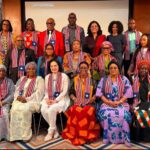
Liberia — Liberia has relaunched its Youth Connekt chapter with a renewed emphasis on transforming youth development programs into sustained pathways to employment, entrepreneurship, innovation, and leadership, as the country joined the global observance of International Youth Day.
The relaunch brought together government officials, United Nations agencies, development partners, private-sector representatives, civil society actors, and young Liberians. Speakers warned that youth empowerment must be measured not simply by the number of young people trained, but by what happens to them after training.
The event featured remarks from United Nations Development Programme (UNDP) Liberia Country Representative Amb. Aliou Mamadou Dia, with a keynote address delivered by Mohammed Kerkula, Chief Executive Officer of Gonet Academy. Minister of Youth and Sports Atty. Cornelia Wonkerleh Kruah used the occasion to outline the government’s broader approach to connecting young people with opportunities.
Ambassador Dia declared that the relaunch should not be viewed simply as another youth event, but as an opportunity to rebuild a platform capable of producing lasting results.
He noted that Liberia’s Youth Connekt initiative has benefited from UNDP’s technical and financial support over several years, including support to the Secretariat, the Innovation Lab, and Liberian participation in regional and continental youth platforms. Dia disclosed that YouthConnekt Liberia has been a major part of UNDP’s youth-development work since its launch in 2016, supporting digital skills, entrepreneurship, leadership development, innovation, and participation in continental summits.
“None of this happens without political will,” Dia declared, urging government, UN agencies, and private-sector partners to maintain attention to youth development beyond collaboration weeks and ceremonies.
The UNDP representative called for the reconstitution of the Youth Connekt steering committee, a functioning coordination mechanism, dedicated staff time, and a budget line capable of supporting the platform beyond individual projects or commemorative events.
Dia further linked Liberia’s Youth Connekt agenda to developments emerging from the first Mano River Union Youth Connekt gathering in Freetown in June. From June 18–20, Sierra Leone hosted the inaugural MRU Youth Connekt Forum, bringing together young people and stakeholders from Sierra Leone, Liberia, Guinea, and Côte d’Ivoire under the theme “One Region. One Generation. One Future.”
Liberian participation at the Freetown meeting has now taken on added significance because Liberia is expected to host the MRU Youth Connekt 2027 gathering. Dia therefore urged stakeholders to begin preparations early, arguing that Liberia’s ability to host the regional platform successfully will depend on whether the national Youth Connekt structure is functional and sustainable.
The Freetown gathering reportedly drew more than 2,000 young leaders, entrepreneurs, innovators, and policymakers from the Mano River region, underscoring the growing importance of cross-border youth cooperation.
In his keynote address, Gonet Academy CEO Mohammed Kerkula shifted the discussion toward one of the most persistent problems facing young Liberians: the gap between potential and opportunity.
Drawing on conversations he said he had held with young people before preparing his address, Kerkula said young Liberians generally understand the problems confronting them and possess creativity, ambition, and intelligence.
“The potential is not our problem,” he declared. The more difficult problem, he argued, is the absence of clear pathways through which young people can convert potential into livelihoods and productive careers. Kerkula pointed to the familiar dilemma confronting first-time job seekers: employers frequently demand years of experience, while young graduates struggle to obtain the first opportunity that would give them that experience.
He also highlighted the barriers facing young entrepreneurs who lack access to capital, mentors, markets, and practical support. “Young people must move beyond waiting for opportunities and become entrepreneurs, innovators, problem-solvers, and creators of opportunities for others,” Kerkula urged.
One of the strongest emphasized points from Kerkula’s message was a call for development partners and government to rethink how youth programs are evaluated. He questioned the practice of measuring success primarily through the number of people who attend workshops or receive certificates.
Instead, he argued, institutions should ask harder questions about whether programs lead to jobs, business survival, and increased income. The distinction, he suggested, is the difference between youth empowerment and youth transformation. “Youth development cannot end where the program ends,” was the central proposition of his keynote.
That argument is consistent with broader concerns in Liberia’s youth-development sector, where government and development partners have increasingly emphasized employment pathways, skills development, and stronger links between training and the labor market. The Ministry of Youth and Sports, for example, has recently advanced initiatives including the National Youth Pathway Program, technical and vocational training, and a Youth Outcome Compact designed to address youth unemployment.
Kerkula also challenged policymakers to rethink the relationship between education and employment, arguing that education should equip young people to think critically, solve problems, create value, work effectively, and contribute to national development.
That message comes at a time when Liberia is placing increasing emphasis on practical and market-relevant skills. In July, the Ministry of Youth and Sports announced that the Monrovia Vocational Training Center had been equipped with modern tools and materials, removing a longstanding barrier that required students to provide some of their own practical training materials.
The Youth Connekt relaunch comes against the backdrop of a broader reform agenda at the Ministry of Youth and Sports. In presenting her first 100-day assessment earlier this year, Minister Kruah acknowledged longstanding institutional challenges, including inadequate infrastructure, transportation constraints, and weaknesses in administrative systems. She also outlined a long-term framework known as “Rooted and Rising,” built around governance and institutional reform, evidence and foresight, the Pathway Framework, sports as an economy, the creative economy, and strategic investment.
In July, Liberia secured support from the UN Youth Office for a Youth, Peace and Security side event during the 81st United Nations General Assembly in New York. The event is expected to showcase Liberia’s youth-development vision and its PATHWAYs framework to international partners.
The government has also launched a National Vacation Job and Community Engagement Program aimed at providing temporary employment, community-service opportunities, and leadership experience for young Liberians during the school vacation.
Despite the optimism surrounding the relaunch, the speakers’ remarks also pointed to the central test facing Youth Connekt Liberia: implementation.
UNDP’s call for a functioning steering committee, dedicated staff, and a budget line highlights the institutional question that has affected many development initiatives in Liberia—whether programs can survive changes in personnel, funding cycles, and political attention.
Kerkula’s emphasis on jobs, business survival, and increased income raises a second question: whether youth programs can demonstrate measurable economic outcomes rather than simply participation figures.
The regional commitments emerging from Freetown raise a third: whether Liberia can convert its opportunity to host MRU Youth Connekt 2027 into a credible platform for regional business connections, innovation, and youth leadership.
These questions are particularly important because Liberia’s young population represents both a major development opportunity and a significant policy challenge. UNDP noted in its International Youth Day reporting that more than 60 percent of Liberia’s population is under 25.
The UNDP representative closed with a direct message to young Liberians: they should not be treated merely as future leaders. Young people, he argued, are already leaders and contributors to Liberia’s development.
The relaunch of Youth Connekt Liberia therefore carries a larger ambition than reviving a youth platform. Its success will ultimately depend on whether it can connect knowledge to opportunity, education to employment, innovation to investment, entrepreneurship to markets, and youth participation to actual decision-making.
For a country preparing to host the next MRU Youth Connekt gathering, the coming year will provide a practical test of whether the renewed platform can move from speeches and workshops to measurable outcomes.