

-Leymah Gbowee Challenges Politicians to Look Beyond Return to State Power
By Jerromie S. Walters
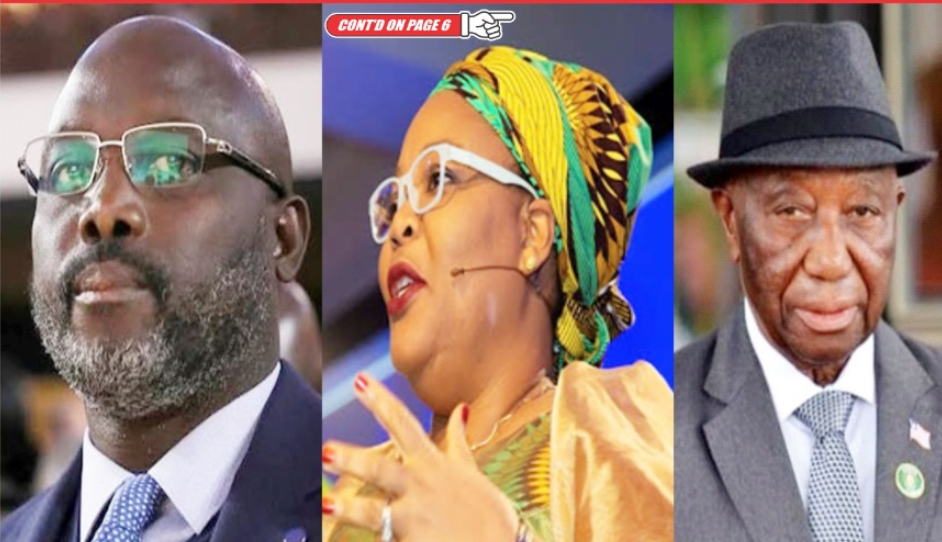
Monrovia – Nobel Peace Laureate Leymah Roberta Gbowee has posed a provocative question to the nation’s political class: Why is everyone fighting to make a comeback after being voted out of office?
The outspoken activist and civil society leader made the comments on Tuesday, September 8, 2026, via her official Facebook page, in what she dubbed “Troublesome Tuesday.”
“I have a burning question for Liberian politicians. After being voted out of office, are there no other options? Why is everyone fighting to make a comeback?” Gbowee wrote.
The Nobel Laureate offered an unconventional solution to what she sees as a fixation on political power. “I want to offer free consultation on how to make it outside of politics. Jobs plenty oh. You just need to be creative,” she added.
The remarks come against the backdrop of a recurring pattern in Liberia’s post-war political history, where the two dominant parties—the Unity Party (UP) and the Coalition for Democratic Change (CDC)—have alternated power after intense campaigns for a return to state authority.
Following twelve years of governance, the UP was defeated by the CDC in 2017. However, the UP campaigned for six years and returned to state power in 2024 after defeating the CDC in the November 2023 elections.
Gbowee, who was awarded the 2011 Nobel Peace Prize alongside Ellen Johnson Sirleaf and Tawakkul Karman for their non-violent struggle for the safety of women and women’s rights to full participation in peace-building work, has increasingly used her platform to challenge political egos and demand accountability.
Her recent contributions have focused on institutionalizing her peacebuilding blueprint, advocating for global education, and holding modern governments accountable to ensure that true societal stability goes deeper than the “silence of guns”.
Just months before her latest comments, Gbowee was at the center of a high-profile controversy with the Liberian Senate over the use of the title “Honourable” for lawmakers.
In July 2026, a dispute erupted when Gbowee organized a civic field trip for young students from rural counties to visit the Capitol building as part of her foundation’s “Peace Through Fair Play” initiative.
The confrontation centered on access for the children after Gbowee declined to address the lawmakers by their preferred elite title. The Senate subsequently locked the children out of the legislative chambers, according to Gbowee’s account.
Enraged that children were used as political pawns, Gbowee publicly blasted the lawmakers’ egos. She made national headlines by issuing a standing legal challenge, promising to write a $10,000 cheque to the constituents of any lawmaker who could legally prove that the Liberian Constitution or statutory laws mandated the use of the title “Honourable”.
Senate leaders publicly counter-accused Gbowee of being “disrespectful to national leaders”. Gbowee’s brand of activism, however, is not limited to domestic political spats. On the international stage, she has continued to wield her immense global credibility to advocate for peace and security.
In June 2026, Gbowee addressed the United Nations Security Council during its Open Debate on Women, Peace, and Security. She delivered a stinging critique of international funding priorities, declaring, “You can’t make war with millions and make peace with peanuts,” pushing global superpowers to view women as core, funded stakeholders rather than passive observers in peace processes.
She has also partnered with the Liberian government to formally endorse and champion the country’s high-profile bid for a non-permanent seat on the U.N. Security Council, lending her influence to reinforce the nation’s reputation as an African leader in conflict mediation.
At home, Gbowee has consistently pushed the administration of President Joseph Boakai to move beyond rhetoric, demanding rigorous anti-corruption policies, food security, and immediate solutions for staggering youth unemployment.
However, the activist’s fierce criticism of power has frequently placed her at the center of political controversy. In mid-2026, Gbowee organized a civic field trip for young students from rural counties to visit the Capitol building. However, a major dispute erupted over political etiquette when Gbowee refused to address the lawmakers by their preferred elite title of “Honourable”.
The Senate subsequently locked the children out of the legislative chambers, according to Gbowee’s account. The Senate’s Public Affairs Department later labeled Gbowee’s claims “false and misleading,” clarifying that no formal request for a chamber visit had been made and that senators were engaged in a consultative meeting.
The Senate’s statement further explained that only a letter from Mr. David S. Konneh was received on Tuesday, requesting that the Senate host the children for lunch. According to the release, when the group arrived, senators were in a consultative meeting preparing for the day’s legislative session.
The disagreement on Thursday was the culmination of a social media exchange that began just a day prior when Gbowee posted a message arguing that the title “Honourable” must be earned through integrity and service, not automatically conferred by office.
Because Gbowee wields immense local influence, her sweeping critiques of consecutive administrations—from George Weah to current President Joseph Boakai—frequently draw allegations that she is politically compromised.
Detractors and opposition groups in Liberia often accuse her of using her activist platform to score political points rather than providing tangible solutions. Some local critics point out that despite her global fundraising power, the scale of her local foundation’s initiatives is not enough to solve Liberia’s widespread youth employment crisis, telling her that “he who preaches decency must come with clean hands”.
In a development that has shaken the political establishment, Gbowee has refused to rule out a future run for power. She recently stated that if she ever decides to enter formal politics, she will skip lower legislative offices entirely: “If I decide to go for any office in Liberia… It will never be [a] senatorial seat; it will definitely be the Liberian Presidency”.
In January 2026, she declared partial interest in the Liberian presidency, stating, “I’m capable and competent of being president, but I’m not going to go ahead of God’s plan”. This has sparked fierce, continuous debate on whether a lifelong civil advocate can or should successfully transition into the head of state.
Despite her global fame, Gbowee remains deeply connected to the grassroots activism that defined her rise. In December 2025, her foundation officially celebrated the opening of “Sisters Place” in Bong County, Liberia—a safe, self-sustaining campus explicitly built to provide adolescent girls with residential security, academic scholarships, and intensive leadership training.
In July 2026, Gbowee joined forces with Global Citizen as a marquee signatory and champion for the “No Child on the Sidelines” Campaign, an international lobbying effort demanding heavier global economic investments in adolescent education.
Her Gbowee Peace Foundation Africa-USA (GPFA-USA) launched its comprehensive 2026–2030 Strategic Plan in April 2026, creating an updated framework to fund local youth leadership, workforce preparation, and grassroots community voice initiatives across West Africa.
As the debate over her political future continues, Gbowee has not shied away from criticizing what she sees as the Legislature’s misplaced priorities. In July 2026, she strongly criticized the move to expand the House of Representatives from 73 to 89 electoral districts, calling on national leaders to channel scarce resources into education, healthcare, and roads instead of legislative expansion.
“A bill to increase the number of lawmakers? Just so we can have more people fighting, huffing and cussing for an honorable title. Schools need labs, hospitals need beds, more roads need to be built. God, please help us,” she wrote on a live Facebook podcast.
The question Gbowee raised on “Troublesome Tuesday”—why politicians are so fixated on comebacks—echoes a broader concern about the nature of leadership in Liberia. As a peace activist responsible for leading a women’s non-violent peace movement that helped bring an end to the Second Liberian Civil War in 2003, Gbowee’s voice carries the moral authority of someone who helped create the very peace that now allows political competition to exist.
Whether her “free consultation” will be taken up by any of Liberia’s political elites remains to be seen, but one thing is clear: Gbowee shows no signs of slowing down in her mission to challenge the status quo. For the Nobel Laureate, the fight for Liberia’s soul continues—one provocative post at a time.