

–How Fake Medicines Continue to Reach Liberia’s Streets
By Franklina Frankline
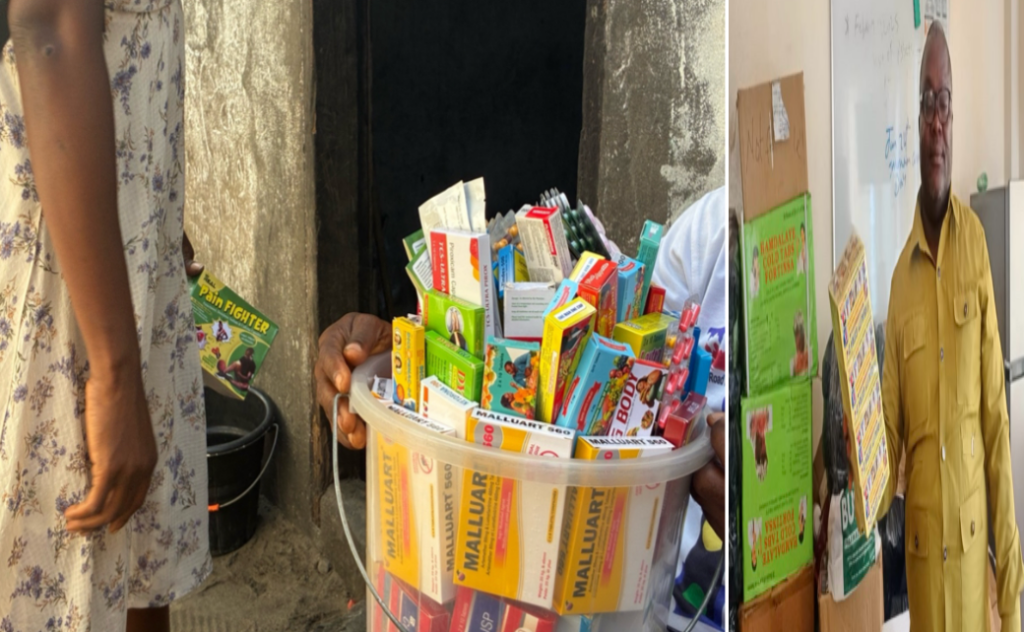
Esther Jakar remembers the desperation that drove her to buy medicine from a street vendor. Her son had persistent diarrhea, but she could not afford to take him to a clinic. So, when a seller carrying medicine in a bucket passed through her neighborhood in West Point, she bought what she could afford.
Instead of getting better, her son became worse.“The more my son took the medicine, the more he was getting sick,” Jakar recalled.
His body became hot, and his condition deteriorated. It was only after a relative found money for a clinic visit that doctors diagnosed him with diarrhea. The medicine purchased from the bucket had done nothing to help.
For Jakar, the experience was painful, not only because her child remained sick, but because she had spent the little money she had on medicine she believed would help.
“I do feel bad,” she said. “When you spend money on something, and you expect it to work, and it doesn’t work, it can hurt your feelings.”
Jakar’s experience reflects a wider public-health problem in Liberia, where people who cannot afford clinic visits or medicines from licensed pharmacies often turn to cheaper alternatives sold from buckets, market tables and street corners. The products may look genuine. But health workers and regulators warn that some are substandard, improperly stored or falsified, and the consequences can extend far beyond wasted money.
A hidden threat to public health
Determining the exact scale of the problem in Liberia remains difficult. Regional estimates, however, indicate the threat is extensive.
The World Health Organization estimates that one in every 10 medicines circulating in low- and middle-income countries is substandard or falsified, with the proportion in Africa significantly higher.
A 2023 report by the United Nations Office on Drugs and Crime referenced by the Health Policy Watch cited estimates that falsified antimalarial medicines contribute to approximately 267,000 deaths annually in sub-Saharan Africa, while counterfeit antibiotics used to treat childhood pneumonia are linked to another 169,000 deaths.
In Liberia, the Liberia Medicines and Health Products Regulatory Authority (LMHRA) has estimated that more than 40 percent of medicines circulating in the country are substandard, counterfeit or improperly stored, according to a report by the Liberian Observer.
For health workers, the danger can be difficult to detect because patients may not realize that the medicine they are taking is contributing to their failure to recover.
When treatment fails
Boima Dougba, a physician assistant with nearly a decade of experience, said he regularly encounters patients whose conditions fail to improve despite being prescribed appropriate medication.
“You prescribe the actual medication, they go and take that drug, go back home, come back for the next visit, and the condition does not stay improving at all,” Dougba said.
When he asks whether patients have taken other medicines purchased elsewhere, some deny doing so, even when there are indications that they may have obtained additional medicine from street vendors.
The danger is particularly serious with antibiotics. If a drug contains too little of its active pharmaceutical ingredient, or none at all, it may fail to kill the bacteria causing an infection. The surviving bacteria can adapt, contributing to antimicrobial resistance and making future infections more difficult to treat.
When genuine medicine loses its effectiveness
The problem does not always begin with a deliberately falsified product.
Dougba said genuine medicines can also lose their effectiveness when they are stored or transported under inappropriate conditions. Street vendors frequently carry medicines in open buckets or other containers exposed to direct sunlight and heat.
“You’re exposing the medications to heat and sunlight,” he said. “And by the time they break down, it’s not a real medicine anymore,” even if the product was genuine when manufactured.
Consumers may therefore unknowingly purchase medicines whose effectiveness has already been compromised.
From the border to the bucket
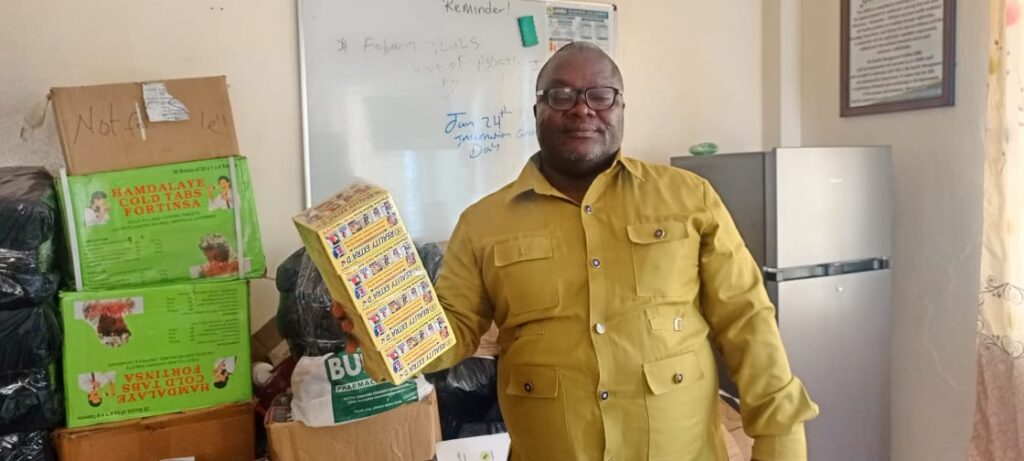
Dr. Paul D. Y. Higgins, the agency’s Director of the Inspectorate, LMHPRA displaying some of the confiscated medicines
According to the LMHRA, the problem extends beyond informal sellers. Dr. Paul D. Y. Higgins, Director of the LMHRA’s Inspectorate, said medicines can enter Liberia through the formal supply chain and later find their way into informal markets. In some cases, he said, medicines obtained through pharmacies are removed from the formal system and placed in buckets for street sale.
The regulator now generally uses the term “substandard” rather than “counterfeit” to describe medicines that do not contain the required amount of active pharmaceutical ingredient.
Higgins said LMHRA has inspection teams at border points and conducts random and routine inspections. But the authority faces significant logistical challenges.
Some trucks entering Liberia are so large, he said, that inspectors, and sometimes national security personnel, cannot completely offload them for inspection.
“Others may pass and come into the country,” Higgins said.
Once medicines reach Monrovia, enforcement becomes another challenge. Higgins said inspectors remove medicines from the streets, but vendors often return.
“The bucket boys are a serious challenge,” Higgins said. “When you get them from there, tomorrow, you see them back.”
Higgins said some people also obtain medicines through pharmacies before transferring them to buckets for resale.
That raises a fundamental accountability question: If medicines can move from the formal supply chain into informal street markets, where does the system fail?
Higgins said the authority wants to identify importers and ensure that people purchasing medicines for resale operate legitimate pharmacies, medicine stores or other authorized businesses.
However, he could not provide statistics on how many importers or licensed businesses had been sanctioned, prosecuted or closed for violations.
Limited enforcement capacity
The LMHRA could not provide an exact figure for medicine seizures, inspections or enforcement actions conducted over the past two years. Higgins said seized medicines are stored in LMHRA warehouses but could not provide a total quantity.
The absence of readily accessible enforcement figures makes it difficult to independently assess the scale and effectiveness of regulatory enforcement.
The authority also has limited laboratory capacity, meaning much of its inspection work is visual. Higgins said the LMHRA currently has only two regional offices serving Liberia’s 15 counties, with some counties visited only two or three times a year.
“We are short of logistics,” he said.
The LMHRA has an annual budget of US$1.8 million for the 2026 fiscal year, with the vast majority, approximately US$1.4 million, allocated to salaries. Only US$442,304 goes toward goods and services
The regulator says it needs a properly equipped laboratory, modern testing tools, additional offices across the country and logistical support to conduct regular inspections.
He said efforts are underway, with government and partner support, to strengthen laboratory capacity, with the expectation that the facility will be better equipped within three to four months.
A five-year plan
The LMHRA plans to address some of these challenges through a new five-year strategic plan covering 2026 to 2030.
According to Higgins, the plan will expand border inspections, decentralize the regulator’s presence across all 15 counties and introduce a digital medicine traceability system using verification codes.
The authority aims to have 95 percent of medicines in Liberia tested by 2030.
He disclosed that LMHRA also conducts joint inspections with the Pharmacy Board and, in some cases, the Drug Enforcement Agency. At Roberts International Airport, LMHRA personnel work with customs officials to inspect luggage and receive medicinal products intercepted by customs for further action.
Despite these measures, gaps remain in border inspections, community enforcement, laboratory capacity and regulatory coverage outside Monrovia.
The cost of taking the wrong medicine
The public-health consequences can be severe.
Higgins furthered that substandard medicines could cause diseases to relapse because patients do not receive the required amount of active pharmaceutical ingredients. He also warned that genuine medicines exposed to excessive heat, sunlight and rain can lose potency, estimating losses of between 30 and 50 percent.
He identified vitamins, painkillers, antibiotics and malaria medicines among products commonly bought on the streets.
The risks are particularly serious for malaria patients. Someone taking ineffective malaria medicine may continue to deteriorate while believing they are receiving treatment. Without effective treatment, malaria can become life-threatening.
Licensed pharmacies are not entirely free from the problem. Higgins said medicines sold through licensed pharmacies are tested and described the system as generally reliable, but unauthorized medicines can still enter the system.
Poverty drives the informal market
For Jakar, the regulator’s warning to avoid street medicines is easier to give than to follow. The underlying problem is affordability.
A clinic visit costs money, medicine from a licensed pharmacy costs more than medicine sold on the street. For a parent with little or no cash and a sick child at home, the choice may not be between safe and unsafe medicine, it is between doing something and doing nothing.
“If you don’t have money, you can’t go to the clinic,” Jakar said. “One is better than zero.”
That reality complicates Liberia’s efforts to control substandard medicines. Regulatory enforcement can remove unsafe products, strengthen border controls and improve testing, but demand for cheaper informal alternatives is likely to persist as long as many families struggle to afford legitimate healthcare and medicines.
Until those gaps are addressed, people with limited means may continue to face the same difficult choice Jakar faced: risk buying medicine from the street or go without treatment altogether.