

-At LCPS 10th Convocation
By Jerromie S. Walters
Monrovia – Prof. Angnon A. Koffi Balogou, President of the ECOWAS Regional Council for Health Professionals’ Education, urged the Liberia College of Physicians and Surgeons (LCPS) to recognize that building a resilient, equitable, and sustainable health system by 2030 demands competent, motivated, and ethically guided health professionals supported by strong governance and accountability—not just buildings, money, or training.
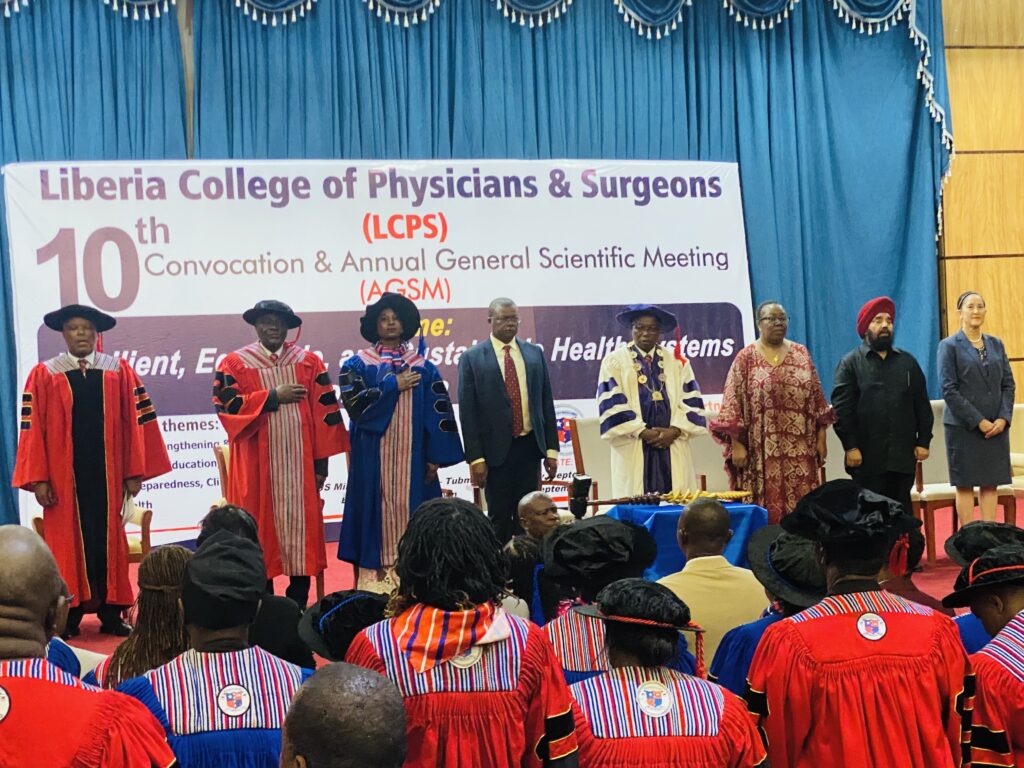
That challenge formed the core of the keynote address delivered by Prof. Agnon A. Koffi Balogou, as the College marked its 10th Annual General and Scientific Meeting and Convocation on Friday, September 18, 2026, at the EJS Ministerial Complex in Congo Town.
The convocation was held under the theme “Resilient, Equitable, and Sustainable Health Systems for Liberia 2030”.
It celebrated a decade of scientific excellence and formally inducted the 2026 cohort of Fellows and Members across eleven faculties, including General Surgery, Obstetrics & Gynecology, Ophthalmology, Radiology, Anesthesiology, Community Medicine, Internal Medicine, Pediatrics, Family Medicine, and Psychiatry.
Delivering the keynote address, Prof. Balogou, who hails from Togo, described the theme as timely, demanding, and strategic, urging stakeholders to move beyond general commitments toward the concrete architecture of a health system capable of delivering reliable care in ordinary times and maintaining social services in moments of shock.
“The theme invites us to look back with respect, to look forward with discipline, and to defend what kind of health system Liberia must build by 2030,” he told the gathering.
He was emphatic that the 2030 target cannot be achieved through isolated interventions. “Liberia 2030 will not be achieved through infrastructure alone, nor through financing alone, nor through training alone,” he warned.
According to him, achieving the national health goal requires deliberate system governance that sets priorities and enforces accountability. “The health workforce must be competent, motivated, distributed, and ethically led. Quality assurance must be embedded. Primary healthcare must be strong enough to reach communities and districts, and the system must be able to integrate services,” he said.
Prof. Balogou acknowledged the profound challenges Liberia’s health system has endured, but noted that the country has produced courage, knowledge, and institutional memory in the face of adversity. He said the question is no longer whether Liberia can recover—having repeatedly proven its capacity—but whether that recovery can be converted into lasting transformation.
LCPS President Reflects on a Decade of Growth
In a special statement, Prof. John K. Mulbah, President of the LCPS, reflected on the College’s remarkable journey from humble beginnings to a national institution. He noted that the College has grown from four to eleven faculties and has successfully trained 166 specialists at the membership and fellowship levels.
“This graduation displays the outcome of years of studying and effort,” Prof. Mulbah stated. “The progress of this college is part of the broader progress in the health system of Liberia.” He reminded the inductees that their new qualification is not the end of the journey but the beginning of greater responsibility, urging them to demonstrate perseverance in their practice.
Prof. Mulbah outlined his administration’s strategic priorities, including strengthening the training program to meet Liberian needs, advancing research and innovation, integrating technology, and fostering institutional and financial partnerships.
He called for deeper commitment from national and international partners, stressing that the College’s success would not have been possible without their support. He thanked the Government of Liberia, particularly the Ministry of Health and the Ministry of Finance, for their continued backing, and announced that the College is completing the process of purchasing its current property.
2026 Inductees
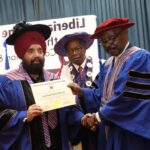
The 2026 inductees include Dr. Patience Dono Franklin, Dr. Cecelia J. Nuta, and Dr. Hawa Sonii-Koon for the Faculty of Pediatrics & Child Health. Inducted as Fellows by Examination and Election were Dr. Terseer Utam (Urology), Dr. Gerald Ekwen (General Surgery), Dr. Vickie Fayiah Sam (Ophthalmology), and Dr. Sovich Sankoh-Karmor (Obstetrics & Gynecology).
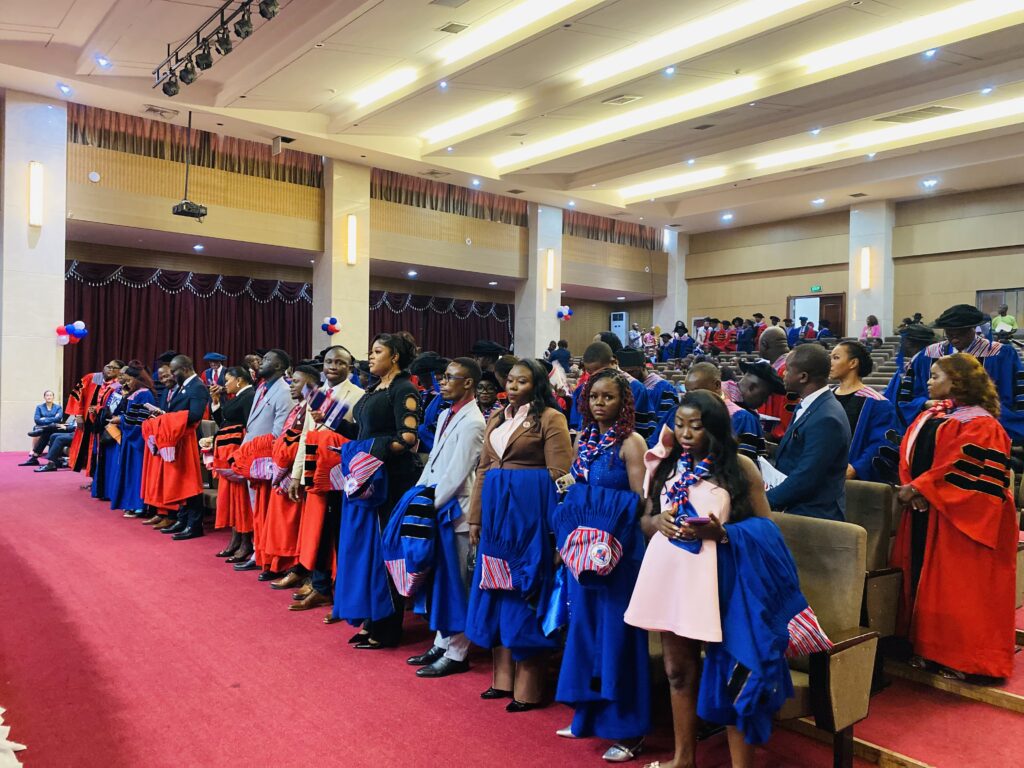
The College of Physicians also welcomed new members by examination, including Dr. Seth N. Tally, Dr. Samphina O. Grose, and Dr. Krystle Joekolo-Ndupe Ilar (Internal Medicine), as well as Dr. Famah Sumo-Giddings and Dr. Rukiatu M. Sheriff-Coleman (Pediatrics & Child Health).
The College of Surgery inducted Dr. Alieu Kamara (Obstetrics & Gynecology), Dr. Yarvoh M. Moore-Wilson, Dr. Alexander S. Magona, Dr. Prince Gweh, Dr. Emmanuel T. Singbe, and Dr. Abdoul Derrick Duannah (General Surgery).
The event featured goodwill messages from key regional and international medical bodies. In a message delivered on behalf of the National Postgraduate Medical College of Nigeria, the President commended the LCPS on its 10th Convocation.
“The theme of your conference, ‘Resilient, Equitable, and Sustainable Health Systems for Liberia 2030,’ is very suitable at this time as it succinctly captures the components of Sustainable Development Goal 3,” the message read. The Nigerian College expressed optimism that the LCPS efforts would address disparities in health access for vulnerable populations and boost multi-disciplinary research partnerships.
Similarly, the West African College of Surgeons, expressed strong support for Liberia regarding this year’s theme, noting that it aligns with broader continental endeavors. He congratulated the inductees and reaffirmed the College’s commitment to regional collaboration.
The President of the Liberia Chapter of the West African College of Nurses and Midwives also extended congratulations to the graduating team, noting that building a better health system serves everyone and commending the LCPS for a decade of scientific excellence.
Also, a proxy of the Liberia Medical and Dental Council (LMDC), acknowledged the critical role of the inductees’ training. “Your teaching goes a long way. We have the fullest level of confidence in your ability,” he stated, expressing the Council’s eagerness to work alongside the new graduates.
The Journey of the LCPS
Before the 1990 civil war, Liberia had developed a vibrant medical education system that attracted students from throughout West Africa and produced excellent clinicians and academicians. The conflict had profoundly negative and long-lasting impacts on that system. By 2012, the country had only 215 registered physicians, with fewer than 15 specialized clinical physicians for a population of over 4 million.
In response to this critical shortage, the National Legislature passed an Act establishing the LCPS on May 22, 2012. Following a technical visit to study the Ghanaian model of postgraduate training, the College was officially launched on September 30, 2013, by former Vice President Joseph Nyuma Boakai.
Postgraduate training in core disciplines began in October 2013 with 19 residents, though it faced a temporary suspension due to the Ebola crisis in 2014 before resuming in 2015. Since its first graduation in 2017, the College has continued to expand its faculties, including the recent additions of Radiology, Anesthesiology, and Orthopedics and Traumatology.