

By Jerromie S. Walters
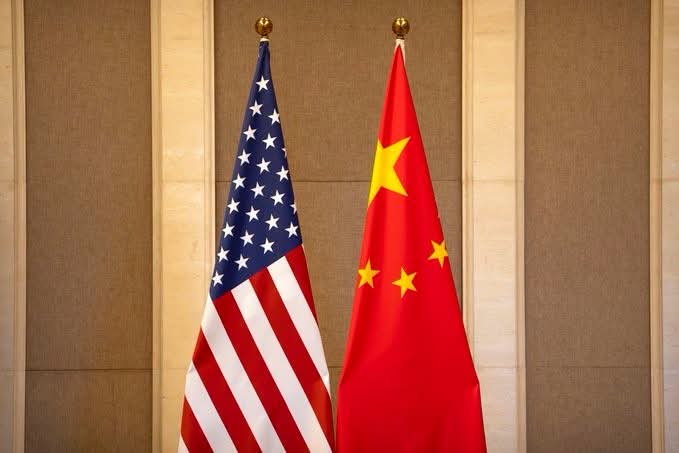
WASHINGTON — Chinese President Xi Jinping will arrive in the United States on Wednesday for a high-stakes, three-day official state visit, marking his first official trip to the nation’s capital since 2015. The summit, scheduled for September 23 to 25, follows an invitation from President Donald J. Trump and serves as a rapid reciprocal follow-up to Trump’s state visit to Beijing just four months ago.
The summit arrives at a critical geopolitical juncture, with both leaders seeking diplomatic alignment on global security and navigating the cascading fallout from the ongoing war in Iran. The immediate domestic focus, however, centers on a ticking economic clock. The current U.S.-China trade truce is set to expire on November 10, giving trade policy heightened urgency this week.
Reports indicate the unveiling of a “30 by 30” deliverable, a framework where both nations would remove existing tariffs on $30 billion worth of imported goods. Trade negotiators also expect Beijing to formalize fresh, multi-billion-dollar purchase agreements for U.S. soybeans and Boeing commercial aircraft.
Beyond trade, the tech sector is also expected to see immediate policy shifts. Following quiet, preliminary negotiations between U.S. and Chinese officials in New York, the two administrations have agreed to launch a new bilateral artificial intelligence dialogue.
The initiative establishes an unprecedented incident-notification mechanism designed to mitigate national security threats stemming from advanced AI technologies. This Washington summit aims to solidify a fragile “constructive relationship of strategic stability” initiated during Trump’s visit to Beijing from May 12 to 15.
While that May meeting produced selective compromises rather than a sweeping breakthrough, it successfully lowered the diplomatic temperature. In Beijing, the two leaders established dedicated U.S.-China boards on trade and investment to manage non-sensitive commerce, while securing a vital commitment from Beijing to address critical mineral supply chains, including rare earths, gallium, germanium, antimony, and graphite.
The May talks also yielded crucial geopolitical guardrails. Trump and Xi jointly declared that Iran must not acquire a nuclear weapon and issued a unified call to reopen the blockaded Strait of Hormuz without international tolls. Furthermore, Beijing committed to purchasing at least $17 billion annually in U.S. agricultural products through 2028, building upon existing multi-million-ton soybean targets.
The foundation for this current diplomatic track dates back to October 30 of last year, when Trump and Xi struck an initial breakthrough agreement during the APEC summit in Busan, South Korea. Under the Busan framework, China suspended fresh export controls on critical minerals and halted retaliatory tariffs.
In return, the U.S. slashed fentanyl-related tariffs on Chinese imports by 10 percentage points and temporarily shelved broader reciprocal tariffs. While the White House has declined to publish a rigid hour-by-hour agenda for this week, officials confirmed that continuous, wide-ranging discussions will dominate the state visit.