

–For Omitting Transitional Justice Agenda
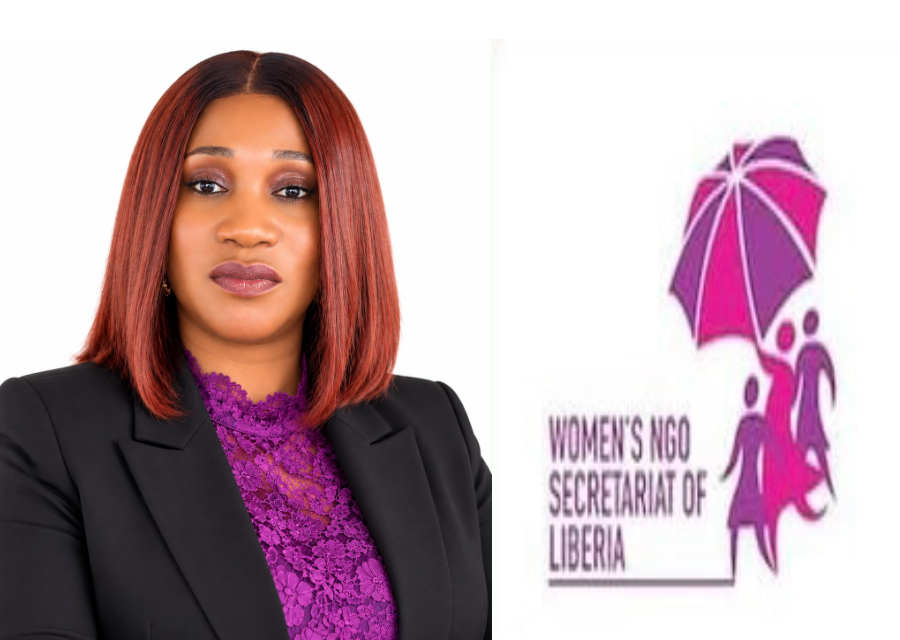
MONROVIA, Liberia — The Women NGOs Secretariat of Liberia (WONGOSOL) has raised concerns over President Joseph Nyuma Boakai’s address to the 81st Session of the United Nations General Assembly, stating that the omission of Liberia’s ongoing transitional justice process weakened the country’s message to the international community.
In a press statement issued Friday, WONGOSOL welcomed the President’s emphasis on restoring trust, strengthening multilateralism, advancing peace and security, promoting inclusive development, and reforming global governance. The organization particularly applauded his recognition that women’s leadership contributes to sustainable peace, economic growth, and accountable governance.
However, WONGOSOL stressed that the formal UNGA address missed a critical opportunity to highlight the central role of women in peacebuilding, justice, and reconciliation, as well as the unfinished work of Liberia’s transitional justice agenda.
“Liberia’s journey from conflict to constitutional democracy cannot be fully understood without acknowledging the contributions of women to peacebuilding, the experiences of victims and survivors, and the unfinished work of transitional justice,” said Esther S. Davis Yango, Executive Director of WONGOSOL.
WONGOSOL noted that while side events and other global engagements hold value, the President’s formal address did not explicitly reference key elements of Liberia’s transitional justice agenda, including the Truth and Reconciliation Commission, accountability for conflict-era crimes, victims and survivors, reparations, reconciliation, and memorialization.
The organization argued that this omission is significant because the central themes of the President’s address—restoring trust, strengthening institutions, accountability, the rule of law, and Liberia’s journey from conflict to constitutional democracy—are closely connected to transitional justice.
WONGOSOL called on the government to clearly articulate what is required to establish and operationalize the War and Economic Crimes Court (WECC) and strengthen the Office of War and Economic Crimes Courts (OWECC). This, the organization said, includes sustained political commitment, adequate resources, institutional capacity, and international support.
The strengthening of the Liberia Anti-Corruption Commission (LACC) should likewise form part of this broader accountability and rule-of-law agenda, WONGOSOL added.
“The UN General Assembly was a significant opportunity for Liberia to tell the world not only that we are committed to transitional justice, but also what it will take to deliver it,” Yango said.
“The establishment and operationalization of the War and Economic Crimes Court and successfully transitioning the OWECC to a viable judicial entity require sustained political commitment, adequate resources, institutional capacity and meaningful engagement with victims, survivors and civil society,” she stressed.
While welcoming the President’s identification of preventive diplomacy, mediation, and early warning as essential to international peace and security, WONGOSOL stressed that women must be meaningfully included in each of these areas. “Liberia’s own history demonstrates that women are not only affected by conflict; they are also peacebuilders, mediators, community leaders, early-warning actors and advocates for reconciliation,” the statement read.
The organization called for Women, Peace and Security commitments to move beyond recognition to implementation, financing, participation, and accountability. WONGOSOL also responded to the President’s statement that “When women lead, peace agreements last longer, economies grow faster, and governance becomes more accountable,” stressing that women’s leadership must translate into meaningful access to decision-making, political participation, economic resources, security institutions, peace processes, and national development planning.
The organization called for adequate and predictable financing, structured implementation plans, and affirmative legislative and governance reforms to accompany Liberia’s Women, Peace and Security commitments. “Commitments without resources, implementation mechanisms and accountability cannot become sustainable policy,” WONGOSOL warned.
As Liberia advances its transitional justice agenda, WONGOSOL called for the experiences, rights, and leadership of women and girls to be deliberately incorporated into justice and reconciliation processes. This includes meaningful participation of women victims and survivors, recognition and documentation of conflict-related sexual and gender-based violence, gender-responsive reparations, survivor-centered approaches to justice, protection of victims and witnesses, and the preservation of women’s testimonies and historical records.
The organization further called for the intentional establishment within the national budget of initial start-up funding for the WECC and NACC, as well as the establishment of a National Reparations Trust Fund.
“Women must not only be remembered as victims of Liberia’s conflict. They must be recognized as agents of peace, justice and national transformation,” Yango said.
WONGOSOL also urged that the ARREST Agenda and other national development initiatives be implemented through a gender-responsive lens, noting that agriculture, infrastructure, education, rule of law, sanitation, and tourism all have direct implications for women and girls.
The organization called for practical affirmative measures to address structural barriers limiting women’s access to land, finance, markets, education, technology, justice, and decision-making. It similarly called for climate action that recognizes both the particular vulnerabilities of women and their leadership in building community resilience.
Liberia’s Opportunity to Lead
WONGOSOL emphasized that Liberia’s experience gives the country a distinctive voice in global conversations on peacebuilding, women’s leadership, reconciliation, and democratic recovery.
As Liberia calls for a United Nations that “delivers for all,” WONGOSOL believes that “all” must meaningfully include women, victims and survivors, young people, rural communities, and others who have historically been excluded from decision-making.
“Restoring trust requires justice. Managing transformation requires inclusion. Sustaining peace requires women’s leadership. And reconciliation requires that we confront the past while building a more inclusive future,” Yango said.
WONGOSOL called for gender equality, Women, Peace and Security, transitional justice, accountability, and reconciliation to be treated not as separate agendas, but as interconnected pillars of Liberia’s democratic transformation.
The Women NGOs Secretariat of Liberia (WONGOSOL) is a network of over 250 women-led and women-focused civil society organizations across Liberia. Since 1998, WONGOSOL has been at the forefront of promoting women’s rights, social justice, and good governance through advocacy, policy engagement, and grassroots mobilization.