

By: Jessica Cox
MONROVIA, Liberia — The National Housing Authority (NHA) says it is developing a digital housing investment portal aimed at helping Liberians in the diaspora navigate land acquisition, permitting and housing development processes in Liberia.
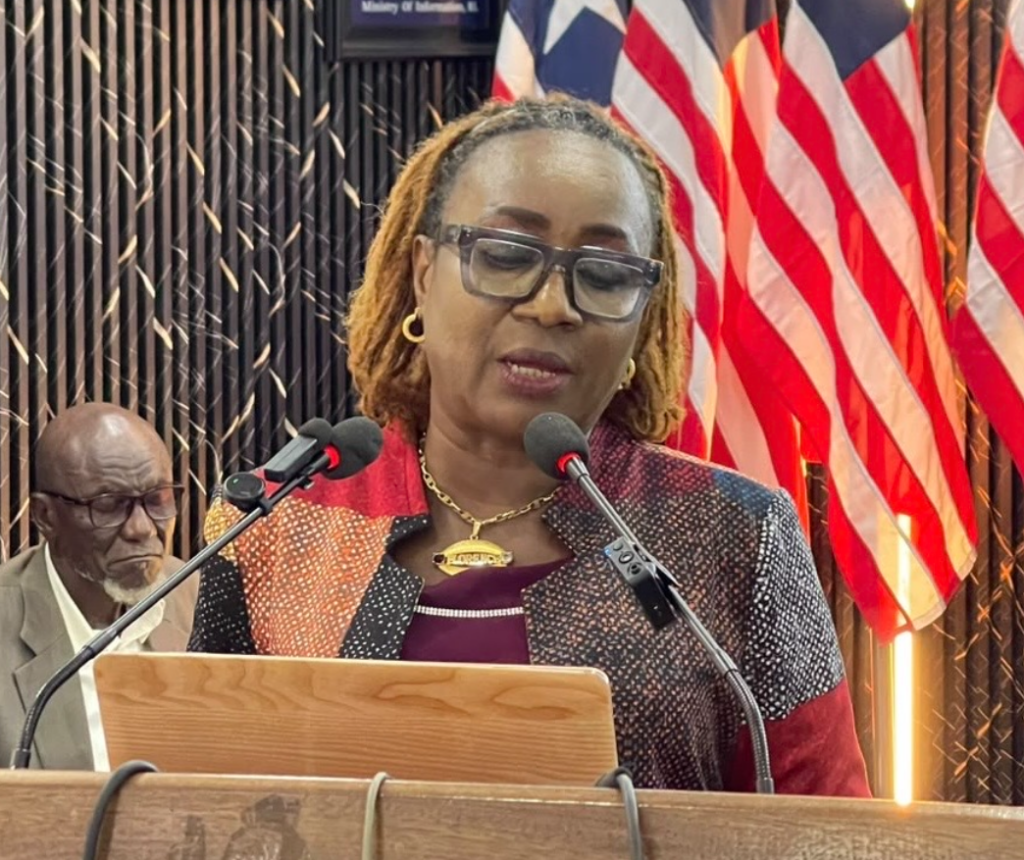
NHA Managing Director Florence K. Geegbae made the disclosure Tuesday at the Ministry of Information press briefing, saying the initiative is designed to address concerns raised by diaspora investors about land transactions and the lack of information on housing development procedures.
Geegbae said the Housing Investment Portal will serve as a single online access point where diaspora investors can obtain information on land verification, permit requirements, construction cost calculations and licensed professionals.
She said the initiative followed discussions during a recent diaspora conference in the United States, where housing investment challenges facing Liberians abroad were highlighted.
According to Geegbae, two major obstacles identified were a trust deficit in land transactions and a knowledge gap regarding estate development in Liberia.
She said the portal will guide investors from their initial inquiries through project completion, while an estate development roadmap will provide a step-by-step guide covering the process from land acquisition to securing an occupancy permit.
The NHA Managing Director said the authority will also establish a partnership program through which NHA experts will assist diaspora investors with land ownership, zoning and permitting requirements.
She said the NHA will work with the Liberia Land Authority to pre-verify parcels of land and develop a portfolio of land suitable for housing projects, allowing investors to avoid independently navigating the land verification process.
Geegbae said the authority is also considering planned communities specifically for diaspora investors, where housing developments could be concentrated on properly planned land with access to basic infrastructure and services.
Under the proposed arrangement, she said, developers could construct homes within designated areas equipped with facilities such as water, electricity, sewage systems, health centers, schools and commercial spaces.
“If they can do it in Ghana, they can do it in Nigeria, we can do it here in Liberia,” Geegbae said, stressing the NHA’s intention to bring more organized housing development to the country.
Meanwhile, Geegbae disclosed that the NHA has negotiated and commenced the acquisition of 578 acres of land for housing development, with additional land commitments in several counties still awaiting surveys.
She also disclosed that preparations are advancing for a 482-unit housing project, with a contract expected to be signed shortly, while work is continuing on another planned 600 housing units, including land surveys and soil testing.
To establish a market for the homes, Geegbae said 3,340 civil servants have enrolled in the NHA’s off-takers program.
She said the program is assessing participants’ salaries and housing preferences, with homes expected to be made available through cash sales, mortgage arrangements and rent-to-own schemes.
Geegbae further disclosed that the NHA is working toward a housing insurance arrangement under which homes developed through its programs, including public-private partnerships, would be insured.
She said the authority has also signed a memorandum of understanding with Shelter Afrique Development Bank to explore cooperation in affordable housing and sustainable urbanization.
Beyond its current housing initiatives, Geegbae said the NHA is seeking stronger legal powers through a proposed new NHA Act awaiting submission to the Legislature.
She said the proposed law would strengthen the authority’s regulatory and monitoring functions and provide a legal framework for addressing rental issues and establishing a national housing trust fund.
The NHA says Liberia currently needs about 200,000 new dwelling units to reduce overcrowding, while 163,035 additional units are needed to keep pace with urban population growth.
The authority also estimates that approximately 512,000 urban dwellings will be needed by 2030, underscoring the scale of the country’s housing challenge.