

-Calls for Fairer Benefits
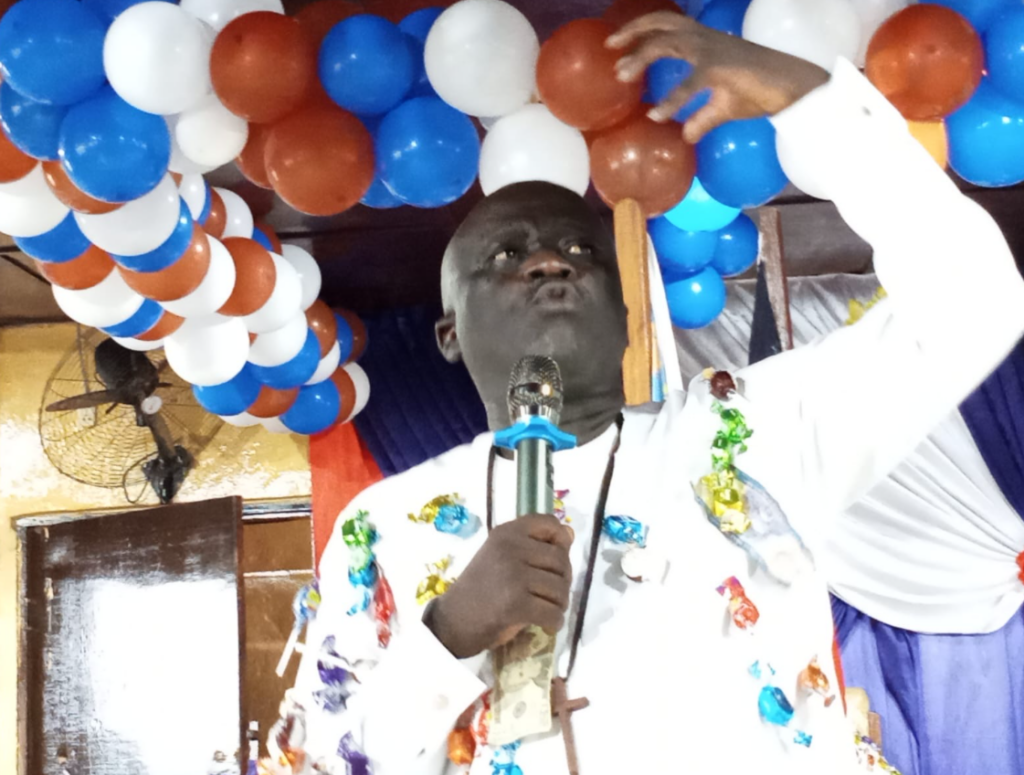
MONROVIA, Liberia — Former President of the Liberia Council of Churches, Bishop Kortu Brown, has called for greater accountability in Liberia’s concession agreements, arguing that communities and ordinary Liberians are not receiving a fair share of the benefits generated from the country’s natural resources.
Bishop Brown said concession activities involving minerals, forests and other natural resources should translate into tangible improvements in the lives of people living in communities where those resources are extracted.
He challenged the Liberian government, human rights organizations, civil society groups and other stakeholders to do more to ensure that communities hosting concession operations receive meaningful benefits from the resources taken from their areas.
Bishop Brown made the remarks while delivering a sermon at a thanksgiving service held at the New Water in Desert Apostolic Pentecostal Church International in Brewerville on Sunday.
The service was held as part of activities marking the 40th wedding anniversary of Bishop Kortu and Mariama Brown.
Concerns Over Concession Agreements
During his sermon, Bishop Brown criticized what he described as shortcomings in some concession agreements between the Liberian government and companies operating in the country.
According to him, the concerns surrounding concession agreements have persisted for years, partly because the Liberian state, in his view, has not demonstrated sufficient leadership and commitment in negotiating agreements that adequately protect the interests of Liberians.
He argued that communities where natural resources are extracted should not remain impoverished while companies benefit from the resources found in those areas.
Bishop Brown stressed that Liberia’s natural resources belong to the Liberian people and should therefore contribute significantly to national development and the improvement of living conditions.
He said communities affected by concession activities should be able to see concrete benefits, including improvements in infrastructure, education, healthcare, employment opportunities and other essential services.
The former church leader also called on human rights organizations and civil society actors to strengthen their advocacy on behalf of communities affected by concession operations.
He said civil society should play a stronger role in examining agreements involving the country’s natural resources and ensuring that the interests and rights of affected communities are protected.
Call for Greater Public Oversight
Bishop Brown maintained that greater public attention is needed whenever Liberia enters into agreements involving its natural resources.
He said Liberians should not depend solely on government institutions or concession companies to determine whether the country is receiving a fair return from its resources.
He encouraged civil society organizations, human rights advocates, community leaders and other stakeholders to remain engaged in discussions surrounding natural-resource management.
According to Bishop Brown, stronger public oversight could help ensure that concession agreements are negotiated and implemented in a manner that benefits the wider Liberian population.
He further emphasized that communities should not be left without meaningful development after their natural resources have been extracted.
Bishop Brown Backs Calls for Reparations for Africa
Meanwhile, Bishop Brown has expressed support for growing calls for reparations for Africa from countries that participated in the transatlantic slave trade.
The bishop described the transatlantic slave trade as a prolonged period of human suffering that resulted in widespread violations of the rights and dignity of African people.
He argued that African countries and people should receive reparations for the historical abuses associated with the slave trade.
Bishop Brown said the consequences of the transatlantic slave trade continue to influence Africa’s development and the socioeconomic conditions of African people.
He therefore maintained that discussions about reparations should remain part of the international conversation on justice, accountability and historical responsibility.
Remembering the Victims of the Slave Trade
In making his argument, Bishop Brown also referred to historical accounts of Africans who resisted enslavement and were killed during the transatlantic slave trade.
He referenced accounts of enslaved Africans who were allegedly thrown overboard from slave ships, highlighting what he described as the extreme brutality and inhumanity associated with the trade.
For Bishop Brown, the history of slavery should not be treated merely as a subject of the past but as an issue that continues to raise questions about justice, human dignity and accountability.
He said acknowledging the suffering of Africans during the slave trade is important to understanding the continuing calls for reparations.
Broader Message on Justice and Human Dignity
The bishop’s message combined concerns over Liberia’s natural resources with broader calls for justice, accountability and protection of vulnerable people.
He urged institutions and individuals with influence to ensure that economic activities do not come at the expense of communities and people whose rights are affected.
His comments come at a time when questions surrounding Liberia’s natural resources, concession agreements, community benefits and government accountability continue to attract public discussion.
Bishop Brown’s call is ultimately for a system in which Liberia’s natural resources generate benefits that are visible not only to companies and government institutions, but also to the communities and ordinary citizens whose country possesses those resources.
He maintained that stronger advocacy, greater transparency and increased public participation are necessary to ensure that Liberia’s natural wealth contributes to the wellbeing and development of its people.