By Jerromie S. Walters
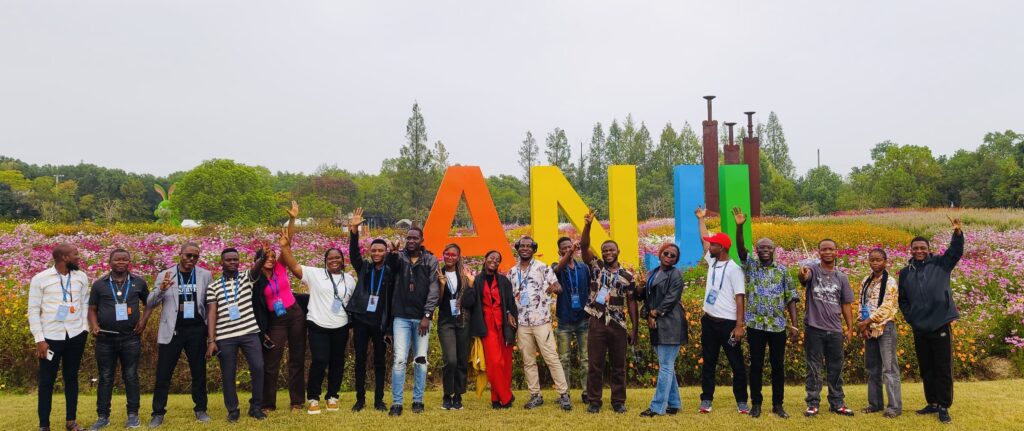
BEIJING, China — A delegation of 23 Liberian journalists is currently concluding the first leg of an intensive field study across Zhejiang Province, observing how China successfully balances eco-friendly economic growth, digital governance, and ancient cultural preservation.
The field visits form a key component of the Seminar on Media Communication Capacity Building for Liberian Journalists, an executive exchange program hosted in China.
The 14-day international seminar officially opened on Wednesday, October 14, 2026, and will conclude on Tuesday, October 27. It is sponsored entirely by the Government of China. The Research and Training Institute of China’s National Radio and Television Administration (NRTA) is organizing and conducting the comprehensive training program.
Following the first leg of their Beijing itinerary, the journalists traveled to Anji County in Zhejiang Province to observe China’s ecological transition and smart municipal operations firsthand. In Yucun Village, the delegation learned how a community once choked by industrial pollution from limestone quarries and cement plants transformed its local economy over twenty-five years.
Between 2003 and 2005, local authorities shut down heavy industrial plants to permit environmental regeneration, laying the groundwork for sustainable eco-tourism.
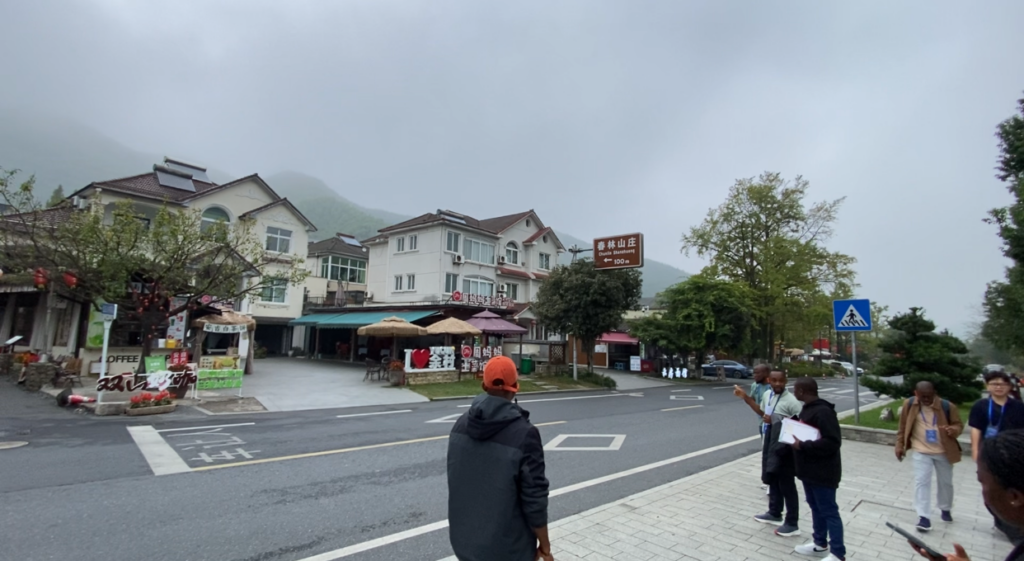
It was in Yucun in August 2005 that President Xi Jinping, then serving as Zhejiang’s Party Secretary, first articulated the concept that “clear waters and green mountains are invaluable assets.”
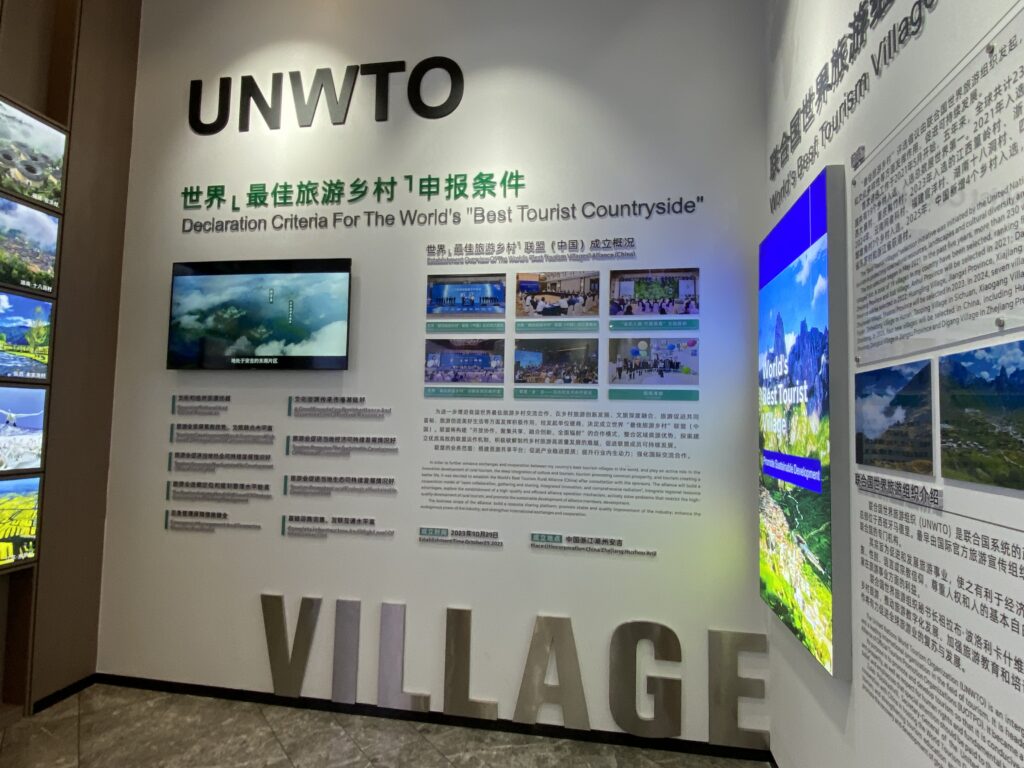
Today, the United Nations recognizes Yucun as one of the world’s best tourism villages, serving as a global model for ecological protection driving economic success.
The delegation also visited the Anji Exhibition Center, where regional manufacturers process sustainable bamboo into direct alternatives for single-use plastics.
While petroleum-based plastics require centuries to decompose, biodegradable bamboo products break down naturally within 360 days without depositing toxic residue into the soil. China’s national bamboo replacement initiative generated 20 billion RMB (over $2.7 billion USD) last year alone, demonstrating that green solutions can deliver substantial financial returns.
On their smart city tour, the journalists visited the Anji Smart Governance Center, a digital command facility built in 2020 following a 2.2 billion RMB investment. The centralized digital platform manages real-time urban parking, public transport networks, municipal healthcare services, eldercare support, and agricultural data analytics.
The delegation transitioned to rural design, by visiting the Anji White Tea Cultural and Creative Complex and the Creative and Design Center on Tuesday morning. The modern facility recently won the prestigious “Red Dot” design award, establishing rural communities as competitive hubs for young creatives and digital nomads.
On Tuesday afternoon, the media team explored the Ancient Yue Cultural Site, an active archaeological center dating back over 2,000 years to the Spring and Autumn Period.
The site spans a 30,000-square-meter burial complex with 571 excavated artifacts. It highlights the region’s ancient heritage as one of Zhejiang’s earliest established administrative centers.
Exploring The 2,000-Year-Old Roots of Zhejiang’s First Prefecture:
Exhibits at the site trace Anji’s deep roots back to the Tianmu Lake and Taihu Lake basins, where human settlement began more than 700,000 years ago. Archaeological discoveries highlight the Shangmakan Site as the first Palaeolithic site in Zhejiang officially excavated by field archaeology, earning its reputation as the birthplace of Zhejiang’s early stone culture. From approximately 7,000 years ago, central settlements flourished along the Tiaoxi River valley, represented significantly by the Anle and Zhili sites.
Further historical markers, including the discovery of Sanguan Shang tombs and Shangmashan Western Zhou tombs, prove that the plains of the Tiaoxi River valley served as a major gathering place for the Yue people roughly 3,000 years ago. During the Spring and Autumn period, Anji served briefly as the political center of the Yue state prior to the relocation of its capital to Kuaiji. Following the defeat of Yue by the State of Chu, Lord Chunshen received a fief in Jiangdong, subsequently fortifying the city and executing vital irrigation works that cemented Anji as an economic and cultural pillar of the Taihu Lake Basin.
The region’s administrative history evolved significantly following the Qin Dynasty’s unification of China, when authorities introduced a centralized system of prefectures and counties. Qin officials established Zhang Prefecture at the original capital of Yue and an important town of Chu, officially designating Anji Ancient City as the very first prefecture established within Zhejiang territory. Although severe damages occurred during regional conflicts in the Western Han Dynasty (202 BC–9 AD), Emperor Wudi subsequently renamed the territory Danyang Prefecture.
Amid widespread uprisings at the close of the Eastern Han Dynasty, local residents steadfastly remained on their native land. In 185 AD, during the second year of Zhongping, authorities partitioned the southern section of original Zhang County to establish a separate administrative district. Emperor Lingdi of Han selected a propitious verse from The Book of Songs—”That will secure tranquility and good fortune”—to formally bestow the name Anji, which translates literally to mean “safe and auspicious”.
Museum documentation underscores how modern archaeological discovery complements traditional Chinese historiography. While official written records document over 3,000 years of Chinese history, archaeology bridges a crucial gap by shedding light on more than 1,000 years of pre-literate cultural evolution and over a million years of human development. By systematically evaluating material remains, archaeological science provides critical time depth, mapping closer relationships between ancient populations and their geographic environments to reveal a more dynamic society.
According to the official program schedule, the media delegation wraps up its field visits in Zhejiang on Wednesday, October 21, 2026, before returning to Beijing. The itinerary include visits to the Former Residence of Wu Changshuo, the Huangpu River Source Resort, and the Lenashigu International Stone Art Village on Wednesday.
The Training:
Designed to enhance professional capacities, the course equips Liberian media practitioners with modern skills in digital communication, broadcasting techniques, media innovation, and international press cooperation. Leading Chinese academics led series of interactive indoor lectures in Beijing during the program’s initial days, inorder to establish a strong theoretical foundation.
Some of the lecturers included Professor Zhang Yanqiu from the Communication University of China, Professor Ran Jijun of China Foreign Affairs University, and Associate Professor Zhang Weiwei from the University of Chinese Academy of Social Sciences.
Gao Xi, Chief Editor of the NRTA’s Research and Training Institute, officially opened the seminar during a formal ceremony in Beijing.
The academic segment began with an introductory lecture by Chang Jin, Second-Level Counselor in the NRTA’s Department of International Cooperation, who outlined China’s broadcasting landscape. Chang detailed the regulatory role of the NRTA, introduced contemporary Chinese social frameworks, and discussed key policy outcomes from the Fourth Plenary Session of the 20th Central Committee.
On Thursday, October 15, participants attended specialized lectures covering China’s modernization drive, global communication dynamics, news reporting methodologies, and digital anti-disinformation strategies.
Professor Ran analyzed the intersection between state modernization and public communication, while Associate Professor Zhang Weiwei shared practical tools for newsroom innovation.
Professor Zhang Yanqiu conducted practical modules on constructive journalism and digital media literacy, which participant Media Specialist Walters described as highly practical for addressing modern media challenges. The curriculum also examined China’s political structures, exploring the administrative responsibilities across central, provincial, municipal, county, township, and village governance levels.
The comprehensive curriculum featured insights from Li Yu, Division Chief at China Media Group’s International Communication Planning Bureau, and former Chinese Ambassador to Gabon, Sun Jiwen. Beyond classroom instruction, organizers arranged field excursions to give journalists direct exposure to China’s infrastructure, rural revitalization initiatives, and green development projects.
In Beijing, the journalists toured symbolic national landmarks, including the National Stadium—popularly known as the Bird’s Nest—on Friday, October 16. The itinerary in the capital also includes visits to the China Central Television (CCTV) Tower, the Great Wall at Juyongguan, Yongding Gate, and the historic Hongqiao Market.
Returning to Beijing:
Following a scheduled return to Beijing on Thursday, October 22, the journalists will conduct case studies examining media cooperation before attending the closing ceremony on October 27. The seminar reflects a long history of international training by the NRTA’s Research and Training Institute, which has conducted 253 government-sponsored international programs since 2005.
By late 2024, more than 6,740 media professionals and officials from 163 developing nations had completed training at the institute. This initiative reinforces the bilateral relationship between Liberia and China established in 1977, which continues to yield strong economic and technical partnerships.
On September 29, 2026, Chinese Embassy Chargé d’Affaires Fan Erwei reported that bilateral trade between Liberia and China grew by 16 percent year-on-year during the first seven months of 2026. With over 100 Liberian media professionals trained in China since 2023, this program continues to strengthen professional capacity and international communication between the two nations.