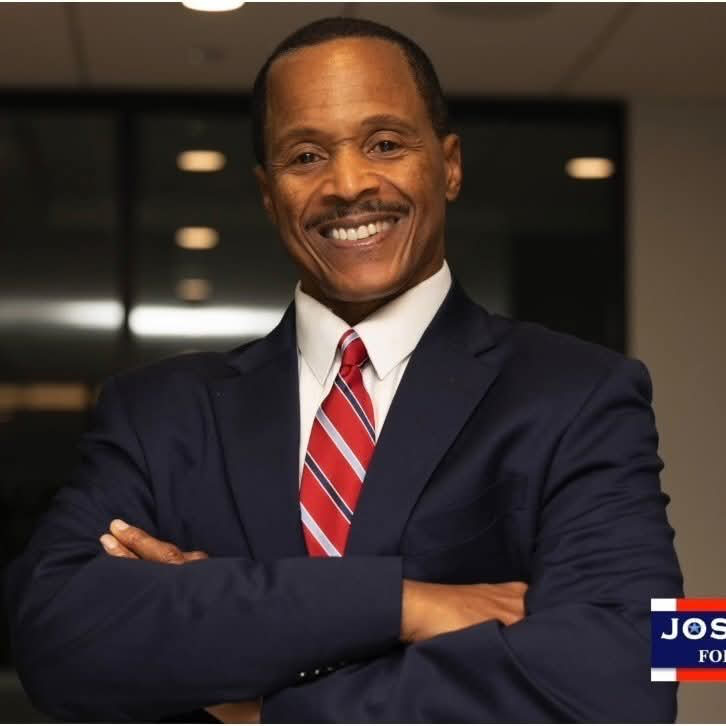
American attorney, businessman, real estate developer and civic leader Rev. Joseph H. Holland has challenged graduates of Jones Christian Academy to look beyond their present circumstances, confront life’s obstacles with determination and use their education to make meaningful contributions to Liberia.
Holland, who traveled from New York to Liberia to serve as guest speaker at the academy’s Sixth Commencement Convocation, urged members of the Foxtrot Class of 2025/2026 to recognize that academic achievement is only the beginning of their journey, emphasizing that lasting success depends on character, discipline, perseverance and a commitment to serving others.
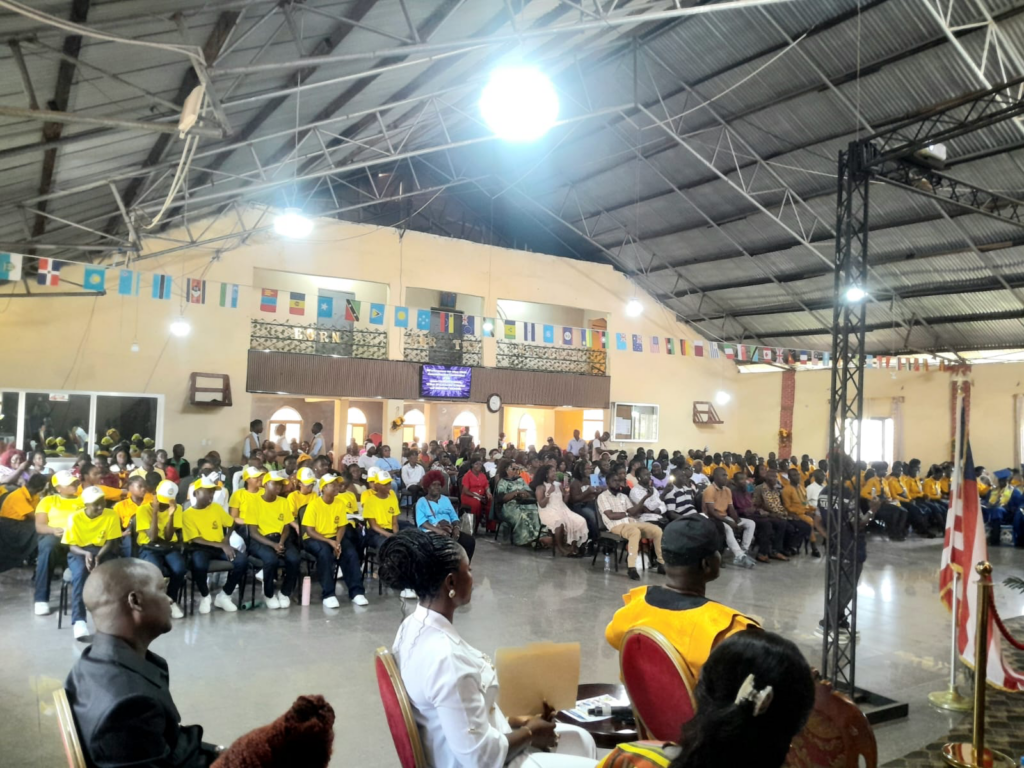
Addressing graduates, students, parents, teachers and school administrators on October 30 at the institution’s campus in Oldest Congo Town, opposite the Ministry of Health, Holland drew from his personal experiences in education, sports, public service and professional life to encourage young Liberians to develop a clear vision for their future and remain determined despite setbacks.
His message centered on what he described as the three “Vs” of his Vision Tool: Vision, Valley and Victory, a framework he said could help young people identify their aspirations, understand the challenges standing in their way and take deliberate steps toward achieving their goals.
“I believe we have something very important in common. We all have dreams. We all face challenges, and we all have the potential to achieve something significant in our lives,” Holland told the gathering.
He added that his experiences had taught him that success should not be measured solely by material possessions or professional accomplishments, but by the kind of person one becomes along the way.
“Success is simply not about what you have. It’s about what you become,” he said, stressing that character guides decisions, determines actions and ultimately shapes a person’s destiny.
Holland’s message drew on a distinguished professional background spanning law, business, real estate development, writing and public service. He previously served as Commissioner of the New York State Department of Housing and Community Renewal after being selected by former New York Governor George Pataki. He held the position from 1995 until his resignation in October 1996.
He also pursued public office, running for New York attorney general in 1994 and 2018 and for governor of New York in 2018.
One of ten children, Holland is the son of Laura Mitchell Holland and Jerome H. Holland, who served as United States ambassador to Sweden under President Richard Nixon. He earned bachelor’s and master’s degrees from Cornell University before graduating from Harvard Law School in 1983.
His experience as a student-athlete at Cornell, where he played American football, became a central part of his address, allowing him to connect his professional achievements with the disappointments and obstacles he encountered during his formative years.
Character and vision beyond circumstances
Holland explained that his understanding of character development was shaped in part by his work serving homeless people in Harlem, New York, which inspired him to develop a character-development curriculum known as Holistic Hardware.
He described the initiative as a practical approach to personal development, built on the idea that just as people need tools to construct a house or maintain a vehicle, they also need tools to build successful and purposeful lives.
Holland credited Bishop Emmanuel Jones, the leader of Jones Christian Academy, for helping bring him back to Liberia to share those principles with a new generation.
According to Holland, he first visited Liberia approximately 18 years ago to train some of Bishop Jones’s leaders in the Holistic Hardware program. His return for the Sixth Commencement Convocation provided an opportunity to extend the message to the graduating class and the wider school community.
Beginning with the first “V,” Holland explained that vision requires individuals to imagine a future beyond their immediate circumstances and work toward becoming the people they aspire to be.
He recalled growing up in the United States during a period when racial discrimination restricted opportunities for Black Americans. Despite those challenges, he remained committed to obtaining a good education and pursuing his ambition of becoming a successful American football player.
His plans were interrupted when his parents moved to Europe during his teenage years, making it impossible for him to continue playing football at that time. However, he maintained his ambition and resumed pursuing it after returning to the United States.
Through persistence and hard work, he eventually became a high school All-American football player and earned admission to every college to which he applied, receiving football scholarship offers.
Drawing on that experience, Holland told the graduates that their aspirations must be greater than the difficulties they face today.
“Your vision must be bigger than your circumstances,” he declared.
He encouraged students aspiring to become doctors, lawyers, engineers, teachers, scientists, entrepreneurs and public officials to think beyond personal advancement and consider how their future professions could help transform their communities.
“Don’t just dream about what you want to get. Dream about what you want to give,” Holland urged.
He challenged the young people to consider how they could contribute to making Liberia a better place, arguing that the highest form of ambition extends beyond earning a living to creating opportunities and improving the lives of others.
“The greatest vision is not simply about making a living. It’s about making a difference,” he said.
Holland also cautioned the graduates against allowing parental expectations, peer pressure or social media trends to determine their futures, urging them instead to identify their individual aspirations and take responsibility for shaping their own paths.
Turning obstacles into opportunities
The second “V,” which Holland described as the “Valley,” represented the obstacles and difficulties people encounter between their present circumstances and their desired future.
He identified financial hardship, academic difficulties, negative peer pressure, fear and a lack of confidence as some of the challenges students may confront while pursuing their goals.
To illustrate the point, Holland recounted a difficult period during his college years when his first year did not go as planned, forcing him to transfer from the University of Michigan to Cornell University.
The experience left him disappointed and devastated, prompting him to consider abandoning football. However, he said he chose to remain committed to his ambitions rather than allow the setback to determine his future.
His difficulties continued after the transfer. He had to sit out a year from football, suffered an injury the following year and later faced the challenge of being assigned to a playing position that did not suit his strengths.
Despite those disappointments, Holland continued working and believing in his potential. During his final year, he said, he established records as a running back, helped his team achieve a winning season, earned All-American recognition and received an opportunity to pursue professional football in the United States.
The experience reinforced his belief that setbacks do not have to mark the end of a person’s ambitions.
“You cannot always choose the obstacles that come into your life. But you can choose how you respond to them,” he said.
He urged students facing academic difficulties to seek assistance from teachers and school administrators rather than give up, while those experiencing financial challenges should explore creative ways of overcoming their limitations.
He also advised students to resist negative peer pressure, learn from examination failures and develop the courage to try again after disappointment.
Holland emphasized that identifying an obstacle is the first step toward overcoming it, encouraging the graduates to name their challenges, understand their causes and develop practical plans to address them.
He warned that people cannot overcome problems they are unwilling to confront, urging students to approach their difficulties with honesty, responsibility and a willingness to seek solutions.
Discipline, perseverance and service
The third “V,” Victory, represented the achievement that follows vision, effort and a willingness to overcome obstacles.
Holland stressed that success does not happen simply because someone has a dream or recognizes the difficulties standing in the way. It requires sustained action, discipline and a commitment to doing what is necessary, even when the process becomes uncomfortable.
Using the example of a student aspiring to become a doctor but struggling with mathematics and science, he explained that the desired outcome would depend on the student’s willingness to study harder, ask questions, seek guidance and make the sacrifices required to improve academically.
He identified discipline, perseverance and service as essential principles for turning aspirations into accomplishments.
On discipline, Holland said students must learn to prioritize their responsibilities, prepare for the future and avoid wasting opportunities available to them.
“Talent without discipline goes nowhere,” he said, adding that a student with average ability but a strong work ethic could accomplish more than a naturally gifted student unwilling to work hard.
He described perseverance as the determination to continue moving forward when circumstances become difficult, explaining that successful people also experience failure and disappointment.
A setback, he said, should be viewed as an opportunity to learn, adjust plans and prepare for the next stage of life rather than as proof that success is impossible.
“A setback is not the end of your story. It is simply preparation for your next chapter,” Holland told the graduates.
Beyond discipline and perseverance, he placed particular emphasis on service, arguing that the greatest achievements are those that improve the lives of other people.
He encouraged the graduates to imagine becoming engineers who provide clean water to communities, teachers who inspire generations of students, entrepreneurs who create employment opportunities and public leaders who demonstrate honesty, integrity and compassion.
For Holland, such accomplishments represent victories that extend beyond individual success to create lasting benefits for society.
He said the message was particularly relevant to young Liberians, whose talents and leadership would be needed to address the country’s challenges and contribute to its development.
“Your country needs your talent. Your communities need your leadership. And your future depends in great part on the character that you build today,” he said.
Holland reminded the students that meaningful contributions do not have to wait until they become adults or attain prominent positions. They can begin by helping classmates, respecting teachers, honoring parents and guardians, standing up for people who are mistreated, refusing to cheat and treating others with dignity.
He maintained that character is developed through everyday decisions and actions, long before a person achieves professional recognition or material success.
Foxtrot graduates challenged to plan their future
As part of his address, Holland gave the Foxtrot Class of 2025/2026 a practical assignment designed to help its members translate his message into action.
He asked each student to write down three things: a vision representing an important goal they wanted to achieve, the obstacles standing between them and that goal, and a victory plan outlining the actions they could begin taking immediately.
He encouraged the graduates to consider their next steps, including university admission, starting a business or developing their talents.
He also urged them to be honest in identifying their limitations, whether related to financial resources, study habits, fear or negative influences, and to establish realistic strategies for addressing them.
Rather than postponing their ambitions, Holland encouraged the students to begin working on their plans immediately, explaining that progress is built through consistent decisions and small but meaningful steps.
“Success is built one decision at a time, one lesson at a time, one good habit at a time, one courageous step at a time,” he said.
He concluded by expressing confidence in the potential of the graduates and other students at Jones Christian Academy to become future professionals, entrepreneurs, public officials and community leaders capable of shaping Liberia’s future.
“When I look at you, I don’t simply see graduates and students. I see future doctors and lawyers. I see future scientists and engineers. I see future business owners. I see future public leaders and community service,” Holland told the gathering.
He added that young Liberians should understand that the future is not something they must simply wait to experience, but something they are helping to create through their present choices.
“Every time you study instead of giving up, you’re building your future. Every time you choose honesty over dishonesty, you’re building your future,” Holland said.
He called on the graduates to remain committed to their vision, confront their challenges and work toward their goals while developing the character needed to serve their country and the wider world.
In a collective declaration, he led the graduates and students in affirming their commitment to having a vision, facing their challenges, working for victory, building character, developing their talents and making a difference.
For his part, Bishop Emmanuel Jones, founder of Jones Christian Academy, expressed gratitude to parents for their continued support of the institution over the years, acknowledging their commitment despite the challenges. He praised their role in sustaining the school’s vision and contributing to its growth, urging the gathering to recognize and appreciate their dedication.
Reflecting on his relationship with Rev. Joseph H. Holland, the guest speaker, Bishop Jones recounted how they first connected about 21 years ago, when Holland supported his vision even before meeting him in person. He described Holland as a mentor who provided encouragement and opportunities, including visits to educational institutions in New York, where he observed teaching methods and took notes on ideas he hoped to introduce in Liberia. Bishop Jones also highlighted Holland’s longstanding connection to Liberia, influenced in part by his father’s public service and links with Liberian officials who studied in the United States.
Bishop Jones said Holland’s visit was particularly meaningful as Jones Christian Academy celebrates 16 years of service, allowing him to witness the growth of a vision he had supported from its early stages. He highlighted the school’s recent achievements, including graduating students from its high school and other educational programs, describing these milestones as evidence of the institution’s contribution to Liberia’s educational development. He concluded by expressing appreciation to God, the parents, and everyone who has helped advance the school’s mission.
Holland closed the convocation with a prayer for the graduates, students, parents, supporters, teachers and administrators, asking God to guide the young people as they entered new stages of their lives and to strengthen Jones Christian Academy in its educational mission.
His message left the Foxtrot Class of 2025/2026 with a central challenge: to pursue success not merely as a personal achievement, but as a responsibility to contribute to the future of Liberia.
For the graduating class, the next chapter, he emphasized, would require more than certificates. It would demand a clear vision, the courage to confront difficulties and the discipline to turn aspirations into accomplishments.