–As Burkinabé Nationals Take Over Their Ancestral Forestland
By Shallon S. Gonlor
shallonsgonlor@gmail.com
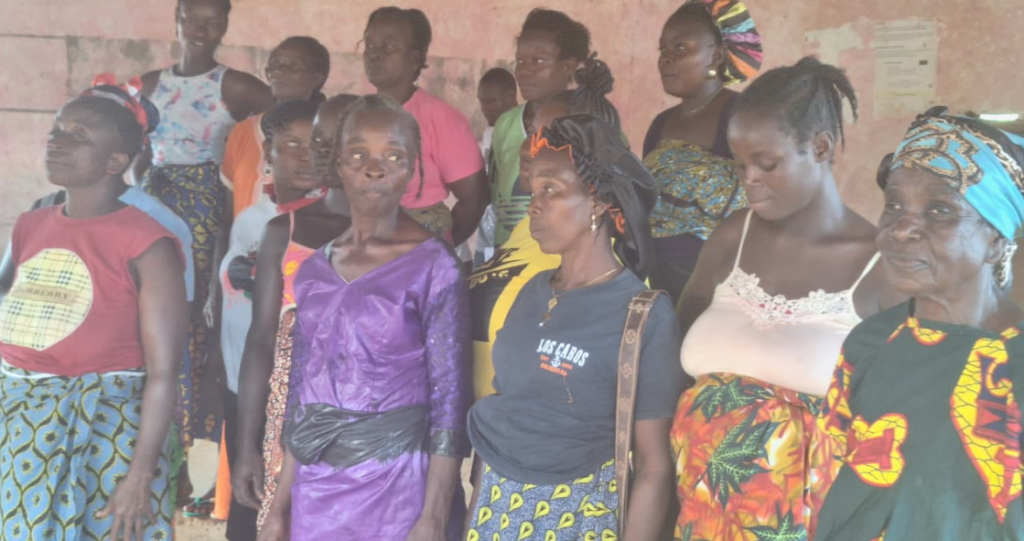
MARLEY TOWN, Nimba County, Liberia — Women of Marley Town in Electoral District #6, Nimba County, are crying foul over what they describe as the takeover of their ancestral forestland by Burkinabé nationals, blaming the situation for worsening economic hardship and warning they may stage a peaceful naked protest if the Government of Liberia does not intervene urgently.
The women say their families have been pushed into desperation by a longstanding forest dispute pitting residents and citizens of Marley Town against Burkinabé nationals and the Forestry Development Authority (FDA), which they accuse of failing to resolve the matter.
Speaking to journalists at a town hall gathering on Sunday in Marley Town, the women expressed frustration over deteriorating living conditions, which they attribute to restrictions on their access to traditional forestland allegedly occupied by the Burkinabé farmers. Some broke down in tears while recounting the hardships their families have endured.
They claimed that persistent intimidation and the arrest of their husbands by law enforcement authorities have forced several families to abandon farming in the disputed forest area. They warned that continued government inaction could leave them with no alternative but to stage a peaceful naked protest to compel national authorities to address their grievances.
The women’s protest threat comes amid growing calls by residents and traditional landowners in Boe-Quellah Administrative District, Lower Nimba County, for immediate government intervention in an escalating dispute involving access to farmland, forest management, and the presence of Burkinabé nationals in the Gio National Forest.
The residents — women, youths, men, traditional landowners, and local chiefs — warn that failure to resolve the dispute could heighten cross-border tensions, deepen existing land conflicts, and potentially trigger widespread unrest. They allege intimidation, unequal treatment, and restrictions on their access to forestland traditionally used to sustain their families and livelihoods.
In a press statement, the group called on the FDA, the Ministries of Justice and Internal Affairs, Nimba County lawmakers, county authorities, traditional leaders, and other stakeholders to urgently address the matter and ensure fairness, transparency, and accountability in forest management.
The residents said they could no longer remain silent while, according to their allegations, local community members were being prevented from farming in the forest, even as Burkinabé nationals cultivated cocoa, rice, pepper, and other agricultural products in the same area.
“How can our families survive, feed our children, and pay school fees if we are barred from our own traditional farmlands?” the group asked. “Our people are suffering in their own community,” the group said, alleging that some residents had been arrested or imprisoned for attempting to farm, clear land, or keep their plantain farms.
Disputed Demarcation Traced to 2016
According to the residents, the FDA, through the USAID-funded People, Rules and Organizations Supporting the Protection of Ecosystem Resources (PROSPER) project, conducted a forest demarcation exercise in the area in 2016. However, disagreements reportedly emerged over the process, prompting protests by residents of the Sarlay area. The group said the exercise was subsequently suspended between Marlay and Sar Youlay, leaving the demarcation incomplete.
During the same period, a Community Forest Management Body (CFMB) was reportedly established following community awareness activities conducted by the FDA. The residents allege that since the initial exercise, the FDA has failed to return with a survey team to complete the demarcation, resolve outstanding disagreements, and clearly establish boundaries and management arrangements involving Boe-Quellah and Kparblee administrative districts.
They argue that the failure to resolve the matter has contributed to confusion, economic hardship, and growing tensions among affected communities, and are demanding that the FDA return to complete the demarcation and provide a transparent explanation of the disputed forestland’s legal status.
Residents Demand Answers, Challenge CFMB Authority
The residents have raised several questions concerning customary land rights, forest management arrangements, and enforcement of restrictions on farming. They want the government to clarify which communities hold legitimate customary rights to the disputed forestland, the legal basis for allowing or prohibiting agricultural activities, and the measures being taken to protect affected residents’ livelihoods.
They also question why community members were allegedly arrested or imprisoned for farming and keeping plantain farms while other individuals were reportedly cultivating crops in the same forest. Additionally, the group wants an explanation for why the 2016 demarcation is still incomplete and what concrete measures the government intends to take to resolve the longstanding dispute. “We are not asking for special treatment. We are demanding fairness, transparency, accountability, and equal protection under the law,” the residents said.
The group also expressed dissatisfaction with the CFMB’s operations, declaring that it no longer wants the body to exercise authority over the community’s forest affairs under current arrangements. While acknowledging the community’s role in establishing the body, residents insisted its mandate, accountability, and relationship with traditional landowners must be reviewed.
They called for an assessment of the CFMB’s authority and the legal procedures required to replace it or establish another management structure that genuinely represents affected communities’ interests, urging the FDA and other authorities to investigate the CFMB’s operations, the circumstances surrounding restrictions on local farming, and the legal basis for what they describe as unequal treatment.
The dispute comes amid wider concerns over the presence of Burkinabé nationals engaged in cocoa farming in forested areas of northern and southeastern Liberia. Since approximately 2015, Burkinabé nationals have reportedly entered parts of Liberia from neighboring Côte d’Ivoire, with some engaging in agricultural activities through arrangements with local landowners. In Nimba and Grand Gedeh counties, such arrangements have reportedly involved the use or leasing of customary forestland for cocoa cultivation.
The Gio National Forest, which extends across areas associated with Boe-Quellah, Kparblee, and Doe administrative districts, has increasingly become a focal point of concerns involving customary land rights, agricultural activities, forest conservation, and enforcement of forestry regulations.
While some local farmers may consider arrangements with Burkinabé nationals economically beneficial, others have raised concerns about alleged encroachment into protected forest areas, protection of customary land rights, and long-term implications for community livelihoods.
However, the presence of foreign nationals or their participation in agricultural activities does not, in itself, establish that they are operating illegally. The legality of specific activities depends on applicable laws, the legal status of the land, and any valid customary, contractual, or statutory rights.
The Boe-Quellah residents are calling for an independent and transparent investigation into the 2016 demarcation exercise, current farming arrangements, the treatment of community members, and the legal authority under which individuals are permitted or prohibited from accessing the disputed forestland. They want the FDA, the Ministries of Justice and Internal Affairs, Nimba County lawmakers, county authorities, traditional leaders, and civil society organizations to work together to resolve the matter.
The group maintains that urgent resolution is necessary to protect community livelihoods, reduce tensions, clarify land rights, and ensure forest management decisions are implemented fairly and in accordance with Liberian law.
The residents say they are seeking justice, accountability, and equal protection under the law, urging the government to act before the dispute escalates into a broader security and humanitarian concern.