By: Julius Konton
Liberia is moving closer to a historic transformation of its national sporting landscape, following legislative concurrence on a proposed law seeking to establish the National County Sports Meet as a permanent national institution with a structured financing mechanism and a broader mandate for sports development, youth empowerment, entertainment, and national unity.
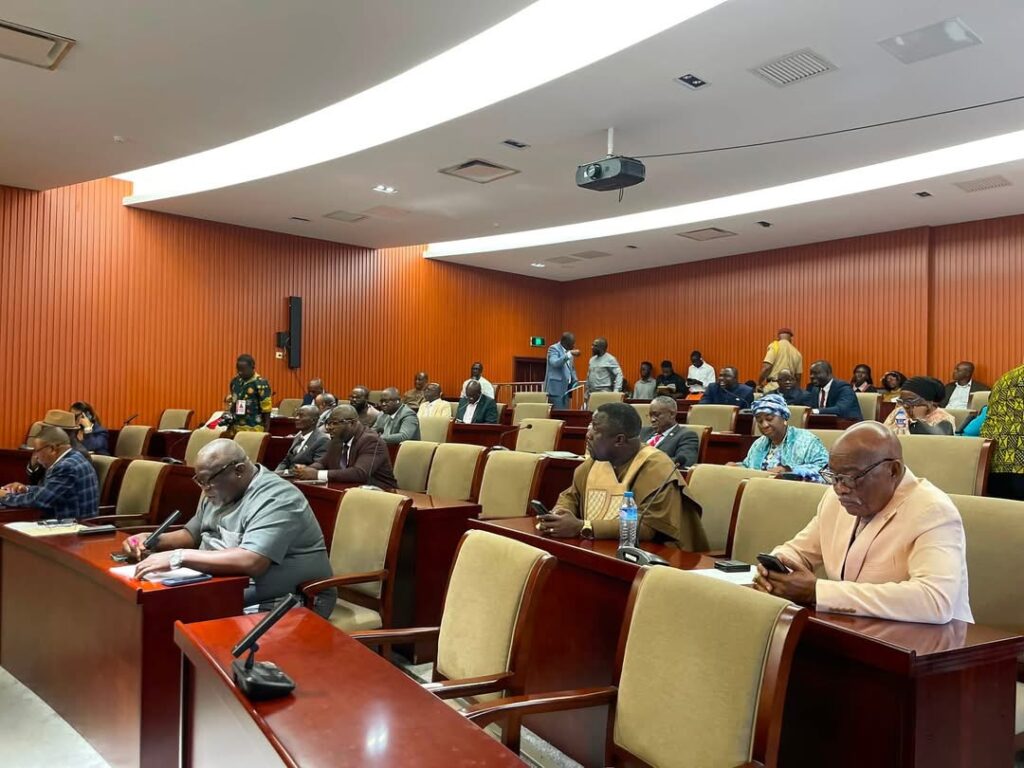
The proposed legislation, titled the National County Sports Meet for Entertainment and Development Act, has received concurrence between the two chambers of Liberia’s 55th Legislature, marking a significant step toward giving the country’s flagship inter-county sporting competition a permanent legal identity.
The bill is now awaiting Executive approval, a critical stage in the legislative process before it can proceed toward enactment into law.
If approved and enacted, the legislation would fundamentally change the administrative and financial framework under which the competition operates, moving it beyond its traditional annual tournament structure toward a more sustainable, legally recognized national sporting institution.
One of its most significant provisions is the proposed inclusion of the competition in Liberia’s National Budget, an arrangement intended to provide more predictable government financing and reduce the uncertainty associated with organizing the annual tournament.
Such a funding mechanism could strengthen long-term planning, improve financial accountability, enhance competition management, and create opportunities for sustained investment in sporting infrastructure and grassroots development.
For a country where sports remain an important avenue for youth engagement, social interaction, and national representation, the proposed reform could represent a major shift in how government approaches the development and administration of competitive sports.
However, the long-term impact will depend on the final provisions of the legislation, the level of budgetary allocations, and the effectiveness of the institution’s governance and accountability mechanisms.
The tournament provides an avenue for identifying emerging sporting talents, encouraging inter-county participation, strengthening community relationships, and creating opportunities for young athletes to demonstrate their abilities.
It also reinforces the country’s historical and cultural connections by bringing together people from Liberia’s 15 political subdivisions under a common national sporting platform.
The competition’s ability to unite counties through sports has made it an important feature of Liberia’s sporting calendar and a potential instrument for advancing national cohesion.
Institutionalizing the event could therefore provide an opportunity to expand its sporting disciplines, improve talent identification, and strengthen its contribution to Liberia’s wider youth-development agenda.
Liberia has a proud football history, highlighted by the achievements of international football icon George Weah, who became the first African player to win the FIFA World Player of the Year award and the Ballon d’Or in 1995.
That historic achievement remains a symbol of Liberia’s potential to produce world-class sporting talent.
However, translating individual sporting excellence into sustainable national development requires deliberate investment in grassroots structures, youth competitions, coaching, talent identification, and sporting facilities.
A legally established and adequately financed County Sports Meet could contribute to that objective by providing a structured national platform through which young athletes can gain competitive experience and attract attention from clubs, scouts, and other sporting institutions.
The proposed institutional framework could also create opportunities for greater collaboration among the Ministry of Youth and Sports, the Liberia Football Association, county administrations, sporting associations, schools, private-sector partners, and development organizations.
The proposed inclusion of the competition in the National Budget could provide a more reliable financial foundation.
However, sustainable development will require transparent procurement procedures, independent financial oversight, clear administrative responsibilities, and measurable performance targets.
Equally important will be ensuring that resources are distributed fairly among participating counties and that the competition benefits athletes beyond the annual tournament period.
A modernized County Sports Meet could incorporate structured youth-development programmes, coaching education, talent-development initiatives, improved sporting facilities, medical support for athletes, and stronger partnerships with international sporting organizations.
Such measures would help transform the competition from a periodic national event into a year-round contributor to Liberia’s sports-development objectives.
The concurrence of the House of Representatives and the Senate signals legislative support for securing the long-term future of one of Liberia’s most prominent sporting competitions.
For athletes, coaches, county sporting authorities, administrators, and sports enthusiasts, the development represents an opportunity to reposition the County Sports Meet as a stronger national institution.
Beyond the excitement of competition, the proposed legislation presents an opportunity to build a sustainable sporting structure capable of identifying talent, encouraging youth participation, promoting national solidarity, and strengthening Liberia’s presence in regional and international sports.
As the bill awaits Executive approval, attention will increasingly focus on the next stage of the process and the practical arrangements required to translate legislative intentions into meaningful sporting development.
If enacted and effectively implemented, the National County Sports Meet for Entertainment and Development Act could mark the beginning of a new chapter in Liberia’s sporting history, transforming an annual competition into a permanent national institution with a lasting mandate for sports, entertainment, youth empowerment, and national development.