

–As Gender Responsive Planning Scales Up
By Jerromie S: Walters
MONROVIA, LIBERIA – The Liberian government’s FY2027 National Budget has introduced a sweeping expansion of Gender-Responsive Planning and Budgeting (GRPB), elevating women’s economic empowerment, maternal health, and social protection from pilot programs to core fiscal priorities. Under the proposed US$1.54 billion fiscal instrument, thirteen spending entities have prepared gender budget statements—up from nine in FY2026.
The proposed budget, formally submitted to the 55th Legislature by President Joseph Nyuma Boakai on November 6, 2026, totals US1.54 billion and external resources of US$92 million.
Within the US1.21 billion for recurrent and non-PSIP capital expenditure, the budget weaves a deliberate focus on women’s advancement. The GRPB framework seeks to identify gender gaps within each entity’s mandate, outline actions to close them, and establish indicators to judge progress.
At the heart of these efforts is the Ministry of Gender, Children and Social Protection (MGCSP). According to the summary by spending entity, the Ministry’s FY2027 Draft Budget stands at **US3,079,136, and a significant jump from the FY2026 Approved Budget of US7,841,344, indicating a sustained commitment to social development.
A breakdown of the Ministry’s economic classification shows that the bulk of its allocation, US2,750,000 is allocated to the PSIP (GOL). The PSIP allocation is a notable increase from the US4,766,552 is dedicated to Compensation of Employees, US2,850,590 to Grants.
The Ministry has set concrete, measurable commitments. It aims to cut the number of children living on the streets by 20 percent by 2029. This will be achieved through reuniting children with their families, returning out-of-school children to learning environments, and providing their caregivers with vocational training and small-business support.
Direct Interventions for Women and Girls
The budget text explicitly outlines direct benefits for critical demographics, specifically highlighting women and girls. The Liberian National Immunization Program (US1.55 million), the C.H. Rennie Hospital rehabilitation (US1.55 million), and specialized dialysis equipment (US$1.00 million) are designed to improve chronic-care services heavily relied upon by women both as patients and primary caregivers.
In the realm of education, the School Feeding and School Health program (US1.50 million) are directly tied to reducing girls’ absenteeism. The budget notes that these programs also alleviate the time burden of unpaid care, exposure to unsafe facilities, and the broader barriers girls face in accessing education.
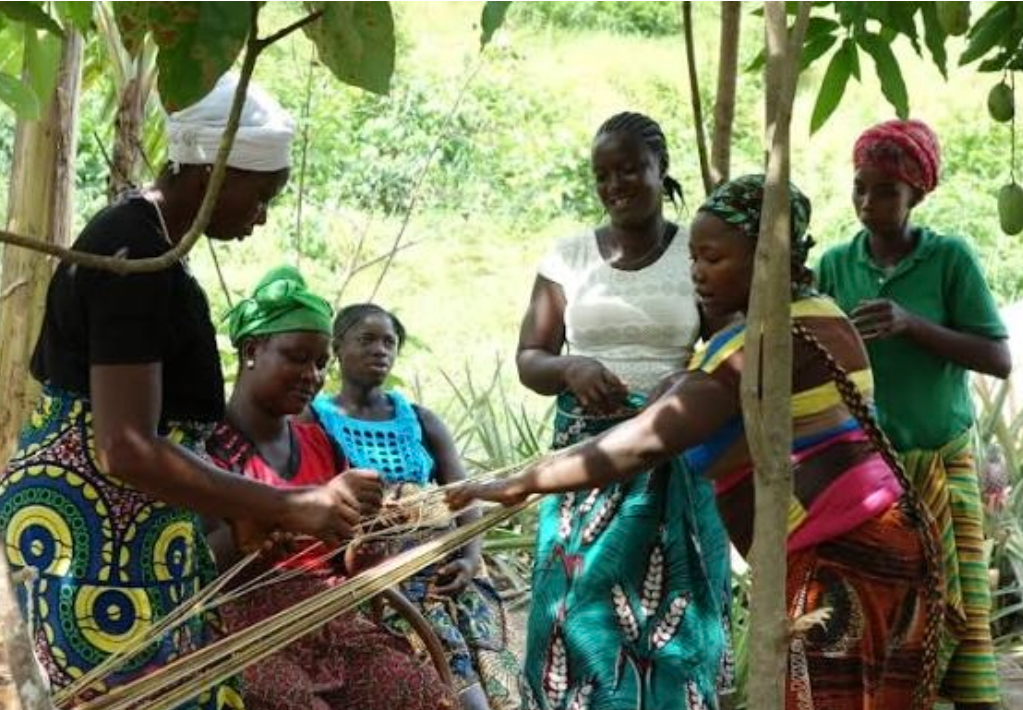
Beyond health and education, the budget targets women’s economic advancement. The Food and Cash Crop Production Value Chain (US1.50 million), and Small Business Support Programs (US$3.80 million) are designed to create income, market-access, and enterprise opportunities specifically for women farmers, processors, traders, and women-led Micro, Small, and Medium Enterprises (MSMEs).
Ministry of Justice and Security Interventions
The commitment to women’s safety and access to justice is echoed in the allocations for the Ministry of Justice (MOJ), which receives a total draft allocation of US820,000 has been costed across five programs to improve access to justice, make communication accessible, provide safe workplaces, improve the welfare of detainees, and recruit more women into the Bureau of Corrections and Rehabilitation.
Furthermore, the Ministry of National Defense (allocated US$30,965,992) is slated to advance women’s recruitment and leadership within the Armed Forces of Liberia (AFL) under the Women, Peace and Security agenda. This aligns with a broader national security initiative in the budget where the AFL and the Liberia National Police (LNP) will recruit 1,400 young people; 800 into the AFL and 600 into the LNP.
Vulnerable Groups and Marginalized Citizens
The budget significantly addresses the needs of vulnerable groups. Older persons and those with chronic illnesses are targeted through the aforementioned health sector improvements and better road infrastructure to reduce the cost and time of reaching care. The Social Protection Safety Net (US$1.05 million) provides direct support to poor and at-risk households.
Additionally, the National Identification Registry (NIR) receives US2,500,000 for the construction of County Service Complexes. These investments are specifically highlighted as tools to make it easier for vulnerable persons, persons with disabilities, and marginalized citizens to establish legal identity and obtain public services closer to home.
The National Commission on Disabilities, allocated US$1,666,384, is tasked with improving knowledge of sexual and reproductive health and rights among women with disabilities. Meanwhile, the National Water, Sanitation and Hygiene Commission will promote menstrual hygiene in schools and increase the share of women in technical roles.
Other Essential Components of the Draft Budget
While the gender component is deeply integrated, the FY2027 budget is dominated by massive infrastructural and economic investments. The Infrastructure and Basic Services Sector receives the largest sectoral allocation at US49,100,000, followed by Government Counterpart Financing for Roads at US14,200,000. The Liberia Electricity Corporation is allocated US$40,000,000 for power generation and grid distribution expansion.
The Education Sector receives a substantial US5,000,000 for the renovation and modernization of the University of Liberia campuses and US$2,000,000 for the National Youth Empowerment Program.
The Public Administration Sector is allocated US58,200,000 for the National Legislature and US198,394,358, with the Judiciary receiving US83,444,616.
To fund these priorities, the government is implementing aggressive revenue generation and digitization measures. The Liberia Revenue Authority (LRA) is allocated US3,000,000), the Digitization of Revenue Transaction Systems across Government (DRTS) at US2,000,000.
Governance, Transparency, and Accountability
The Governance and Anti-Corruption pillar receives US5.90 million for District Development Projects through the Liberia Agency for Community Empowerment (LACE), and US2.00 million, the Public Procurement and Concessions Commission (PPCC) headquarters expansion receiving US2.00 million.
Human Capital and Social Impact
The Human Capital Development pillar commits US6.40 million, while the Ministry of Education receives US2.00 million for education infrastructure expansion.
The budget also introduces significant income-related interventions. Building on foundational reforms from FY2025 and FY2026, the government is reversing harmonization and making significant salary adjustments for professionals within the Judiciary, Ministry of Public Works, and the Ministry of Mines and Energy. These changes have led to the enrollment of over 600 volunteer teachers under the Ministry of Education, over 200 in MCSS, over 400 under the Ministry of Health, and 304 staff members at the ELWA Hospital. Overall, the proposed budget outlines salary improvement measures targeting nearly 13,000 government employees, alongside recruitment opportunities for approximately 4,350 additional personnel.
Environment and Economic Transformation
The Environmental Sustainability pillar receives US4.00 million, while the Paynesville equivalent receives US1.11 million) and the Liberia Green Corridor Project (US$0.50 million), are also funded.
The Economic Transformation pillar receives US5.25 million for the Food and Cash Crop Production Value Chain, US2.75 million for the development of Providence Island as a Heritage Tourism Site.
As the budget now sits before the Joint Committee on Ways, Means and Finance, and Public Accounts and Expenditure, lawmakers have the profound opportunity to independently assess these revenue projections and expenditure priorities. The committee’s review will provide the Legislature the opportunity to ensure transparency, accountability, and responsible management of public resources.
Upon completion of the House’s review and subsequent passage, the proposed budget will be forwarded to the Liberian Senate for concurrence, in keeping with the constitutional legislative process. This is critical to ensuring that the US$1.54 billion fiscal instrument aligns with national development priorities, particularly the economic and social advancement of women, and delivers meaningful benefits to the Liberian people.