

By: Julius Konton
Liberia has called for stronger international cooperation and coordinated action to combat the growing threat of transnational organized crime, warning that criminal networks continue to undermine international peace and security, sustainable development, and human rights.
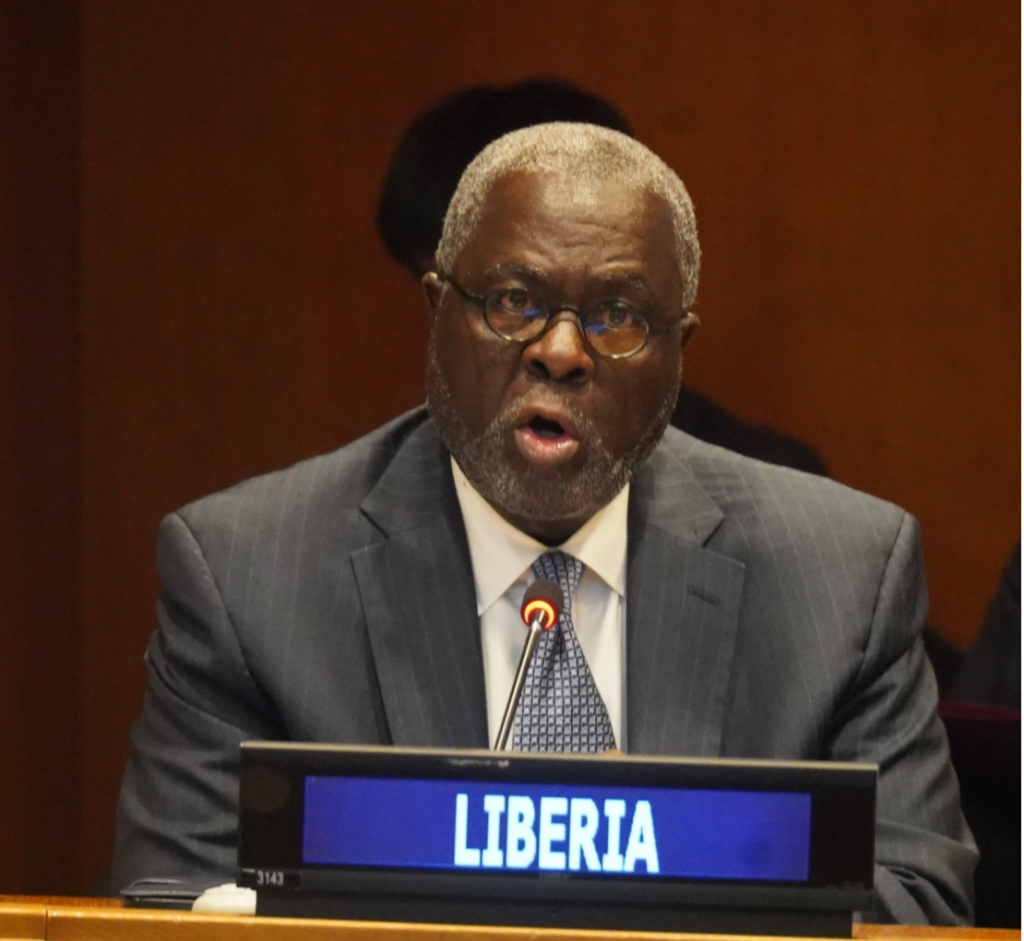
Speaking at a high-level event held Monday, November 23, at the United Nations Headquarters in New York to commemorate the International Day for the Prevention and Fight Against All Forms of Transnational Organized Crime, Liberia’s Ambassador, Lewis G. Brown II, outlined three strategic priorities he said were essential to strengthening the global response.
Ambassador Brown emphasized the need for practical cross-border cooperation, improved financial intelligence sharing, and increased investment in preventive interventions, particularly for young people vulnerable to drug dependence.
Presenting his recommendations, the Liberian diplomat identified the following priorities:
First, strengthening cross-border cooperation: He called for more effective international collaboration, enabling countries to request and exchange relevant evidence across jurisdictions to support criminal investigations and prosecutions.
Second, following the money: Ambassador Brown stressed the importance of allowing financial intelligence units and investigative authorities to share critical information to trace, identify, and recover criminal proceeds through established legal mechanisms.
Third, investing in prevention: He urged governments and international partners to prioritize preventive measures, including accessible treatment and rehabilitation services for young people experiencing drug dependence, preferably within their local communities.
The Ambassador further underscored Liberia’s experience in rebuilding public trust and strengthening national institutions, noting that the fight against organized crime requires collective responsibility and sustained international commitment.
He cautioned that communities should not be left to bear the consequences of criminal activities when the financial gains generated by those crimes are transferred, concealed, and protected across national borders.
“Every time we recover what these networks have stolen, we deny them some of the means to do it again. Every time we reach a young person before they do, we give peace a better chance to last,” Ambassador Brown declared.
His remarks highlighted the importance of addressing transnational organized crime through a comprehensive approach that combines effective law enforcement, international legal cooperation, financial accountability, and community-based prevention initiatives.
The Liberian Ambassador’s three-point proposal reinforces the need for countries to move beyond individual national responses and embrace stronger partnerships to disrupt criminal networks, recover illicit assets, protect vulnerable populations, and safeguard global peace and security.