

— Government Says
By Jessica Cox
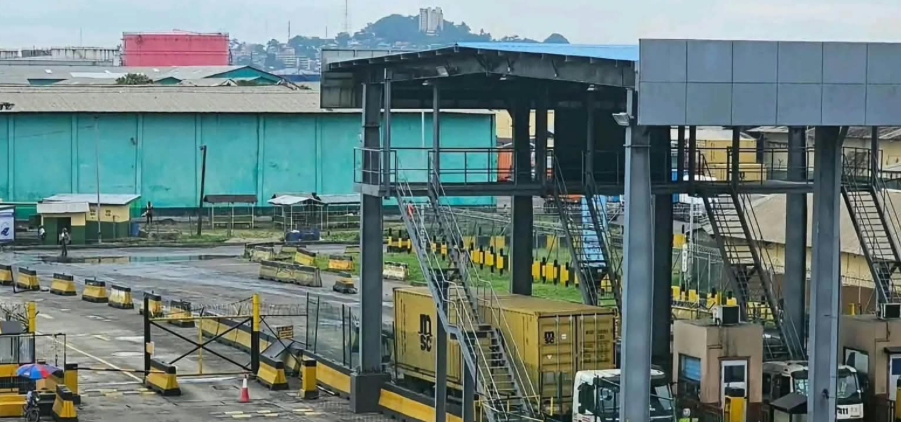
MONROVIA, Liberia – The Government of Liberia says cargo movement at the Freeport of Monrovia has improved following the adoption of several recommendations aimed at addressing persistent congestion and delays in the clearance of imported goods.
Information Minister Jerolinmek Matthew Piah disclosed the development Tuesday at the Ministry of Information’s regular press briefing, stating that the National Port Authority (NPA) has adopted nine of 15 recommendations submitted by a government-appointed Strategic Technical Committee.
According to Piah, the implementation of some of the recommendations has contributed to improved cargo movement over the past 72 hours.
The government has not yet provided details of all nine adopted recommendations or indicated when the remaining six will be implemented.
As part of measures to ease the financial burden on importers affected by the congestion, the NPA has announced a 30-day relief period, effective November 16, during which eligible goods imported before that date will not attract storage or demurrage charges.
The measure is intended to give importers additional time to clear their goods without accumulating further port-related charges resulting from delays.
In another effort to improve cargo clearance, the government plans to introduce an electronic payment system beginning January 2027, in collaboration with the Liberia Revenue Authority (LRA).
The proposed arrangement is expected to allow importers and clearing agents to make payments electronically, reducing delays associated with conventional payment procedures and facilitating the movement of goods through the port.
Meanwhile, dredging works at the Freeport of Monrovia are expected to commence in the coming weeks as part of longer-term efforts to improve navigational access and strengthen port operations.
The project is intended to improve water depth within the port and its entrance channel, supporting vessel movement and the port’s capacity to accommodate maritime traffic.
However, authorities have yet to provide a specific commencement date and completion timeline for the dredging exercise.
The congestion at the Freeport has raised concerns among importers and businesses over delays in receiving goods, increased storage expenses and the broader cost of doing business.
The latest measures represent the government’s efforts to address the challenges through administrative reforms, financial relief for importers, electronic payment services and infrastructure improvements.
With nine of the committee’s 15 recommendations adopted, attention now turns to the implementation of the approved measures and the outstanding proposals as authorities seek to sustain improvements in cargo movement and prevent further disruptions at Liberia’s principal seaport.