

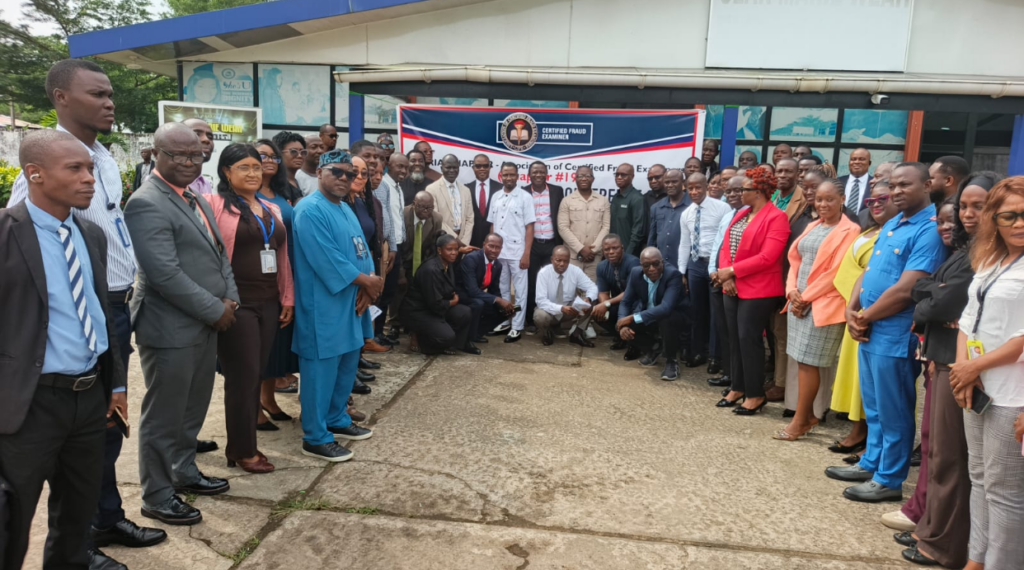
MONROVIA, Liberia – The Liberia Chapter of the Association of Certified Fraud Examiners (ACFE), Chapter #198, has called for stronger institutional accountability, ethical leadership, and collective action to combat fraud in Liberia’s public and private sectors.
The chapter made the call Wednesday at the opening of its 13th Annual Anti-Fraud Conference, held at the Clara Marie Weah Event Hall in the National Archives Building on 12th Street in Monrovia.
The three-day conference, running from November 25 to 27, is being held under the theme, “Raising Fraud Awareness in Public and Private Institutions in Liberia.”
Delivering the opening remarks on behalf of ACFE Liberia Chapter President Attorney Augustine G. Chenoway, Jarwo Nutah Cooper, Head of Training, emphasized that combating fraud should not fall to a single profession or institution but requires collective responsibility and sustained collaboration.
“Fraud is not the responsibility of one profession to prevent. It is a collective challenge that requires collaboration, vigilance, and a united response,” Cooper said.
He warned that fraud continues to evolve in sophistication and scale, with technological advancement, digital transactions, cyber-enabled schemes, procurement irregularities, corruption risks, and other financial crimes posing growing threats to institutions.
According to him, the consequences of fraud extend beyond financial losses, as the practice undermines public trust, weakens institutions, discourages investment, and impedes national development.
“For Liberia, the fight against fraud is inseparable from our pursuit of good governance, economic growth, transparency, and sustainable development,” he noted.
Cooper stressed that raising awareness should go beyond educating employees about fraudulent practices, arguing that it must become a strategic approach to strengthening institutional safeguards and promoting ethical conduct.
He said awareness empowers employees to identify warning signs, encourages leaders to establish ethical organizational cultures, strengthens internal controls, and motivates citizens to protect public and private resources.
He further challenged institutions to move beyond detecting fraud after it occurs and instead invest in preventive measures, effective governance frameworks, risk management, and reliable reporting and investigation mechanisms.
“Most importantly, it reminds us that every individual within an organization has a role to play in preventing and combating fraud,” he added.
Also speaking at the conference, Mohammed B. Korleh, Deputy Director General for Administration at the Internal Audit Agency (IAA), described fraud as a serious threat to institutional credibility, business sustainability, effective public service delivery, and citizens’ confidence in public institutions.
“We are gathered here because we understand that fraud is a serious issue that threatens the credibility of institutions; it threatens the sustainability of businesses, it threatens the effective delivery of public services,” Korleh said.
He emphasized the need for professionals and institutions to build networks and partnerships to sustain the fight against fraud.
“We must network, build partnerships for a sustained fight against fraud,” he stressed, reaffirming the IAA management’s support for the ACFE Liberia Chapter.
“This is the reason for which the Internal Audit Agency Management firmly stands with this noble body, the ACFE Chapter 198,” Korleh added.
Meanwhile, Dr. Emmanuel K. Urey Yarkpawolo, Executive Director of the Environmental Protection Agency (EPA), commended the ACFE for organizing the conference and highlighted the importance of integrity and accountability in addressing broader governance and environmental challenges.
He pointed to the responsibility of individuals and institutions in ensuring that commitments are translated into meaningful action, particularly in the management of environmental resources and international obligations.
Yarkpawolo referenced international environmental commitments, including the Paris Agreement, under which countries establish their respective climate commitments, stressing the importance of responsible action and accountability.
The conference is designed to refresh and broaden the knowledge of Certified Fraud Examiners, associate members, internal and external auditors, attorneys, law enforcement personnel, banking and business professionals, accountants, investigators, risk management practitioners, and compliance officers.
Participants are expected to examine contemporary fraud trends and acquire practical knowledge of modern fraud investigation and examination techniques, while strengthening professional integrity and ethical standards.
The gathering also provides opportunities for participants to network, share professional experiences, exchange ideas, and discuss emerging challenges affecting their respective organizations.
Over the three days, participants are expected to engage subject matter experts in discussions on fraud prevention, detection, deterrence, investigation, and institutional responses.
In closing his remarks, Cooper urged participants to use the conference to renew their commitment to transparency, accountability, and ethical leadership.