

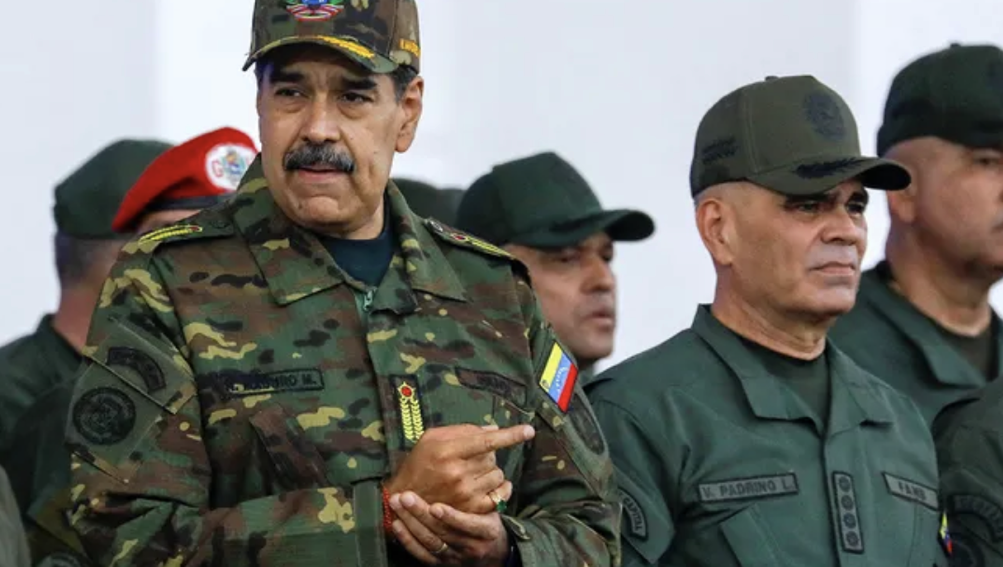
ADDIS ABABA, ETHIOPIA – The African Union (AU) has issued a formal statement expressing “grave concern” over escalating political and military turmoil in Venezuela, including what it described as reports of the “abduction” of President Nicolás Maduro and attacks on state institutions.
The communiqué, released from the AU’s headquarters on January 3, 2026, calls for restraint, dialogue, and strict adherence to international law, underscoring the continental body’s principles of sovereignty and non-interference.
The AU’s statement intervenes in a long-simmering crisis that has gripped Venezuela for over a decade. The nation’s collapse stems from a catastrophic economic meltdown, hyperinflation, severe shortages of food and medicine, and a profound political schism.
The core dispute centers on the legitimacy of leadership. President Nicolás Maduro, successor to the late Hugo Chávez, has maintained power since 2013 through elections widely condemned internationally as neither free nor fair. His government is accused of authoritarian practices, including jailing political opponents, silencing independent media, and undermining democratic institutions.
In contrast, a significant portion of the international community, led by the United States and dozens of other nations, recognized opposition leader Juan Guaidó as the legitimate interim president from 2019 to 2022, following Maduro’s contested re-election. This created a unique and volatile situation of dual claims to presidential authority.
The crisis is deeply internationalized, with the United States playing a central role. Washington has imposed severe economic sanctions on Maduro’s government and state oil company PDVSA since 2017, aiming to force a democratic transition. The U.S. argues these measures target the ruling elite, but the UN and humanitarian groups have repeatedly stated the sanctions exacerbate the nation’s humanitarian disaster, affecting the most vulnerable citizens.
The U.S. has consistently supported the Venezuelan opposition, levied drug trafficking charges against Maduro and his inner circle, and offered rewards for information leading to their capture. This stance has solidified Venezuela’s alignment with U.S. adversaries like Russia, China, Iran, and Cuba, which provide Maduro’s government with diplomatic, economic, and military support.
The AU’s communiqué appears to reference a dramatic and recent escalation beyond the prolonged stalemate. Phrases like “abduction of the President” and “military attacks on Venezuelan institutions” suggest a potential coup attempt, armed uprising, or a covert operation.
Such an event would represent a dangerous new phase, moving beyond political and economic pressure into overt, violent instability. It remains unclear from the AU statement which actors are allegedly responsible—whether dissident military factions, external forces, or opposition groups.
The AU’s response is carefully framed within its foundational principles. The statement strongly reaffirms “respect for the sovereignty of States” and “territorial integrity,” reflecting the AU’s general aversion to external interference in member states’ affairs, a sensitivity rooted in colonial history.
It emphasizes “inclusive political dialogue among Venezuelans themselves” as the only sustainable path forward, implicitly rejecting military solutions or foreign-imposed regime change.
The call for restraint is driven by concern for “regional peace and stability,” recognizing that a full-blown conflict in Venezuela could trigger a wider refugee crisis and destabilize the Caribbean and Latin American region.
The AU’s entry into the Venezuela discourse adds a significant, if diplomatically cautious, voice to the international response. While it expresses solidarity with the Venezuelan people, its emphasis on constitutional order and dialogue aligns more closely with the positions of other global actors calling for negotiated solutions, such as the European Union and Mexico, rather than the maximum-pressure approach of the U.S.