

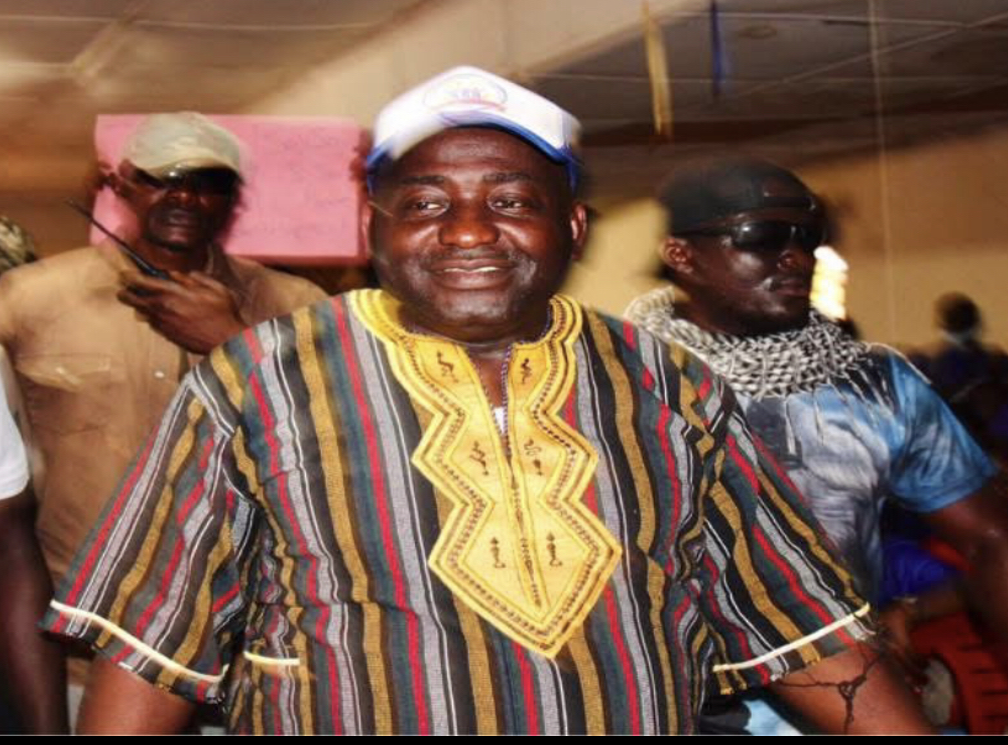
Saclepea, Nimba County – Nimba County Electoral District #9 Representative hopeful, Hon. Musa Hassan Bility, has issued a strong statement in support of the Supreme Court of Liberia’s recent ruling sentencing controversial preacher Prophet Key to six months in prison.
In a communication released from Saclepea on Friday, Bility framed the verdict not simply as a punishment for an individual, but as a landmark moment for the rule of law and the protection of human dignity in Liberia.
“This moment is not merely about one man. It is about justice. It is about decency. And more importantly, it is about the place of our Supreme Court in the life of our Republic,” Bility wrote.
The statement serves as a robust defense of the Judiciary, which Bility describes as “the most sacred institution of our democracy.” He acknowledged that while no court system is infallible, Liberia’s Supreme Court has consistently served as a stabilizing force during political tensions.
“Through years of political uncertainty, Liberians have consistently turned to the Supreme Court to resolve major disputes without resorting to violence. That alone is not a small achievement,” he noted.
Bility used the occasion to contrast the Judiciary’s performance with the other branches of government, asserting that it has demonstrated a “higher level of institutional discipline, transparency, and duty” than the Legislature and the Executive.
While encouraging healthy debate over judicial decisions, Bility drew a sharp distinction between disagreeing with a ruling and attacking the institution itself. He warned that denigrating the Court threatens the very system designed to protect citizens’ rights.
“When we attack and vulgarize the Court or those who sit in judgment, we weaken the system we depend on to protect our rights,” he cautioned. He commended the other branches of government for not interfering with the judicial process, stating that their “restraint is commendable” and proves “the system can work as it should.”
For Bility, the ruling against Prophet Key carries significant social weight. He characterized it as a moment where justice was served, particularly for Liberian women.
“For our women, our mothers, and our daughters, it signals that dignity matters. It sends a message that actions have consequences, and that no one is above the law,” he stated.
Looking beyond the specifics of the case, Bility called for a broader shift in the nation’s political culture. He urged leaders to remove “vulgarity,” “religious bigotry,” and “tribal division” from public discourse.
“Free speech is a fundamental right, yes,” he acknowledged. “But speech that tramples the dignity and humanity of others cannot hide forever under the banner of freedom.”
He concluded by calling on politicians to follow the example of the Judiciary, urging them to let “ideas compete, not identities” and to let their “deeds speak louder than insults.”